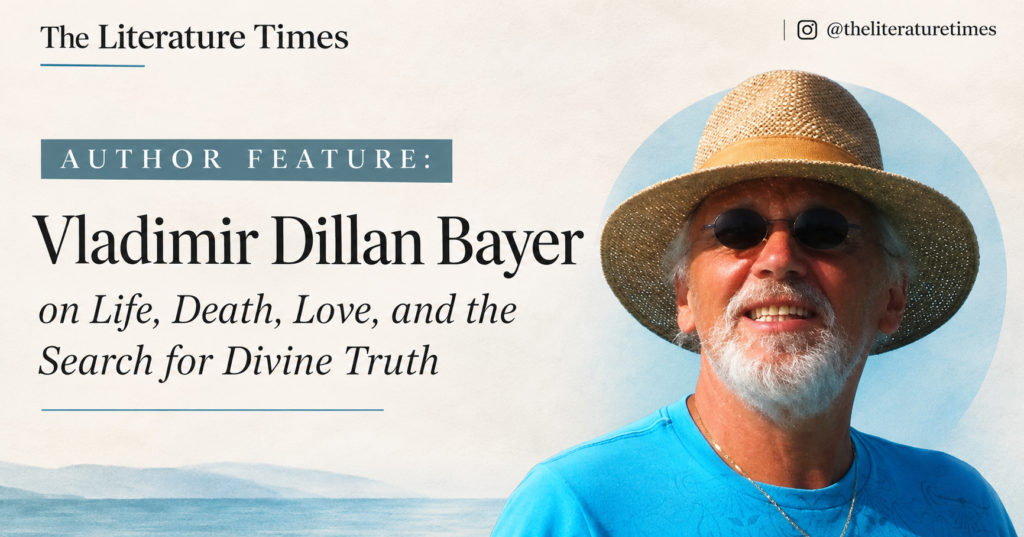
An exploration of the philosophical and spiritual vision behind About Life and Death: Love and Fear
Life and death have fascinated humanity for centuries, inspiring countless philosophical discussions, spiritual reflections, and attempts to understand the meaning of existence. While life represents experiences, relationships, and possibilities, death is often associated with uncertainty, separation, and fear. Yet what if these two realities are not opposites but interconnected aspects of a greater whole? This question lies at the heart of About Life and Death: Love and Fear, a thought-provoking nonfiction work by Vladimir Dillan Bayer. Through deeply personal reflections, the author invites readers to reconsider familiar beliefs, confront fundamental human fears, and explore the possibility of a deeper spiritual understanding of existence.
A Writer on a Journey of Self-Discovery
Vladimir Dillan Bayer introduces himself through an unusual and deeply personal expression, describing himself as “God’s lost son.” Rather than presenting a conventional biography built around professional accomplishments, he approaches identity through spiritual inquiry and philosophical reflection.
For Bayer, understanding oneself involves more than examining personal experiences or social identities. His perspective suggests that human beings are cosmic travellers, moving through existence in search of their divine origins.
The author acknowledges the difficulty of communicating his identity through words. He suggests that even 170 pages cannot fully explain who he truly is. This observation reflects the central philosophy behind his writing: self-discovery is an ongoing journey, and understanding human existence requires a willingness to question familiar assumptions.
Through his work, Bayer invites readers to explore his personal reflections while considering their own questions about identity, purpose, and spiritual belonging.
Understanding Life and Death as One Whole
One of the defining themes of About Life and Death: Love and Fear is the relationship between life and death.
Human beings generally perceive life as a beginning filled with opportunities, while death represents an unavoidable ending. Bayer challenges readers to examine this conventional distinction and consider whether both experiences belong to a larger interconnected reality.
His philosophical approach encourages readers to reflect upon the nature of physical existence and the possibility that mortality carries meanings beyond ordinary human understanding.
Rather than presenting death solely as something to fear, the book invites readers to reconsider how awareness of mortality influences their appreciation of life.
This perspective forms an important foundation for the author’s broader exploration of consciousness, spiritual identity, and the human search for meaning.
Love and Fear: The Emotions That Shape Existence
Love and fear occupy a central position in Bayer’s philosophical vision.
These emotions influence human relationships, personal choices, and perceptions of the world. Love often encourages compassion, connection, acceptance, and trust, while fear can generate uncertainty, resistance, insecurity, and emotional separation.
Through his book, Bayer invites readers to examine how these contrasting experiences influence their understanding of themselves and others.
Fear of rejection, loss, uncertainty, and mortality frequently shapes human behaviour. At the same time, love can inspire individuals to move beyond personal limitations and develop stronger emotional connections.
By placing love and fear within a wider spiritual discussion, Bayer encourages readers to explore whether deeper self-awareness can transform their relationship with these emotions.
Exploring Morality, Freedom, and Divine Will
Beyond love and fear, Bayer examines several fundamental dualities that have influenced philosophical and spiritual traditions.
Among these are good and evil, free will and divine will, and the relationship between man and woman.
Questions about good and evil invite reflection on morality, responsibility, and the complexities of human decisions. The contrast between free will and divine will introduces another profound question: do individuals determine their own paths, or does existence unfold within a greater spiritual order?
These subjects encourage readers to reconsider the boundaries between personal choice, moral responsibility, and spiritual belief.
Bayer’s philosophical framework presents these questions as opportunities for contemplation rather than matters that necessarily require immediate or universally accepted answers.
Confronting the Fear of Death
Perhaps the most significant concern explored through Bayer’s work is humanity’s fear of physical death.
The author describes death as the mother of human phobias and fears, suggesting that awareness of mortality influences numerous aspects of human existence.
Fear of death may shape relationships, ambitions, attachments, and the desire for security. It can also influence spiritual beliefs and the ways individuals understand life’s purpose.
By encouraging readers to confront mortality directly, Bayer invites them to examine the assumptions underlying their deepest anxieties.
His exploration suggests that reflecting upon death may provide an opportunity to develop greater self-awareness and a more meaningful appreciation of existence.
Rather than avoiding uncertainty, his work encourages readers to approach difficult questions with openness and curiosity.
Humanity’s Search for Divine Origins
A distinctive element of Bayer’s writing is his portrayal of human beings as cosmic travellers searching for their divine origins.
This metaphysical perspective presents existence as a spiritual journey that extends beyond ordinary material concerns.
Through this understanding, the author encourages readers to contemplate their relationship with the universe, their sense of identity, and the possibility of a deeper spiritual connection.
These ideas reflect the personal philosophical and spiritual outlook presented in his work.
For readers interested in existential questions, metaphysics, and spiritual self-discovery, such perspectives offer opportunities for individual reflection and interpretation.
Writing Beyond Conventional Boundaries
Bayer’s literary approach is rooted in introspection rather than conventional instruction.
His writing invites readers to examine their beliefs and emotional experiences without assuming that every existential question must have a simple answer.
The personal nature of his reflections creates a connection between the author’s spiritual exploration and the reader’s individual search for meaning.
This approach makes About Life and Death: Love and Fear particularly relevant to readers who appreciate philosophical nonfiction, existential inquiry, and spiritually oriented literature.
The book’s central themes encourage contemplation of universal questions that continue to influence human understanding across cultures and generations.
An Invitation to Question and Discover
Through About Life and Death: Love and Fear, Vladimir Dillan Bayer presents an introspective exploration of the mysteries surrounding human existence.
His reflections on love, fear, morality, free will, divine will, and mortality encourage readers to reconsider familiar perspectives and explore questions that extend beyond everyday experience.
By presenting life and death as potentially interconnected aspects of a greater whole, Bayer offers a distinctive philosophical starting point for contemplating existence.
His vision of humanity as cosmic travellers searching for divine origins gives the work a deeply personal spiritual dimension.
Ultimately, Bayer’s writing reminds readers that self-discovery requires curiosity, reflection, and the courage to confront uncertainty. For those interested in exploring the deeper questions of life, his work offers an invitation to look beyond conventional assumptions and continue the search for understanding.
About Life and Death: Love and Fear is not simply concerned with what it means to exist. It also encourages readers to consider how their understanding of love, fear, and mortality influences the way they choose to live.







Your perspective matters
Share your thoughts respectfully. Comments are moderated.