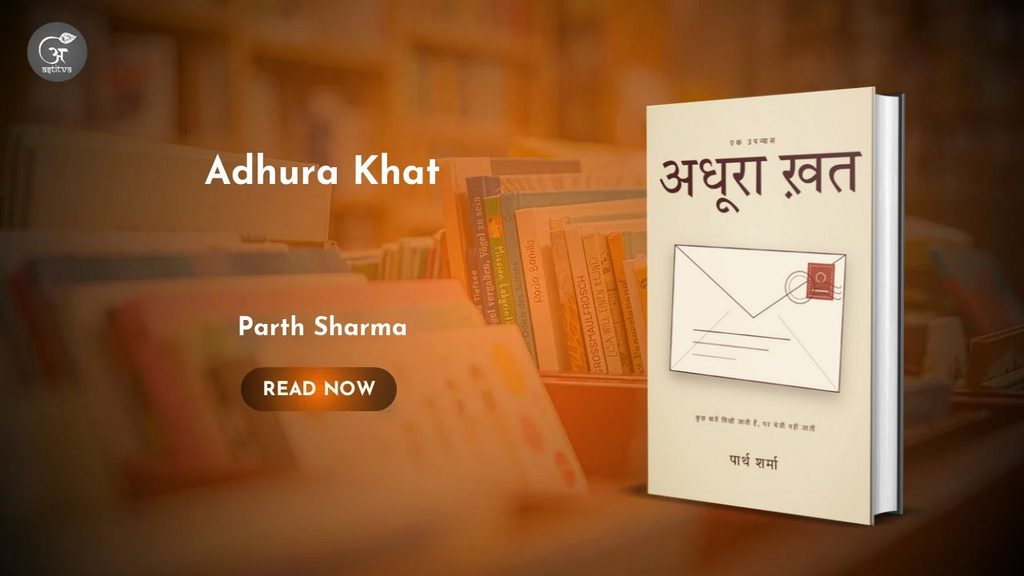
Some stories end with the turning of a page, while others remain alive in the heart long after the final chapter. Some letters never reach their destination, some journeys remain incomplete, and some waits continue for a lifetime. Capturing the beauty and pain of such enduring emotions is Adhura Khat (The Incomplete Letter), a poignant novel by Parth Sharma. Set in the small town of Sonpur in Uttar Pradesh, this moving tale explores love, separation, social barriers, sacrifice, and the unbreakable connections that time cannot erase.
At the heart of the novel are Devkant, affectionately known as Deva, and Rukmini. Their relationship begins with the innocence of childhood friendship, gradually developing into a deep emotional bond. What starts as a simple connection between two young hearts becomes a story of love tested by circumstances far beyond their control. Their journey reflects the vulnerability of human relationships and the difficult choices people are sometimes forced to make when personal feelings collide with society’s expectations.
The world of Deva and Rukmini is shaped by the traditions and social realities of their time. Societal orthodoxy and rigid divisions of social status create obstacles between them, challenging their hopes and dreams. Their relationship is not simply a story of two individuals falling in love; it also reflects the struggles of people whose emotions are judged through the lens of caste, social position, and established conventions. Through their experiences, the novel raises meaningful questions about the freedom to love and the price people pay when society refuses to accept their choices.
The historical backdrop of the 1971 war adds another layer of uncertainty and emotional intensity to the narrative. As larger events influence individual lives, the distance between Deva and Rukmini becomes more than a physical separation. It transforms into a long and painful wait filled with memories, unanswered questions, tears, and hope. The novel brings attention to the personal stories that often remain hidden behind major historical events, reminding readers that history is not only about dates and battles but also about the lives and relationships affected by them.
The incomplete letter becomes a powerful symbol throughout the story. It represents words left unspoken, feelings that could not be expressed, and promises that remain suspended between the past and the present. The central mystery surrounding the letter keeps readers connected to the emotional journey of the characters. Will the letter ever reach the person for whom it was written? Will Deva and Rukmini find their way back to each other after years of separation? These questions form the emotional foundation of the novel and encourage readers to discover how their story unfolds.
Beyond its romantic elements, Adhura Khat explores sacrifice, family expectations, faith, and the complicated relationship between individual desires and social responsibilities. It invites readers to reflect on the sacrifices made by parents, the influence of social traditions, and the emotional consequences of decisions taken under pressure. Rather than presenting love as an easy or uncomplicated experience, the novel examines its difficult dimensions—patience, uncertainty, longing, and the courage to hold on to memories even when the future remains unclear.
Parth Sharma’s Literary Vision
Through his writing, Parth Sharma explores the unspoken layers and social taboos that shape human relationships. His storytelling focuses on the realities of a society where love is often measured against caste, social status, family expectations, and harsh circumstances. He does not limit his writing to entertainment; instead, he uses his characters and their experiences to bring attention to emotions and truths that are frequently overlooked.
One of the notable aspects of his approach is the effort to create vivid characters who leave a lasting impression. Their struggles, choices, and emotional journeys encourage readers to look beyond the surface of relationships and understand the deeper conflicts within them. Through Deva and Rukmini, Sharma presents a story that speaks not only about romantic attachment but also about the strength of human emotions when confronted with separation and adversity.
Adhura Khat is likely to resonate with readers who appreciate emotional fiction, historical settings, and stories that examine the complexities of society. Its themes of childhood friendship, enduring affection, family sacrifice, and lifelong waiting make it a reflective reading experience. The novel also reminds us that not every relationship receives a perfect ending, yet some connections continue to hold meaning regardless of distance or time.
With its evocative setting, emotionally layered characters, and the symbolic significance of an unfinished letter, Adhura Khat brings readers a story of love that refuses to fade. It is a reminder that certain emotions cannot be measured by the years that pass or the miles that separate two people.
Ultimately, Adhura Khat carries a thought-provoking message: some letters may remain incomplete, some paths may never reach their destination, and some waits may last a lifetime—but the feelings behind them can remain unforgettable. Through this novel, Parth Sharma invites readers to experience a journey where love, memory, sacrifice, and hope continue to exist beyond the boundaries of time.





Your perspective matters
Share your thoughts respectfully. Comments are moderated.