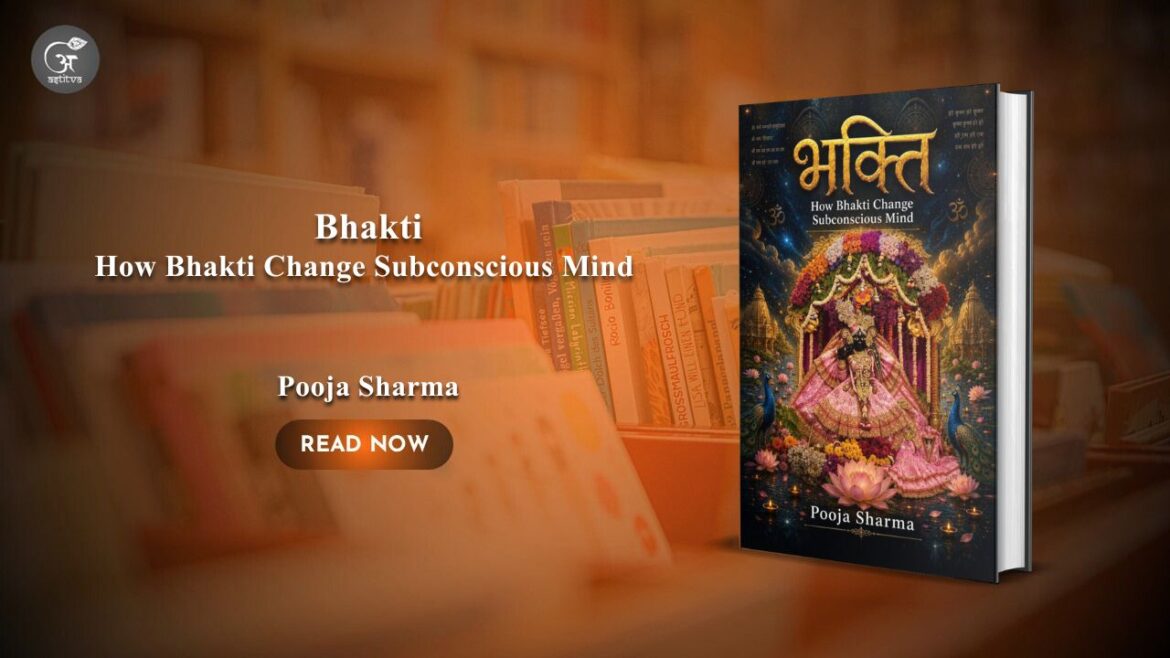
In a fast-paced world filled with constant distractions, uncertainty, and emotional stress, the search for inner peace has become more important than ever. Bhakti: How Bhakti Change Subconscious Mind by Pooja Sharma offers readers a thoughtful and inspiring spiritual journey that explores the transformative power of devotion. More than a book about religious practices, it presents bhakti as a path of love, faith, surrender, and inner awakening that has the potential to reshape not only the heart but also the subconscious mind.
The central message of the book is that true devotion goes far beyond rituals and external worship. Bhakti is portrayed as a living experience—a sincere connection with the Divine built on unconditional love, unwavering faith, and complete surrender. Through this perspective, the author encourages readers to understand that spirituality is not confined to temples or ceremonies but is something that can be experienced in every moment of daily life through compassion, humility, and selfless living.
One of the most intriguing aspects of Bhakti is its focus on the subconscious mind. The book explains how consistent devotion, positive thoughts, prayer, and faith gradually influence one’s inner consciousness. According to the author, the subconscious mind stores beliefs, emotions, and habits that shape every aspect of human life. When it is nourished with devotion and spiritual awareness, it becomes a source of peace, strength, and positive transformation. This approach offers readers a meaningful connection between spirituality and personal growth, demonstrating how inner change begins with the thoughts and emotions we cultivate every day.
Throughout the book, readers are gently guided toward self-reflection. Rather than presenting spirituality as a distant or complicated concept, the author makes it accessible by encouraging readers to pause, look within, and recognize the divine presence that already exists inside them. The book inspires individuals to cultivate kindness, gratitude, forgiveness, and compassion—qualities that not only deepen spiritual understanding but also enrich everyday relationships and experiences.
The language of the book remains simple, warm, and approachable, making profound spiritual ideas easy to understand for readers from all backgrounds. Whether someone is taking their first steps toward spirituality or has long been walking the path of devotion, the book offers valuable insights that encourage continuous growth and deeper self-awareness. It reminds readers that lasting happiness is not found in external achievements alone but in developing inner harmony through love and faith.
Beyond its spiritual teachings, Bhakti carries a universal message of hope and positivity. It encourages readers to face life’s challenges with courage, trust, and a calm mind, believing that sincere devotion has the power to transform fear into faith and uncertainty into confidence. By emphasizing the importance of surrender without losing personal responsibility, the book presents devotion as a practical way of living rather than merely a religious practice.
The wisdom shared in Bhakti reflects the heartfelt vision of its author, Pooja Sharma, a sensitive writer deeply inspired by spirituality, Indian culture, and timeless human values. Her passion for exploring devotion and inner transformation shines throughout the book, making it both authentic and relatable. Through her writing, she seeks to inspire readers to embrace positive thinking, spiritual awareness, and a life guided by compassion and faith.
Bhakti: How Bhakti Change Subconscious Mind is more than a spiritual book—it is an invitation to rediscover the power of devotion as a means of transforming the mind, uplifting the soul, and finding lasting peace within. It reminds readers that the simplest path to the Divine is through love, sincerity, and complete surrender, and that true transformation always begins from within.