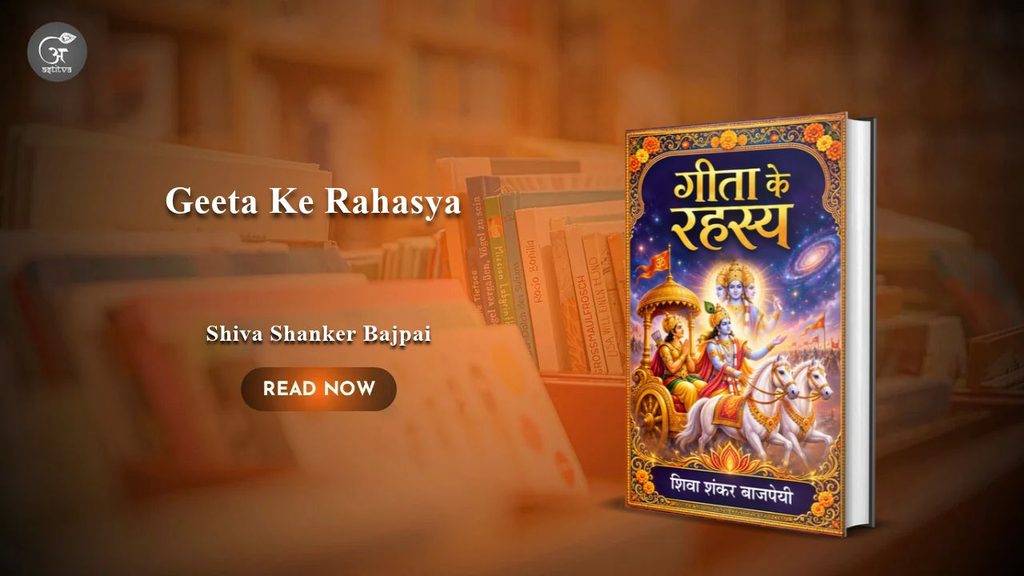
Discovering the Deeper Wisdom of the Bhagavad Gita Through Geeta Ke Rahasya
The timeless wisdom of the Bhagavad Gita continues to guide humanity through life’s challenges, moral dilemmas, and spiritual questions. Its teachings offer valuable insights into duty, action, devotion, self-discipline, and the true nature of the self. Bringing these profound principles into focus, author Shiva Shankar Bajpai presents his book Geeta Ke Rahasya: Jivan, Karm aur Aatmgyan ka Marg, a reflective exploration of the philosophical and spiritual teachings of the Bhagavad Gita.
The book invites readers to look beyond the surface meaning of the Gita’s verses and reflect on the deeper principles that shape human life. It explores essential questions concerning one’s responsibilities, the purpose of action, the influence of ego, and the journey towards self-realisation. Through his reflections on the chapters and teachings of the Bhagavad Gita, the author encourages readers to understand how ancient spiritual wisdom can offer direction in everyday life.
At the heart of Geeta Ke Rahasya lies the concept of Dharma, or righteous duty. Every individual faces situations in which choosing the right path can become difficult. Personal desires, social expectations, responsibilities, and emotional attachments often influence decisions. The Bhagavad Gita teaches that fulfilling one’s duty with sincerity and awareness is an important part of a meaningful life. Through this theme, the book encourages readers to reflect on their responsibilities and develop a clearer understanding of what it means to act with righteousness.
Another significant principle explored in the book is Nishkama Karma, the philosophy of selfless action. It teaches that individuals should perform their duties with dedication without becoming excessively attached to the results. Human beings often measure their efforts through success, recognition, and rewards. However, the Gita offers a different perspective: the value of action lies not only in its outcome but also in the intention and sincerity behind it. This teaching encourages a balanced approach to life, where commitment to one’s responsibilities takes priority over anxiety about the final result.
The book also reflects on Ahankara, or ego, which can become a barrier to understanding oneself and others. Ego often creates a false sense of identity, leading individuals towards pride, insecurity, attachment, and conflict. By examining this concept through the philosophical perspective of the Gita, the author invites readers to recognise the limitations created by ego and move towards humility, self-awareness, and inner balance.
A central dimension of the book is Atma-Jnana, or self-knowledge. The Bhagavad Gita presents the understanding of the self as an essential step towards spiritual growth. Beyond external identities, possessions, and temporary circumstances, it encourages individuals to explore their deeper nature. This journey of self-discovery requires reflection, discipline, and an awareness of one’s thoughts and actions. Through this theme, Geeta Ke Rahasya highlights the importance of looking inward to gain a better understanding of life’s deeper purpose.
The book also explores Bhakti, or devotion, as an important path of spiritual connection. Devotion is not merely an expression of religious faith; it can also represent sincerity, surrender, trust, and a deeper relationship with the divine. Along with selfless action and self-knowledge, devotion provides another perspective on spiritual development. These interconnected principles form an important foundation for understanding the Gita’s message.
Beyond its philosophical discussions, the book addresses questions that remain relevant in contemporary society. How should a person fulfil responsibilities without becoming overwhelmed by expectations? How can one maintain self-control during difficult circumstances? How can individuals overcome attachment, ego, and uncertainty? These questions make the teachings of the Bhagavad Gita meaningful across generations. By reflecting on them, readers can discover perspectives that encourage thoughtful decisions, personal discipline, and inner peace.
About the Author
Shiva Shankar Bajpai was born in 1947 on the auspicious occasion of Phalguna Chaturdashi, the day associated with the traditional Holika bonfire. He holds academic qualifications including M.A., B.Ed., and LL.B. His educational background and professional journey reflect a longstanding commitment to learning, teaching, and traditional knowledge.
He began his teaching career at Yogeshwar College in 1968, serving there until 1974. He subsequently joined Kashishwar College, where he continued his service from 1974 to 2010. Over the years, he contributed to the academic development of students through his dedication to education.
Alongside his teaching career, Bajpai developed a deep interest in Bharatiya Jyotish (Indian Astrology). He completed a comprehensive 12-year study of subjects related to Indian Astrology under the auspices of the Sanskrit Sansthan, Uttar Pradesh, Lucknow, and the Central Sanskrit University, Lucknow. His academic and traditional studies reflect his continued interest in India’s intellectual and spiritual heritage.
A Journey Towards Life, Action, and Self-Knowledge
Geeta Ke Rahasya: Jivan, Karm aur Aatmgyan ka Marg is an invitation to explore the wisdom of the Bhagavad Gita through reflection and self-examination. By bringing together the ideas of dharma, nishkama karma, ahankara, atma-jnana, and bhakti, Shiva Shankar Bajpai encourages readers to look at life with greater awareness and understanding.
For readers interested in Indian philosophy, spirituality, and the practical relevance of the Bhagavad Gita, this book offers an opportunity to revisit timeless teachings and reflect on their place in modern life. Ultimately, its message points towards a meaningful journey in which right action, freedom from excessive attachment, and self-knowledge become guiding principles for living with purpose.







Your perspective matters
Share your thoughts respectfully. Comments are moderated.