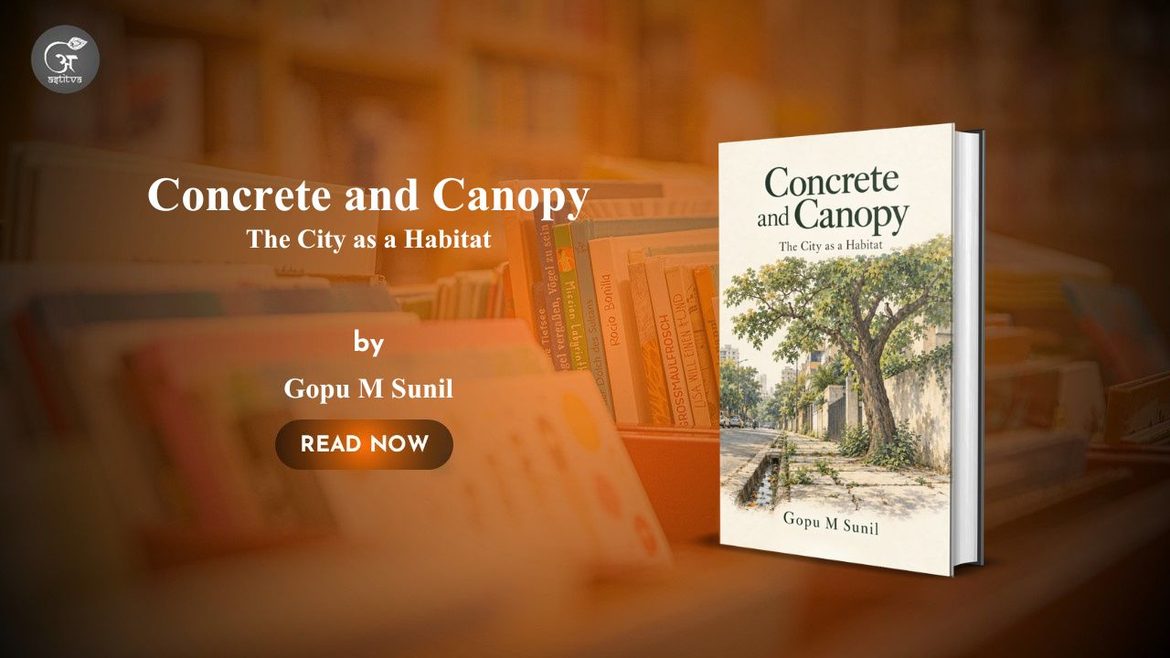
A collection of 42 poems invites readers to discover the resilience of nature and the quiet coexistence of living ecosystems within modern cities.
Concrete and Canopy: The City as a Habitat, authored by Gopu M Sunil, is a poetry collection that offers a thoughtful exploration of the relationship between urban development and the natural world. Through 42 poems, the book draws attention to the diverse forms of life that continue to exist, adapt, and flourish amid the concrete structures of modern cities.
In an age when cities are expanding and natural habitats are increasingly under pressure, the collection encourages readers to look beyond familiar urban landscapes and recognise the living ecosystems that persist within them. From trees pushing through pavements and weeds reclaiming abandoned plots to moss growing beneath subway lights and birds finding shelter among buildings, the poems reveal the often-overlooked presence of nature in human-dominated spaces.
Moving through streets, rooftops, rivers, railway corridors, parks, and forgotten corners, Gopu M Sunil captures the subtle interactions between human infrastructure and the natural environment. The collection explores pressing urban concerns, including rising temperatures, flooding, light pollution, disappearing habitats, and the environmental consequences of human activity. Alongside these challenges, it presents moments of adaptation, persistence, and renewal, highlighting nature’s remarkable ability to survive in changing surroundings.
One of the defining features of Concrete and Canopy: The City as a Habitat is its ability to transform ordinary urban spaces into sites of ecological discovery. A storm drain becomes a temporary river, a vacant lot develops into a small ecosystem, and a rooftop puddle briefly reflects the sky. Even a subway station, typically associated with movement and machinery, becomes a place where moss can survive. Through such observations, the poems challenge the conventional perception that cities and nature belong to separate worlds.
Rather than presenting nature as something that exists only in forests, mountains, or remote wilderness, the collection reveals how life continues to find opportunities within the built environment. Its poetry invites readers to reconsider the familiar spaces they pass through every day and recognise the complex habitats developing around them, often unnoticed.
The book also raises important questions about coexistence and the future of urban living. As cities continue to grow, the relationship between development and ecological preservation becomes increasingly significant. By observing the small signs of life that endure amid concrete and construction, the collection encourages a more attentive and thoughtful understanding of the environments people inhabit.
Written with a keen eye for the details of urban life, Concrete and Canopy: The City as a Habitat is both a poetic observation of the modern city and a reflection on the resilience of the natural world. Its 42 poems remind readers that nature does not always exist beyond the boundaries of human civilisation; often, it is quietly present in the spaces people overlook.
Ultimately, Gopu M Sunil’s collection is a poetic record of coexistence. It invites readers to pause, observe, and discover the wild lives that remain woven into the fabric of urban existence. By bringing attention to the trees, birds, insects, moss, water, and other living elements that share the city with humanity, the book offers a compelling reminder that even in landscapes dominated by concrete, life continues to adapt, persist, and make a home.