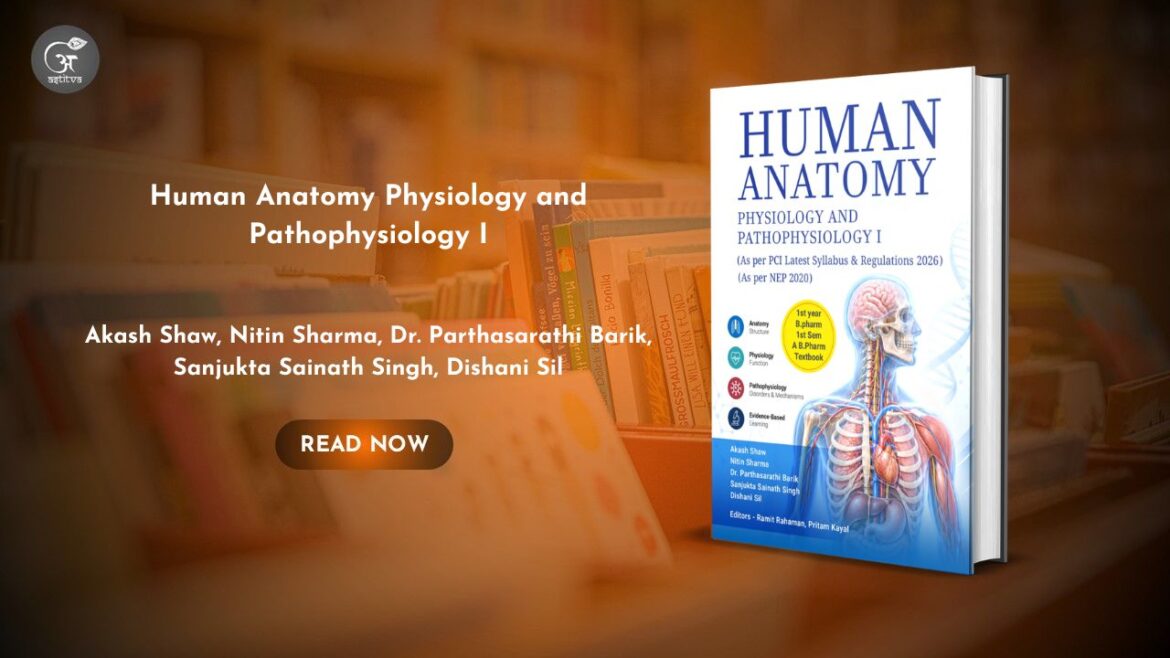
proudly announces the release of Human Anatomy, Physiology and Pathophysiology I, an authoritative academic textbook authored by Akash Shaw, Nitin Sharma, Dr. Parthasarathi Barik, Sanjukta Sainath Singh, and Dishani Sil. Specially designed for B.Pharm First Year, First Semester students, this comprehensive volume is fully aligned with the latest 2026 Pharmacy curriculum and serves as an essential resource for building a strong foundation in the core principles of human anatomy, physiology, and pathophysiology.
Understanding the structure and function of the human body is fundamental to pharmaceutical education. This book has been carefully developed to help students connect normal physiological processes with disease mechanisms and the therapeutic actions of drugs. By presenting scientific concepts in a clear, systematic, and student-friendly manner, it enables learners to develop both conceptual understanding and clinical relevance, making it an invaluable companion throughout their academic journey.
The textbook follows a logical and progressive approach, beginning with the fundamentals of cell biology and tissues before advancing to the study of major body systems, including the integumentary, skeletal, muscular, and cardiovascular systems. Alongside normal anatomy and physiology, the authors have integrated discussions on common pathological conditions such as psoriasis, dermatitis, rheumatoid arthritis, osteoporosis, and gout. This integrated methodology allows students to appreciate how structural and functional changes in the body contribute to disease and influence therapeutic interventions.
To strengthen learning outcomes and support examination preparation, every unit includes thoughtfully designed Multiple Choice Questions (MCQs), Short Answer Questions, and Long Answer Questions based on the prescribed syllabus. These assessment tools encourage self-evaluation, reinforce key concepts, and prepare students to excel in university examinations while enhancing their analytical and problem-solving abilities.
The strength of this textbook lies in the diverse expertise of its distinguished authors. Akash Shaw brings extensive knowledge in pharmaceutics, formulation development, pharmacovigilance, regulatory affairs, advanced drug delivery systems, and pharmaceutical innovation. His professional experience and research-oriented approach ensure that the content remains relevant to both academic and industrial perspectives.
Nitin Sharma, a pharmaceutical scientist and Ph.D. scholar, contributes his expertise in novel drug delivery systems, nanomedicine, artificial intelligence, digital health, and emerging pharmaceutical technologies. His commitment to research and scientific advancement enriches the book with contemporary insights that reflect the evolving landscape of pharmaceutical sciences.
Dr. Parthasarathi Barik, an accomplished biomedical scientist, offers valuable expertise in anatomy, physiology, pathophysiology, molecular biology, regenerative medicine, cardiovascular research, and translational biomedical sciences. His interdisciplinary perspective bridges the gap between fundamental biological sciences and clinical applications, enabling students to understand the practical significance of biomedical concepts.
Sanjukta Sainath Singh, an experienced Associate Professor with more than a decade of teaching and research experience in pharmacology, has made significant contributions in experimental pharmacology, drug discovery, medicinal plants, and evidence-based pharmaceutical research. Her academic excellence and dedication to student learning are reflected throughout the textbook.
Dishani Sil, Assistant Professor of Pharmacology, contributes her expertise in pharmacological screening, experimental pharmacology, drug discovery, pharmaceutical education, and student mentoring. Her passion for research and teaching strengthens the educational value of the book, making it an effective learning resource for aspiring pharmacists.
Human Anatomy, Physiology and Pathophysiology I is more than a syllabus-oriented textbook; it is a carefully crafted academic guide that combines scientific accuracy, clinical relevance, and examination-focused learning. Its comprehensive coverage, structured presentation, and practical approach make it an indispensable resource for pharmacy students, educators, and academic institutions.
With the release of this remarkable textbook, the authors have made a significant contribution to pharmaceutical education by providing learners with a reliable and contemporary resource that supports academic excellence and professional development. As the pharmacy profession continues to evolve with advances in biomedical science and healthcare, this book stands as a valuable companion for students preparing to become competent and knowledgeable healthcare professionals.
If you’d like, I can also Prepare this article in a press release format suitable for newspapers and online media portals.