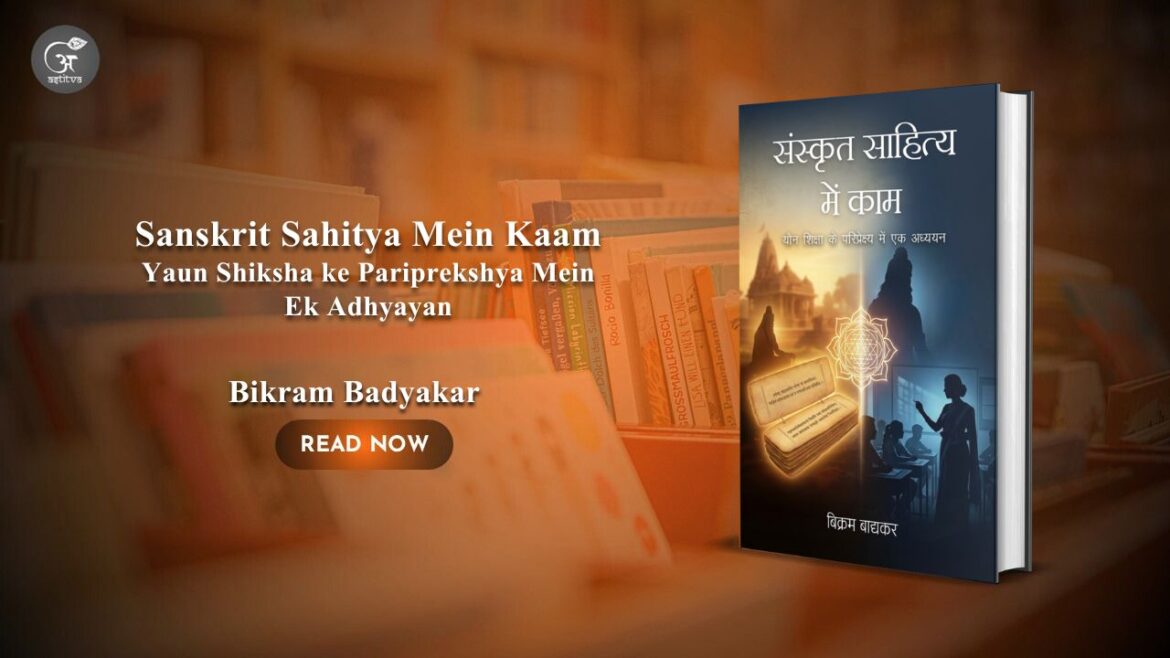
Sanskrit Sahitya Mein Kaam: Yaun Shiksha ke Pariprekshya Mein Ek Adhyayan by Bikram Badyakar enters the contemporary discourse at a moment when conversations around sex education are evolving rapidly yet remain deeply sensitive and often misunderstood. As society grapples with questions of how, when, and why to introduce scientific and balanced sex education to young learners, this book offers a refreshing, scholarly, and culturally rooted perspective—one that challenges the misconception that sex education is a purely modern or Western construct.
The book begins by acknowledging a key concern of parents, educators, and policymakers: the need to protect children from misinformation, confusion, and psychological inhibitions. It is in this context that the author draws inspiration from the film OMG 2, which boldly argues that Indian traditions—particularly those preserved in Sanskrit literature—have long acknowledged the importance of informed and healthy understanding of sexuality. While the film briefly references a range of Sanskrit texts, cultural practices, and philosophical viewpoints, it does so within the constraints of cinematic storytelling. Bikram Badyakar takes those references as a starting point and expands them into a comprehensive, nuanced, and academically rich study.
Through meticulous research and sensitive interpretation, the book examines how ancient Sanskrit literature, scriptures, and kāma-related texts approached topics of desire, ethics, emotional well-being, and sexual knowledge with openness and sophistication. Rather than treating kāma as a taboo, classical Indian thought positioned it as one of the four essential puruṣārthas of life. The author explores this philosophical foundation while also connecting it to contemporary pedagogical concerns. By bridging classical textual references with modern scientific insights, the book offers a balanced analysis that respects both tradition and present-day educational needs.
What makes this work timely is its insistence that understanding kāma in its proper cultural and literary context can enrich today’s conversations on sex education. It neither romanticizes the past nor dismisses it; instead, it interprets centuries-old wisdom through a critical, modern lens, showing how ancient Indian thinkers viewed sexuality as an integral part of holistic human development. This interdisciplinary approach makes the book not only relevant to scholars of Sanskrit and Indology but also valuable for educators, sociologists, and anyone concerned with shaping healthier and more informed social attitudes.
The strength of the book is amplified by the author’s academic credibility and deep engagement with Sanskrit literature. A graduate of Visva Bharati, Santiniketan, and currently a doctoral researcher at the University of Delhi focusing on the Kāmasūtra, Bikram Badyakar brings both rigor and empathy to his study. His research contributions to national and international journals, his participation in global conferences, and his forthcoming edited edition of the Ratimanjari reflect a scholar deeply invested in this field. His parallel interest in poetry lends his writing a certain sensitivity, making the analysis intellectual yet accessible.
This book stands as an invitation to revisit a cultural tradition that approached human emotions, desires, and relationships with remarkable maturity. At a time when discussions around sex education are more urgent than ever, Sanskrit Sahitya Mein Kaam prompts readers to look inward—toward a heritage that understood the importance of clear, healthy, and meaningful dialogue on kāma long before the modern world began debating it.