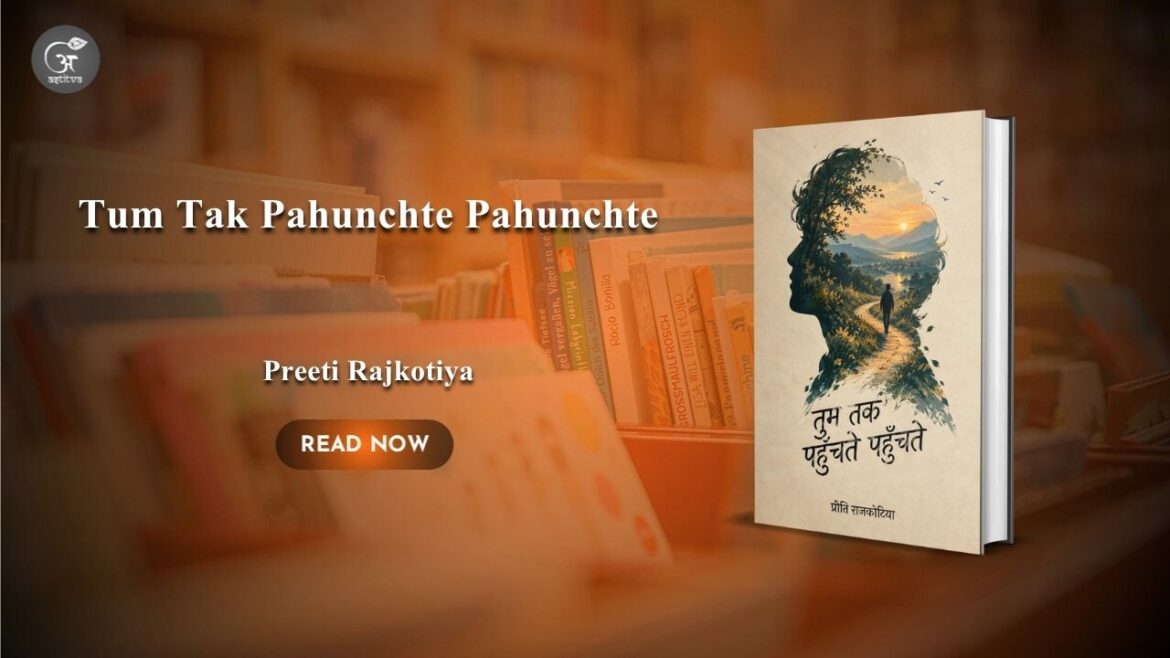
Tum Tak Pahunchte Pahunchte by Preeti Rajkotiya is an evocative collection of emotions, relationships, memories, and the unspoken experiences that quietly shape our lives. Rooted in the many shades of human connection, the book explores the journey from “Me” to “You”—a gradual movement beyond one’s own identity towards another person, where feelings find meaning, memories become companions, and relationships leave lasting impressions on the heart.
Rather than focusing on a single definition of love, the book embraces its many forms and complexities. Through reflections on attachment, longing, trust, separation, companionship, and emotional vulnerability, it captures the experiences that make relationships both beautiful and difficult. The writing speaks of incomplete connections, words that remain unsaid, promises that are difficult to fulfil, and memories that continue to return long after people have moved apart.
One of the distinctive qualities of Tum Tak Pahunchte Pahunchte is its openness to interpretation. The ideas of “Me” and “You” are deliberately left undefined, allowing readers to bring their own experiences and relationships into the pages. The “You” might represent a beloved person, a cherished friend, someone from the past, or an individual whose presence has quietly transformed one’s life. This openness gives the collection a deeply personal quality, making each reader’s experience of the book unique.
The collection also explores the emotional significance of places and memories. Returning to familiar surroundings can awaken feelings that time has not entirely erased. A forgotten conversation, an unfinished promise, or a place once shared with someone special can suddenly bring the past into the present. Through such moments, the book reflects on how human connections continue to influence us, even when circumstances change and people move in different directions.
Alongside longing and emotional pain, the work recognises the gentler dimensions of relationships. Trust, understanding, care, companionship, and the desire to remain connected offer moments of warmth throughout its emotional landscape. These experiences remind readers that relationships are not defined only by grand declarations or dramatic events. Often, their deepest meaning lies in ordinary gestures, quiet understanding, and the simple wish to be present for another person.
Preeti Rajkotiya, currently based in Ahmedabad, was born into a Gujarati family and has maintained a connection with Gujarat as both her birthplace and workplace. During her academic years, she developed an interest in Hindi literature and found pleasure in listening to ghazals. These literary and musical influences form a meaningful part of the background to her creative journey.
Although her writing experienced a considerable pause, her creative expression eventually found its way back into her life. The writings produced after this long interval gradually came together as Tum Tak Pahunchte Pahunchte. The collection represents not merely a return to writing but also a coming together of emotions, experiences, and reflections gathered over time. The author has dedicated this journey to all those who, directly or indirectly, inspired her and contributed to the development of her creative voice.
What makes the book relatable is its ability to express emotions without making them complicated. It does not attempt to impose a single interpretation on love or relationships. Instead, it allows feelings to emerge naturally, giving readers the freedom to recognise their own stories within its reflections.
Tum Tak Pahunchte Pahunchte is ultimately a journey through the spaces between people—the distance between what is felt and what is expressed, between memories and the present, and between separation and the hope of connection. Through its intimate exploration of human emotions, Preeti Rajkotiya offers readers an opportunity to pause, remember, and reconnect with the experiences that have shaped their hearts. It is a collection for those who have loved, waited, remembered, or searched for the right words to reach someone who matters, reminding us that sometimes the journey towards another person becomes a journey towards understanding ourselves.