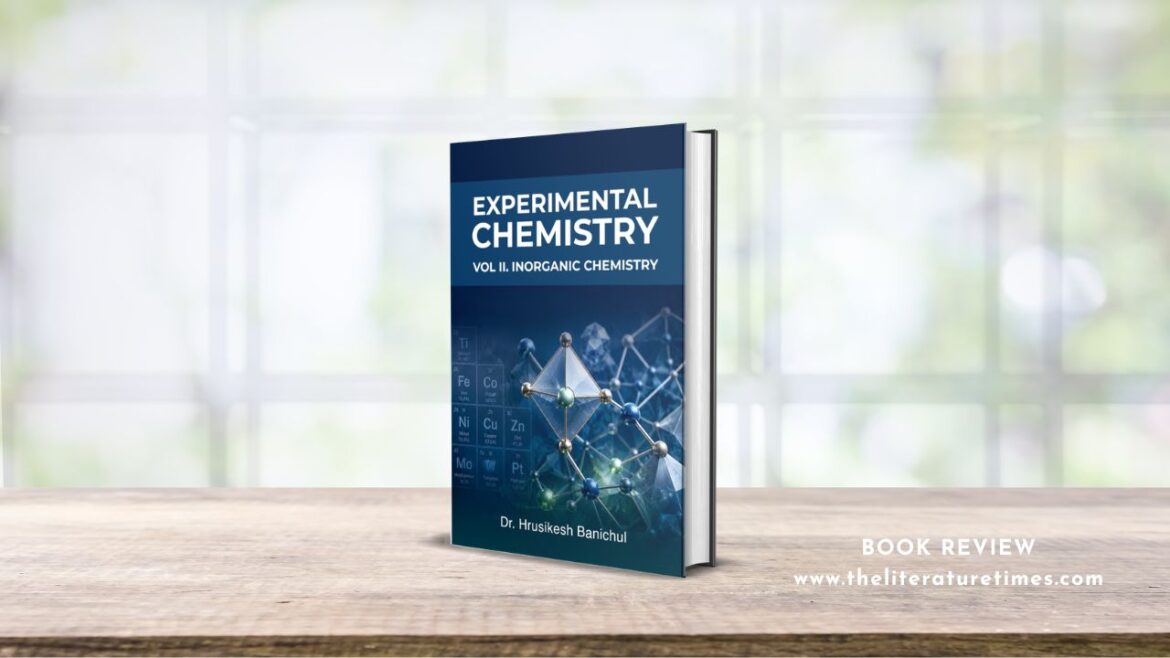
Science is best understood when theoretical knowledge meets practical application. In the field of chemistry, laboratory experiments play a vital role in transforming abstract concepts into measurable realities. Experimental Chemistry Vol II: Physical Chemistry by Dr. Hrusikesh Banichul is a thoughtfully designed laboratory manual that successfully bridges the gap between theoretical principles and experimental understanding. The book provides students with a systematic approach to exploring the quantitative aspects of physical chemistry while developing essential laboratory skills.
Physical chemistry involves the study of chemical systems through measurable properties, mathematical relationships, and scientific analysis. This volume goes beyond conventional textbook explanations by focusing on practical experimentation and real-world applications. It guides students through carefully structured experiments that help them understand fundamental concepts such as thermodynamics, fluid dynamics, electrochemistry, reaction kinetics, and surface chemistry.
One of the most valuable aspects of this book is its student-friendly approach. The experiments are presented in a clear and organized manner, allowing learners to understand the purpose, methodology, observations, and outcomes of each practical exercise. This structured format makes the book an excellent resource for undergraduate students who are beginning their journey into laboratory-based scientific research.
A major highlight of Experimental Chemistry Vol II: Physical Chemistry is its detailed coverage of essential physical constants. The book provides practical procedures for measuring properties such as surface tension and viscosity, enabling students to understand how these parameters influence chemical systems. These experiments encourage accuracy, observation skills, and analytical thinking, which are crucial qualities for every aspiring chemist.
The section on electrochemistry is another significant strength of the book. Through comprehensive explanations of pH-metry, potentiometry, and conductometry, students gain practical knowledge of techniques widely used in academic research and industrial laboratories. The emphasis on precision instruments, including pH meters and conductometers, helps learners develop confidence in handling modern laboratory equipment and interpreting experimental results.
The book also provides valuable insights into reaction dynamics through practical studies of chemical kinetics and distribution coefficients. Understanding the speed and mechanism of chemical reactions is essential in fields ranging from pharmaceutical development to industrial manufacturing. By presenting these concepts through experiments, the book enables students to appreciate the practical importance of reaction behaviour and chemical interactions.
Another important area covered in the book is thermochemistry, where students explore energy changes and heat exchange during chemical processes. These experiments help learners understand the relationship between chemical reactions and energy transformations, strengthening their foundation in physical chemistry principles.
Behind this remarkable work is the expertise of Dr. Hrusikesh Banichul, an accomplished chemist and researcher with more than fifteen years of experience in academic teaching, industrial research, and applied R&D. He earned his Ph.D. from IIT (ISM), Dhanbad, specializing in sustainable catalysis, along with an M.Phil. and M.Sc. from Sambalpur University. His extensive experience in process development, advanced characterization techniques, and pilot-plant operations reflects in the practical depth and scientific accuracy of this book.
Dr. Banichul’s commitment to scientific education extends beyond writing. As a mentor and editorial board member of multiple international journals, he continues to contribute to the growth of research and innovation while promoting environmentally responsible scientific practices.
Overall, Experimental Chemistry Vol II: Physical Chemistry is an excellent laboratory companion for students, educators, and anyone interested in developing a deeper understanding of experimental chemistry. With its clear explanations, practical approach, and comprehensive coverage of important laboratory techniques, the book successfully prepares learners for advanced scientific exploration.
This volume is not merely a collection of experiments; it is a carefully crafted learning experience that inspires curiosity, precision, and scientific thinking. Dr. Hrusikesh Banichul has created a valuable resource that will support students in mastering physical chemistry and building a strong foundation for future research and innovation.