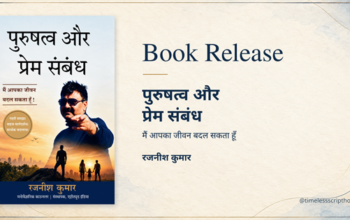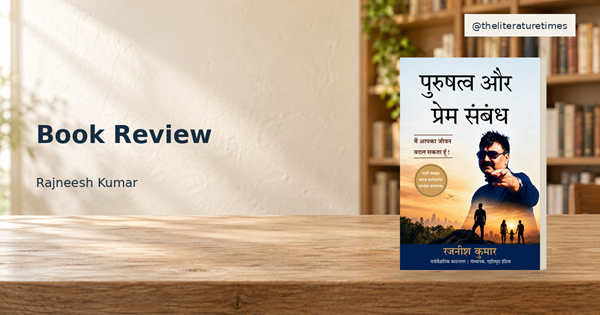
The description of Rajneesh Kumar’s पुरुषत्व और प्रेम संबंध places an uncomfortable gap at the centre of its argument: a man may be taught to study, earn and fulfil family expectations without being helped to understand the relationships that shape his adult life. That premise gives the Hindi book a recognisable audience and a clear editorial focus. It addresses men who are considering a lasting partnership, trying to make sense of a troubled relationship or rebuilding after separation. Its most interesting proposition is that relationship difficulties deserve sustained examination rather than a brief burst of encouragement. On the evidence available, this is a book positioned around the conversations that conventional accounts of male responsibility can leave unfinished.
This review is based on the supplied book description and author biography, not a reading of the manuscript. It therefore considers the book’s stated themes, intended readership and proposed approach rather than assessing its chapters, prose, evidence or practical exercises. That distinction matters particularly for a title concerned with psychology and intimate relationships. The description can establish what the book sets out to discuss; it cannot establish how fully, sensitively or convincingly that discussion is carried through. The subtitle, मैं आपका जीवन बदल सकता हूँ, makes an ambitious promise. Whether the full book earns that confidence is a question that requires the text itself.
The strongest element of the premise is its attention to preparation. Choosing a partner is presented as a decision that calls for understanding, yet the description suggests that many men receive little deliberate guidance in making it. Read as a publishing proposition, this moves the subject beyond the familiar demand to be successful or dependable. It asks what a person understands about closeness, expectations and mutual respect before making a lifelong commitment. That is a worthwhile starting point for a relationship book because it makes room for uncertainty without treating uncertainty as a failure of character. The reader being addressed is allowed to acknowledge that important questions have gone unanswered.
Another substantial thread is the description’s interest in behavioural habits formed during childhood and repeated in later relationships. The material does not provide an explanation of those habits or identify the evidence the book uses. Even so, its inclusion signals an intention to connect current difficulties with a longer personal history. This offers a potentially more searching direction than a simple catalogue of a partner’s faults. A reader approaching the premise critically might ask what they bring to a relationship, what they have learned to expect and what they repeatedly overlook. Those are useful questions to bring to the book, rather than findings that can be claimed on its behalf.
The discussion of emotional manipulation introduces the more difficult edge of the project. The description contrasts affection with control and asks why giving more to the wrong person may appear to diminish respect. These are emotionally charged formulations, and the book’s credibility will depend in part on how it handles their complexity. A responsible reading should avoid turning the stated concerns into a universal account of women or a presumption that every painful disagreement is manipulation. The promising question is how someone can distinguish care, conflict and controlling behaviour in a particular relationship. The supplied material identifies that question but does not show the distinctions the finished book makes.
Marriage and separation broaden the intended conversation. The description includes strains that can undermine a marriage, the aftermath of a relationship ending and the prospect of starting again after life has become unsettled. This range gives the book a readership beyond men looking for a partner. It also creates a demanding brief: a person deciding whether to commit and a person facing the loss of a long relationship may need very different kinds of discussion. The book’s stated directness could appeal to both, but the description alone cannot tell us how the author differentiates their circumstances. Its value will rest on that attention to context as much as on the force of its message.
Kumar’s supplied biography helps explain the professional perspective attached to the project. It describes him as a psychological counsellor based in Chandigarh, with more than twenty-five years of counselling experience, and as the founder and director of Aptitude India. It also states an association with the Institute of Personality and Aptitude Testing. The biography describes work with students, professionals and couples, including men rebuilding their lives. These details are relevant background, not a substitute for evaluating the book’s arguments. They suggest why the author would be interested in connecting personal decisions with psychological understanding, while leaving the quality and limits of the published treatment open to examination.
The description explicitly distances the book from temporary reassurance and presents it as a candid conversation for a man passing through a difficult period. That positioning is its clearest stylistic signal. Readers may reasonably expect an accessible, direct address, although the actual writing cannot be judged without the manuscript. There is an appealing seriousness in asking for more than momentary comfort. At the same time, directness is most persuasive when it allows for complexity, including the reader’s own responsibilities and the individuality of a partner. The full text would need to demonstrate that balance rather than rely on a promise of uncomfortable truths.
For prospective readers, पुरुषत्व और प्रेम संबंध is best understood here as an invitation to examine an area of life often left to assumption. Its stated concerns are specific enough to help readers decide whether the subject meets their needs: partner choice, recurring habits, respect, control, marital strain and recovery after a relationship ends. It should not be treated, on the strength of a description, as a diagnosis of any particular relationship or as a guarantee of personal change. What can be recognised is the relevance of its central question: how might men approach intimate relationships with greater thoughtfulness? The book’s proposed conversation is worth examining; a judgement of its execution must await the complete text.