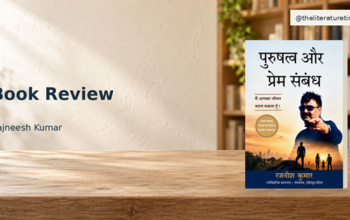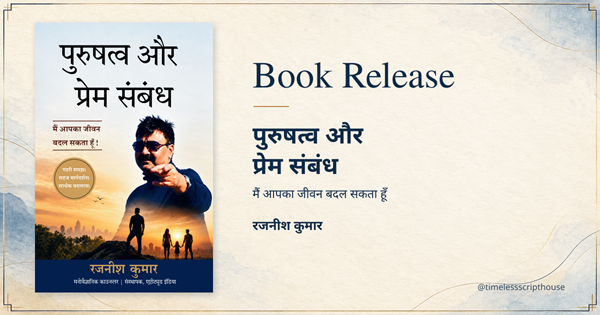
Rajneesh Kumar brings questions about masculinity, emotional understanding and intimate relationships into focus with his Hindi book Purushatva aur Prem Sambandh (पुरुषत्व और प्रेम संबंध). Bearing the subtitle Main Aapka Jeevan Badal Sakta Hoon (मैं आपका जीवन बदल सकता हूँ), the work addresses men who are trying to make sense of difficult relationships and consequential personal choices. Its central concern is the distance between the responsibilities men are taught to fulfil and the emotional questions they may encounter without having had an open conversation about them.
The book’s central premise begins with a familiar sequence of expectations: study, earn a living and become a good son. It then turns to an area that it presents as receiving less direct preparation: understanding a partner and recognising what happens within a relationship. That starting point gives the book a specific focus. Rather than treating personal achievement as a complete preparation for adult life, Kumar directs attention to the decisions, habits and uncertainties that accompany emotional commitment. The emphasis is on the private questions that can remain even when a person has met the expectations placed on him.
One of those questions concerns how a man understands the woman with whom he is considering sharing his life. The book places this process before the decision to make a lasting commitment, giving relationship understanding a role in the choice itself. The subject therefore extends beyond responding to a crisis after it has happened. It also concerns the assumptions a person brings to a relationship and the attention given to understanding another individual. For readers considering a serious partnership, this is one of the clearest points of relevance in the book’s stated purpose.
Patterns of behaviour formed in childhood are another part of the discussion. Kumar’s stated focus includes habits that can recur across a person’s relationships, drawing attention to their own behaviour as well as that of a partner. This adds a reflective dimension to a subject that could otherwise be framed solely around choosing the right person. The stated concern is with recognising recurring patterns and considering how earlier experiences may enter later relationships. It places self-understanding alongside the effort to understand someone else, without presenting the two as separate concerns.
Understanding difficult relationship dynamics
The distinction between affection and control is a prominent theme in the book’s presentation. The book asks how a reader can understand the difference between being loved and being directed according to someone else’s wishes. It also raises the question of how otherwise thoughtful people can become caught in emotional manipulation. It approaches these questions from a male reader’s perspective. Their significance lies in the uncertainty they describe: a relationship may involve attachment and commitment while still leaving a person unsure about the meaning of the behaviour he encounters.
The book also turns to marriage and the pressures that can weaken it from within. It considers relationship difficulty before the moment of separation, asking what may be happening inside a partnership before an eventual breakdown. Read alongside its attention to repeated habits and emotional influence, this places marriage within a broader examination of relationship dynamics. The intended conversation is relevant both to men reviewing a troubled relationship and to those who want to think more carefully about a long-term commitment before reaching a point of serious conflict.
Breakup and its effect on a man’s mind form a further part of the stated subject. This experience sits alongside questions about marriage, emotional manipulation and choosing a partner. The book is presented as a conversation for a man going through a difficult period and looking for a candid account of what he is facing. This focus brings emotional distress into the discussion of masculinity, with attention to the reader’s need to understand an experience rather than simply move past it. The emphasis remains on the book’s perspective on relationships and personal understanding.
Another question concerns effort and respect: why might doing more for an unsuitable partner fail to produce the regard a person expects? The book treats this as part of the difficulty of interpreting one’s own investment in a relationship. It invites attention to the gap between what someone gives and what that effort appears to mean within the partnership. Its concern is the individual relationship and the reader’s understanding of his experience. It contributes to the book’s focus on situations in which commitment alone does not resolve a man’s uncertainty.
The intended writing approach is direct and practical. Kumar presents the work as a conversation that its reader may not previously have had, and distinguishes its purpose from brief encouragement or reassurance. Its stated ambition is to engage with uncomfortable questions that arise during difficult periods. That positioning helps explain the book’s intended audience: men seeking a more deliberate way of thinking about a partner, a strained marriage or the aftermath of a relationship. Its Hindi-language presentation places these subjects within reach of readers who prefer to engage with personal and emotional questions in Hindi.
A background in psychological counselling
Kumar’s professional background provides context for this choice of subject. According to his author biography, he is a psychological counsellor based in Chandigarh, India, with more than 25 years of experience in the field. He is the founder and director of Aptitude India and is associated with IPAT, the Institute of Personality and Aptitude Testing. These details locate his work within counselling and the practical interpretation of human behaviour. They also explain the connection between the book’s relationship concerns and his wider professional interest in helping people understand decisions and difficulties in their lives.
His biography also describes work with thousands of people in India and abroad, across circumstances that include education, employment and personal relationships. Among those identified are students making career decisions, professionals facing relationship difficulties, couples approaching divorce and men beginning again after major personal upheaval. This range is relevant to the book’s focus because it places relationship questions alongside other decisions that shape adult life. His emphasis on explaining psychology in accessible, practical terms is consistent with the book’s aim of having a clear conversation with readers facing difficult emotional circumstances.
His public communication also includes content on relationships, male psychology, career guidance and mental health through @aptitudeindia on Instagram and YouTube. His stated perspective centres on understanding psychology honestly and applying it practically, rather than concentrating on declaring a person right or wrong. That perspective offers a useful context for the questions introduced in Purushatva aur Prem Sambandh. The book’s presentation directs attention to recognising behaviour and making sense of personal experience, with its primary reader being a man seeking clarity about the relationships that matter to him.
Purushatva aur Prem Sambandh brings together questions about choosing a partner, recognising repeated behaviour and understanding the strain of difficult relationships. For Hindi readers interested in Kumar’s counselling-informed perspective, its potential relevance rests in this sustained attention to emotional life. The book introduces a conversation about the preparation men receive for responsibility and the understanding they may still seek when love, marriage or separation becomes difficult.