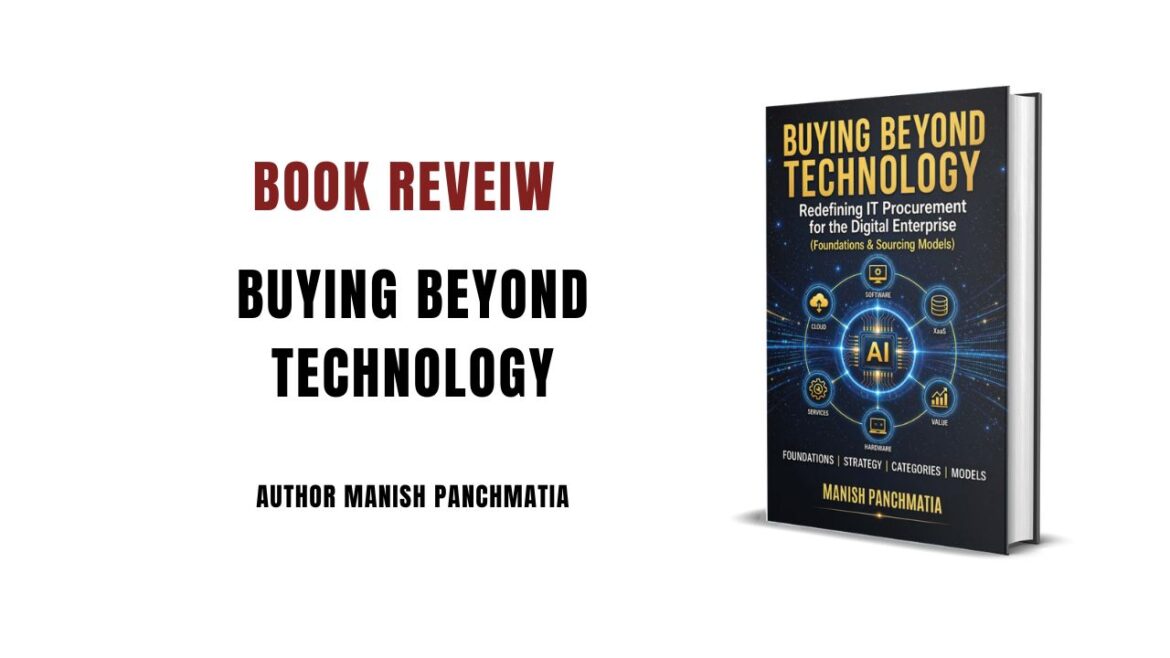
Title: Buying Beyond Technology
(A thoughtful, structured guide to understanding IT procurement in the digital era)
In an age where technology decisions can define the success or failure of an organization, Buying Beyond Technology arrives as a timely and necessary read. What makes this book stand out is not just its subject matter, but the clarity and depth with which it approaches a domain that is often misunderstood—even by professionals working within it.
At its core, the book challenges a long-standing misconception: that procurement is merely a transactional function focused on cost. Instead, it reframes IT procurement as a strategic capability—one that sits at the intersection of business value, technology architecture, and risk management. This shift in perspective is not presented as a theoretical argument, but as a practical reality shaped by the digital transformation of modern enterprises.
From the very beginning, the tone of the book is structured, calm, and deliberate. It does not rush into jargon-heavy explanations or overwhelming frameworks. Instead, it builds a strong foundation by first explaining how procurement evolved over time—from simple purchasing activities to a more disciplined and strategic function. This historical context is particularly valuable because it helps readers understand why traditional procurement models exist and why they are no longer sufficient in today’s technology-driven environment.
One of the most compelling aspects of the book is its ability to explain complexity without oversimplifying it. IT procurement is inherently complicated—it involves evolving requirements, long-term vendor relationships, subscription-based pricing models, and a constantly changing technology landscape. Rather than trying to “dumb down” these challenges, the author acknowledges them and provides structured ways to think through them.
A key theme that runs throughout the book is the idea that technology is no longer just a support function—it is a core business capability. This insight has significant implications. When organizations invest in cloud platforms, SaaS solutions, or digital ecosystems, they are not just buying tools; they are shaping how their business operates, scales, and competes. Procurement decisions, therefore, influence far more than cost—they impact resilience, compliance, innovation, and long-term value.
The book also does an excellent job of highlighting the limitations of traditional procurement models. In stable environments—where requirements are fixed and suppliers compete primarily on price—traditional methods like competitive bidding and fixed contracts work well. However, in dynamic technology environments, these approaches can become restrictive. Requirements evolve, solutions are co-created with vendors, and value is realized over time rather than at the point of purchase. Recognizing this shift is one of the book’s strongest contributions.
Another standout feature is the emphasis on vendor ecosystems. Modern organizations rarely rely on a single technology provider. Instead, they operate within complex networks of vendors, each contributing to different aspects of the digital infrastructure. Managing these ecosystems requires coordination, foresight, and a deep understanding of dependencies—something the book explores with clarity and practical insight.
The writing style deserves special mention. It is professional yet accessible, structured yet readable. The repetition of key ideas across chapters—something the author explicitly acknowledges—is not redundant but reinforcing. It mirrors how learning actually happens in complex domains: through revisiting concepts in different contexts until they become intuitive.
The book is also highly inclusive in terms of its audience. While it is clearly valuable for procurement professionals looking to specialize in IT and digital sourcing, it is equally relevant for technology leaders, finance professionals, and even legal or compliance teams. This cross-functional relevance reflects the reality of modern organizations, where procurement decisions are rarely made in isolation.
One of the most practical aspects of the book is its focus on thinking frameworks rather than rigid rules. It does not attempt to provide one-size-fits-all solutions. Instead, it equips readers with the mental models needed to approach different sourcing scenarios with clarity and confidence. This makes the book not just informative, but genuinely useful in real-world decision-making.
However, the book is not without its challenges. For readers expecting quick tips or simplified checklists, the structured and layered approach may feel dense at times. It requires patience and engagement. But this is less a flaw and more a reflection of the subject itself—IT procurement is complex, and any attempt to truly understand it will require effort.
Another subtle but important strength is the book’s neutrality. It does not push a specific methodology or proprietary framework. Instead, it focuses on building understanding. This makes it adaptable across industries and organizational contexts, which is especially important given how varied technology environments can be.
Overall, Buying Beyond Technology is not just a book—it is a capability-building resource. It encourages readers to move beyond surface-level thinking and engage with the deeper implications of technology sourcing. In doing so, it elevates procurement from a supporting function to a strategic enabler of business success.
For anyone involved in technology decisions—whether directly or indirectly—this book offers a valuable perspective. It does not promise easy answers, but it provides something far more important: the ability to ask better questions, think more clearly, and make more informed decisions.