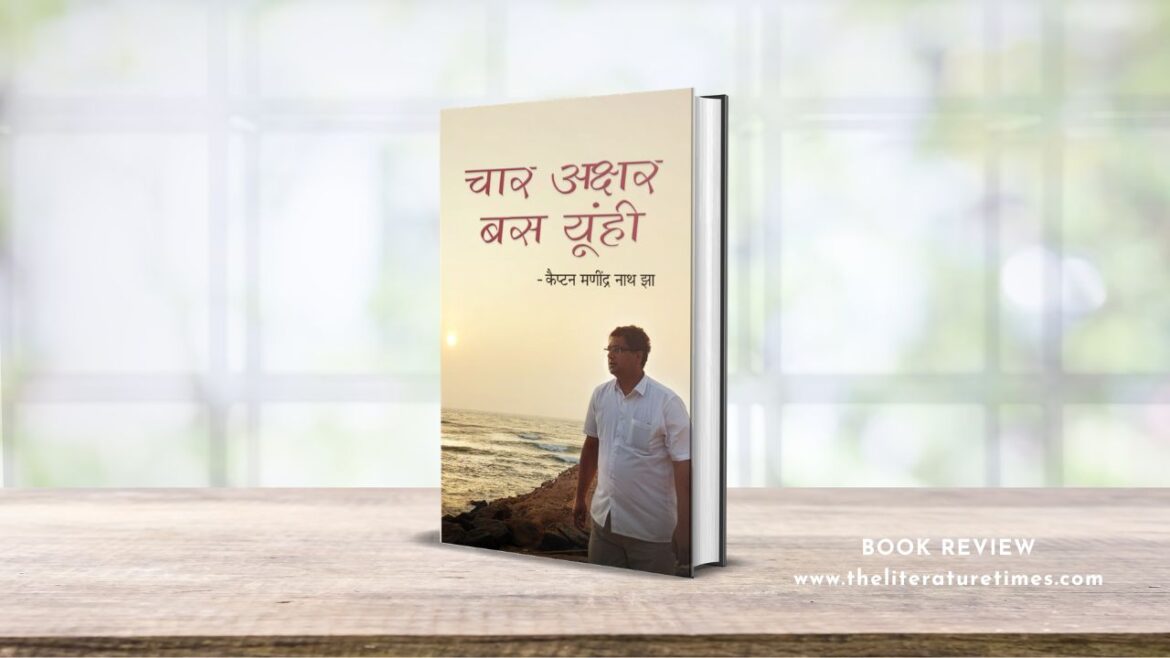
Char Akshar – Bas Yun Hi by Capt. Manindra Nath Jha is a reflective and emotionally resonant poetry collection that attempts to capture the many shades of human life through simple yet meaningful expression. The title itself suggests modesty and spontaneity—“four words, just like that”—but the poems within carry a depth that goes far beyond casual reflection. Through thirty-five poems, the author gently explores the emotional, moral, and philosophical dimensions of everyday human experiences, presenting them in a language that remains accessible while still touching deeper layers of thought and feeling.
One of the most striking qualities of the book is its sincerity. The poems do not attempt to impress through complex metaphors or ornate language; instead, they rely on honesty of emotion and clarity of thought. This approach makes the collection relatable to a wide range of readers. Themes such as hope and despair, love and duty, struggle and perseverance, and moments of quiet introspection appear throughout the book. Rather than presenting life as a linear journey, the poems reflect the constant ebb and flow of human emotions. Some poems contemplate the quiet strength that comes from patience and discipline, while others highlight the fragility of human relationships and the importance of empathy.
The author’s background plays an important role in shaping the tone of the collection. Having served as an Army officer and later working in various responsible security roles, Capt. Manindra Nath Jha brings a sense of discipline, observation, and realism to his writing. His professional journey—spanning more than three decades—appears to have provided him with numerous encounters with human nature, responsibility, and duty. These experiences subtly influence the poems, giving them a grounded perspective. The verses often convey a sense of quiet resilience and moral clarity, qualities that are commonly associated with a life shaped by service and responsibility.
Another noteworthy aspect of the collection is its spiritual undertone. The poems frequently encourage readers to pause and reflect on life’s deeper meanings. Instead of offering definitive answers, they invite contemplation. Many of the poems resemble an internal dialogue where the poet examines his own thoughts and emotions while simultaneously engaging the reader in the same process. This reflective style creates a meditative atmosphere, making the book suitable for slow, thoughtful reading rather than hurried consumption.
The language of the poems remains simple, almost conversational at times, yet it carries emotional weight. This simplicity allows the ideas to reach readers directly without the barrier of linguistic complexity. In many places, the author uses everyday imagery and straightforward statements to convey philosophical insights about life. The effect is that readers may find themselves recognizing fragments of their own experiences within the lines. The poems therefore function not only as expressions of the poet’s thoughts but also as mirrors reflecting universal human emotions.
Structurally, the poems maintain a concise and focused form. Each piece tends to revolve around a central idea or emotional moment, allowing the reader to absorb its message clearly. The brevity of many poems contributes to their impact, as they often leave space for interpretation. Instead of elaborating excessively, the poet frequently suggests a thought and allows the reader’s imagination to complete it. This quality aligns well with the spirit of reflective poetry, where meaning emerges gradually through contemplation.
Beyond personal reflection, the collection also carries subtle social and ethical observations. Some poems hint at the importance of values such as honesty, perseverance, compassion, and responsibility. These reflections feel natural rather than didactic, arising from lived experience rather than theoretical discussion. The poet’s voice remains calm and introspective, never forceful, which makes these messages more persuasive and authentic.
In terms of readership, the book is particularly suitable for those who appreciate poetry as a medium for quiet introspection rather than dramatic experimentation. Readers who enjoy thoughtful reflections on life’s realities may find the collection especially meaningful. The poems encourage moments of pause, making the book well suited for reading in short sittings where each poem can be absorbed individually.
Overall, Char Akshar – Bas Yun Hi stands as a sincere and thoughtful poetic effort. It reflects the life experiences, emotional awareness, and disciplined outlook of its author while presenting them in a gentle and accessible literary form. The collection does not seek grandeur or stylistic complexity; instead, its strength lies in authenticity and emotional clarity. Through simple yet evocative verses, Capt. Manindra Nath Jha invites readers to reflect on the quiet truths of life, making the book a meaningful addition for readers who value poetry as a pathway to self-reflection and inner dialogue.
Bottom of Form