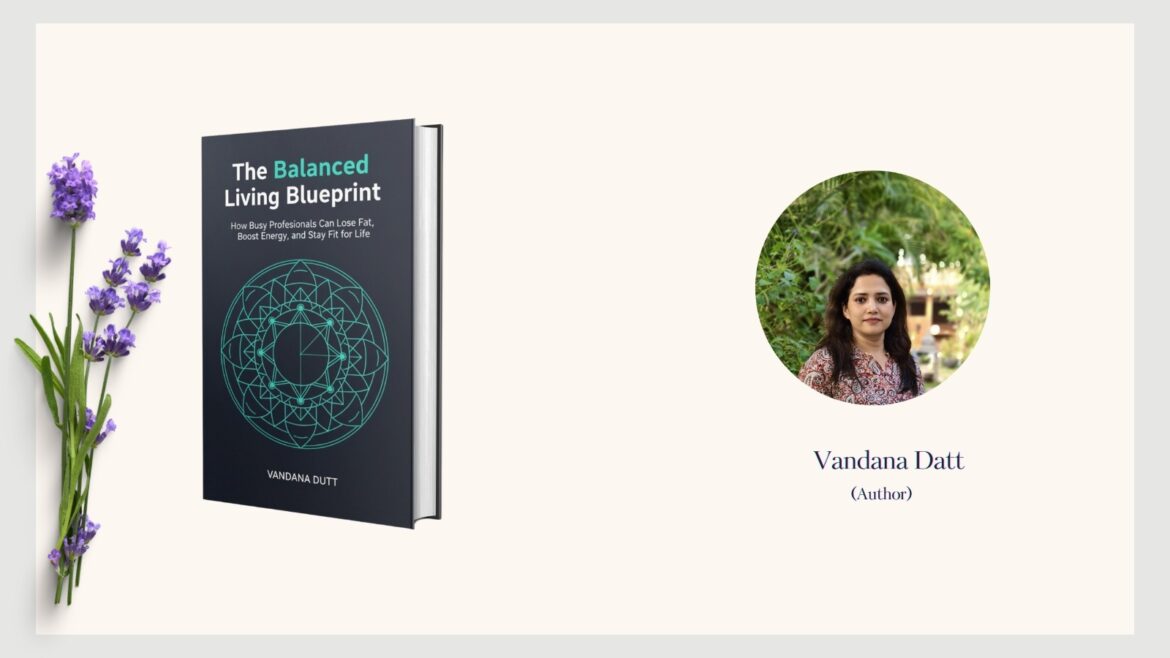
In a world that constantly celebrates productivity, speed, and visible achievement, many people silently struggle with exhaustion, imbalance, and a growing disconnection from their own wellbeing. Amid this reality, Vandana Dutt emerges as a compassionate and authentic voice, offering not just advice but lived wisdom drawn from her own deeply personal journey. Her book, The Balanced Living Blueprint, is not merely about physical health or weight loss—it is about reclaiming energy, identity, and a sustainable relationship with oneself.
What makes Vandana’s work particularly powerful is its honesty. She does not position herself as someone who always had the answers. Instead, she speaks openly about her own years of chronic exhaustion, emotional overwhelm, and the frustration of struggling with her health despite trying conventional solutions. Like many people, she followed diets, attempted strict routines, and relied on bursts of motivation, only to find herself returning to the same cycle of fatigue and discouragement. Her experience reflects a truth that resonates with millions: the problem is often not a lack of discipline, but systems that do not support human sustainability.
Rather than continuing to chase temporary fixes, Vandana began to ask deeper questions. She shifted her focus from appearance to energy, from restriction to alignment, and from pressure to understanding. This shift marked the beginning of her transformation—not just physically, but emotionally and mentally. Over time, she rebuilt her life around rhythms that supported her nervous system, respected her body’s signals, and allowed her to function with clarity instead of constant strain.
Her philosophy challenges one of the most common myths in modern wellness culture—the idea that motivation is the foundation of lasting change. Vandana explains that motivation is inherently unstable. It fluctuates based on emotions, circumstances, and mental state. Systems, however, create consistency. By designing environments, routines, and habits that support wellbeing even on difficult days, individuals can create sustainable progress without relying on constant emotional drive.
Central to her approach is the idea of Energy Alignment. Instead of forcing the body into rigid schedules, she emphasizes restoring natural rhythms through proper sleep, mindful nutrition timing, hydration, and nervous system regulation. This perspective reframes health as something supportive and cooperative, rather than something that must be controlled through force or deprivation. It encourages individuals to listen to their bodies instead of overriding them.
Another key aspect of her work is Consistency Mastery, which focuses on building habits that are realistic and adaptable. Vandana recognizes that life is unpredictable. Stressful days, emotional challenges, and unexpected disruptions are part of human experience. Rather than expecting perfection, her framework teaches people how to maintain gentle consistency. This removes the guilt and self-criticism that often derail progress and replaces it with resilience and self-trust.
Perhaps the most transformative element of her philosophy is Lifestyle Integration. Instead of treating health as a separate task that must be completed, she encourages people to integrate wellbeing into their identity. When health becomes part of how someone lives, rather than something they temporarily pursue, balance becomes natural rather than forced. This shift reduces internal conflict and creates a sense of stability that extends into every area of life.
Vandana’s work also addresses the emotional dimension of health, which is often overlooked. She acknowledges that exhaustion is not always physical. Emotional stress, unresolved feelings, and constant mental pressure can drain energy just as profoundly. By encouraging reflection, awareness, and compassionate self-understanding, she helps readers rebuild trust with themselves. This emotional healing becomes the foundation upon which physical wellbeing can grow.
What distinguishes Vandana’s voice is her empathy. She does not present health as a rigid standard or a moral obligation. Instead, she presents it as a form of self-respect and self-connection. Her message reassures readers that they are not failures for struggling, but human beings who may have been operating within systems that did not support their needs.
Her journey from exhaustion to balance also represents a broader shift in how wellness is understood. Rather than chasing extremes or quick transformations, she advocates for steady, meaningful change rooted in awareness and sustainability. Her story demonstrates that true health is not about dramatic overnight success, but about quiet, consistent alignment with one’s own rhythms.
Through her writing, coaching, and personal example, Vandana offers more than guidance—she offers hope. She shows that it is possible to move from survival mode into a state of calm energy and clarity. She reminds readers that balance is not a distant ideal reserved for a few, but an achievable reality built through small, intentional changes.
Ultimately, her work is an invitation. It invites individuals to step away from cycles of pressure and exhaustion and return to themselves. It invites them to replace force with understanding, guilt with compassion, and chaos with alignment. Her message is simple yet profound: wellbeing is not something to chase—it is something to rebuild, patiently and gently, until it becomes the natural foundation of one’s life.