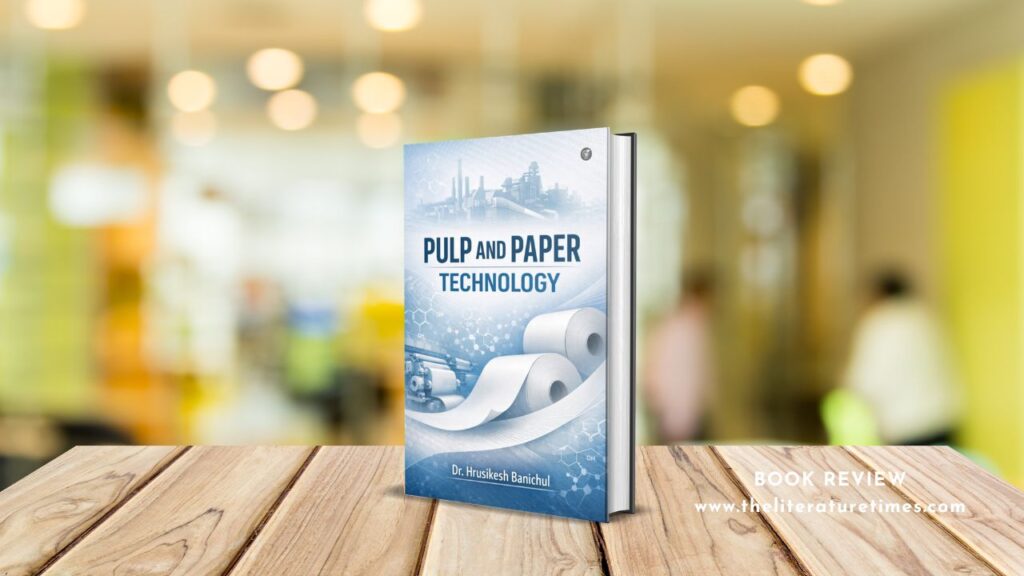
In Pulp and Paper Technology, Dr. Hrusikesh Banichul delivers an insightful and exhaustive exploration of one of the world’s oldest yet continually evolving industries — the pulp and paper sector. The book stands as a remarkable fusion of scientific precision and industrial relevance, offering both students and professionals a deep understanding of the fundamental and applied aspects of pulp and paper manufacturing.
Right from the opening chapters, the author provides a well-structured introduction to the historical background, classification, and chemistry of paper and paperboard. What makes the book distinct is its clarity in explaining the molecular and structural composition of raw materials — particularly the anatomy of wood and its primary components such as cellulose, hemicellulose, lignin, and extractives. This scientific foundation sets the stage for a nuanced comprehension of how raw materials behave during various stages of paper production.
Dr. Banichul’s systematic approach to describing pulping technologies demonstrates both academic depth and industrial awareness. The chapters on sulphite and kraft pulping are especially detailed, shedding light on reaction mechanisms, process parameters, and chemical balances that define efficient pulping operations. The inclusion of recent advancements in chemical recovery systems and sustainable practices — like black liquor processing and lignin valorization — ensures that the book remains relevant in an era increasingly focused on environmental stewardship and circular economy principles.
The sections dedicated to bleaching chemistry are another highlight. The author’s detailed discussion on conventional and advanced bleaching agents, reaction kinetics, and eco-friendly alternatives reflects his expertise in sustainable chemical processes. Equally noteworthy is the treatment of stock preparation, additives, fillers, and dyes — components that directly affect paper quality, printability, and performance. Dr. Banichul successfully bridges the gap between laboratory science and large-scale industrial applications, making this work an indispensable resource for researchers and practitioners alike.
Beyond technical knowledge, Pulp and Paper Technology carries the author’s broader vision for sustainable industrial development. His emphasis on waste utilization, green chemistry, and eco-friendly manufacturing practices resonates strongly with current global efforts toward carbon neutrality and resource conservation.
The author’s academic and professional background further enhances the credibility of this work. With over 15 years of diverse experience spanning academia, research, and industry — and a Ph.D. from Indian Institute of Technology (Indian School of Mines) Dhanbad — Dr. Banichul brings a rare blend of theoretical insight and hands-on expertise. His contributions to catalytic synthesis, process development, and environmental monitoring underline the practical wisdom embedded in every chapter of this book.
In essence, Pulp and Paper Technology is more than a technical manual; it is a testament to the synergy of science, technology, and sustainability. For students of chemical engineering, industrial chemistry, and environmental sciences, it provides an invaluable foundation. For industry professionals, it serves as a ready reference and a source of innovation. Dr. Banichul’s work will undoubtedly become a cornerstone text in the field, inspiring future research and sustainable practices in pulp and paper technology.







Your perspective matters
Share your thoughts respectfully. Comments are moderated.