New Zealand moved into a commanding position in the second Test against India at Hagley Oval, Christchurch, on Sunday, November 29, 2026. At the close of the third day’s play, the hosts were 133/3 in their second innings, an overall advantage of 243 runs. Dhruv Jurel’s 88 had earlier helped India reach 246 in reply to New Zealand’s first-innings 356, while Prasidh Krishna was brought into the match as a concussion replacement for Akash Deep.
With two scheduled days remaining, India face the challenge of restricting New Zealand’s lead before attempting a fourth-innings chase. The series remains level after the drawn opening Test in Wellington.
IND vs NZ 2nd Test Day 3: Score at stumps
| Innings | Score |
|---|---|
| New Zealand first innings | 356 all out (116.3 overs) |
| India first innings | 246 all out (86.1 overs) |
| New Zealand second innings | 133/3 (46 overs) |
| New Zealand overall lead | 243 runs |
Match status: stumps on Day 3, November 29, Christchurch local date. The match is ongoing, and India’s final target has not yet been set. The latest innings figures are available in the full match scorecard.
Dhruv Jurel gives India a route back into the contest
India were in danger of conceding a substantial first-innings deficit when Anshul Kamboj fell with the score on 117. Jurel, batting at No. 7, eventually finished with 88 from 170 deliveries, including 14 fours. He received support from Akash Deep (29) and debutant Gurnoor Brar (10).
India added 129 runs after the seventh wicket fell. The eighth-wicket partnership was worth 46 and the ninth produced 64. That recovery had a practical consequence: it took India beyond the follow-on threshold, obliging New Zealand to bat a second time rather than having the option of immediately sending India back in.
Kyle Jamieson finished with 4/69, while Matt Henry, Jacob Duffy and Nathan Smith claimed two wickets each. Jurel’s contribution was especially valuable given that India’s highest individual score among its first six batters was KL Rahul’s 25.
Prasidh Krishna replaces Akash Deep in Christchurch
India’s bowling resources changed during the third day. The ICC’s official Day 3 report carried the BCCI’s confirmation that Akash Deep had been struck on his helmet while batting and that Prasidh Krishna had replaced him as a concussion substitute. The BCCI medical team was monitoring Akash Deep.
The change is significant because Akash Deep was India’s most successful bowler in the first innings, returning figures of 5/99. Prasidh is eligible to bowl as the approved replacement; by stumps he had completed ten overs for 29 runs without a wicket.
A concussion replacement differs from an ordinary substitute fielder because the approved replacement can participate in the match as a player. The announcement concerns this Test; no conclusion about Akash Deep’s availability for future matches should be drawn from it alone.
Bumrah finds wickets, but New Zealand retain control
Jasprit Bumrah dismissed Tom Latham for eight and Henry Nicholls for 22. Washington Sundar accounted for Devon Conway, whose 51 came from 97 balls. New Zealand then rebuilt from 93/3 through Rachin Ravindra and Daryl Mitchell.
| Selected Day 3 performances | Figures |
|---|---|
| Dhruv Jurel (India) | 88 off 170 balls |
| Kyle Jamieson (NZ, first innings bowling) | 4/69 |
| Devon Conway (NZ) | 51 off 97 balls |
| Rachin Ravindra (NZ) | 46 not out |
| Jasprit Bumrah (India, second innings bowling) | 2/34 |
| Washington Sundar (India, second innings bowling) | 1/14 |
For India, the key difference between the two innings is that Bumrah has now made inroads with the new ball. But New Zealand have seven wickets available and can choose how aggressively to build their advantage.
What India need on Day 4
Monday, November 30, will be the fourth day of the Test. India’s first objective is to take wickets before New Zealand can set a considerably larger target. For the hosts, the decision will be whether to accumulate more runs or accelerate to leave enough time to dismiss India.
Rain is a possible complication on the scheduled final day, according to Reuters’ November 29 reporting. A forecast is not a confirmed interruption, however, and neither side can yet know how many overs will be available.
The fourth-innings equation will depend on New Zealand’s eventual total. If they were to declare at their overnight score, India would need 244 to win; every additional run would increase that target by one. That is a hypothetical calculation, not the target announced for the match.
Follow the official ICC match centre for updates. Readers can also revisit our Day 1 Christchurch report and Wellington Test result and WTC context.
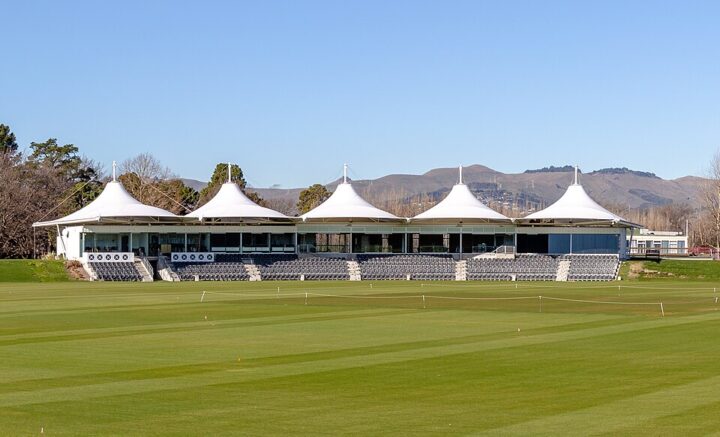
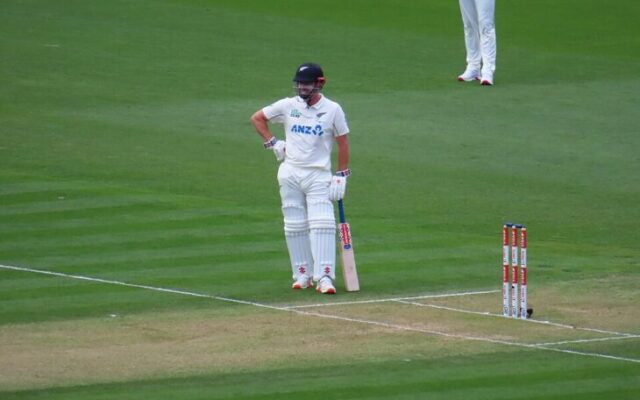
Featured image: archival photograph of Hagley Oval, 6 August 2019, by Michal Klajban, cropped by Schwede66 and resized; Wikimedia Commons, CC BY-SA 4.0. It does not depict the match on November 29, 2026.




Your perspective matters
Share your thoughts respectfully. Comments are moderated.