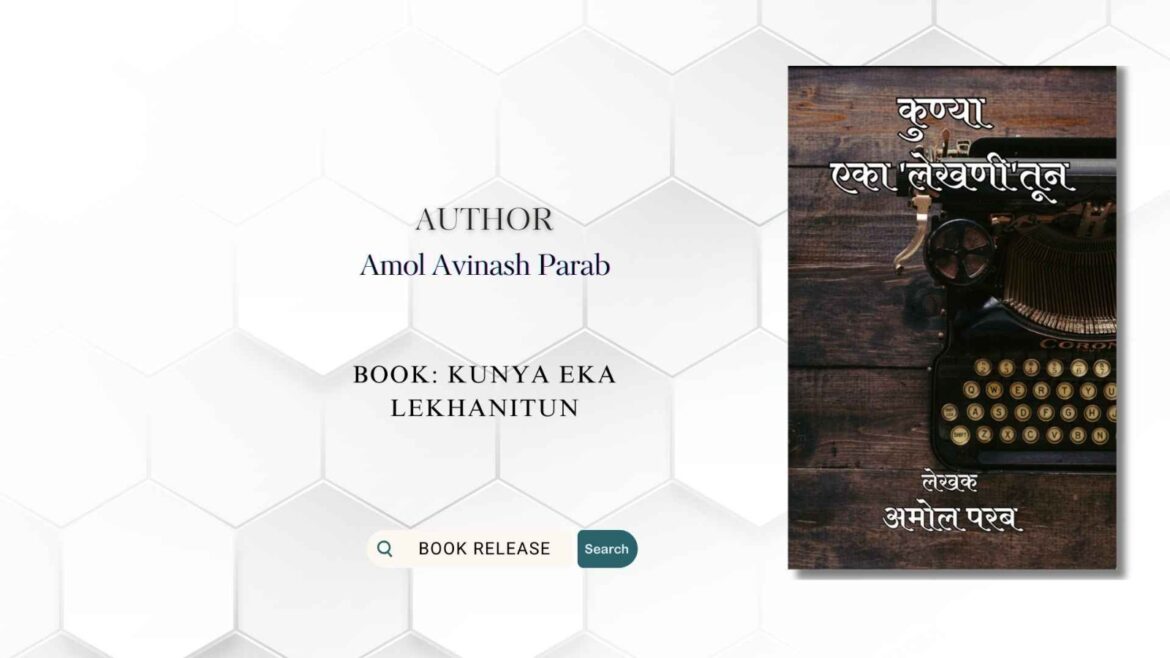
Marathi literature welcomes a fresh and heartfelt contribution in the form of Kunya Eka Lekhanitun, a collection of eighteen diverse and emotionally rich short stories penned by Amol Avinash Parab. Known for his balanced dual life as a civil engineer by profession and a passionate writer by calling, Amol Parab brings readers stories that resonate across genres, generations, and emotional spectrums.
The anthology opens with Eka Whatsapp chi Gosht, a tender tale exploring the misunderstood world of children and technology through little Rashmi and her innocent late-night chats. This perspective on childhood sensitivity and expression sets the tone for the stories that follow—each a window into complex emotional landscapes. In Refuge Area and Mi Nahi Bolnar Ja, the fragile inner world of children is carefully drawn, often prompting readers to question the adult approach to communication and understanding.
Themes mature with the stories, moving beyond childhood into narratives that touch on everyday relationships, unsaid emotions, and societal indifference. Nishabd, for instance, deals with silence in a marriage—short, yet immensely powerful in its portrayal. Andaz, set during the pandemic, captures the isolation and quiet struggles of two people trying to cope, reflecting how assumptions can overpower our sense of self. Guilty Mind and Ugly Duckling uncover internal battles, making readers introspect long after the story ends.
What makes this anthology stand out is the range of tones and textures. Horror and thrill find a place in stories like Final Verdict and A Tempting Curse, with vivid settings and haunting sequences. Meanwhile, She Moves It Like and Woh Humsafar Tha explore warmth in human connections, with the latter beautifully unfolding a father-son bond rarely written about with such honesty.
One of the unique features of this book is its song-inspired stories. Narratives like Aapki Aankhon Mein Kuch, Zara Zara Mehekta Hai, and Maana Ke Hum Yaar Nahi reinterpret popular songs into heartfelt, story-driven experiences. These tales breathe new life into melodies we hum daily, transforming them into intimate literary journeys.
Each story in Kunya Eka Lekhanitun carries its own identity, some captivating with plot, others with mood and reflection. The anthology offers a mix of relatable characters, emotional depth, and thematic richness that make it more than just a read—it becomes an experience.
Amol Parab’s evolution as a writer is evident in the pages of this book. From his debut collection Thrill to a Cannes-nominated short film adaptation of Refuge Area, his storytelling has consistently grown in both vision and emotional intensity. What remains constant, however, is his sincerity as a writer—his words are not just for entertainment, but for evoking thought, empathy, and a new lens to see the world through.
For readers looking for stories that make them think, feel, and sometimes pause in silence, Kunya Eka Lekhanitun offers a literary journey worth taking. With its seamless blend of imagination, reality, and heartfelt emotion, this collection is a commendable addition to contemporary Marathi literature.