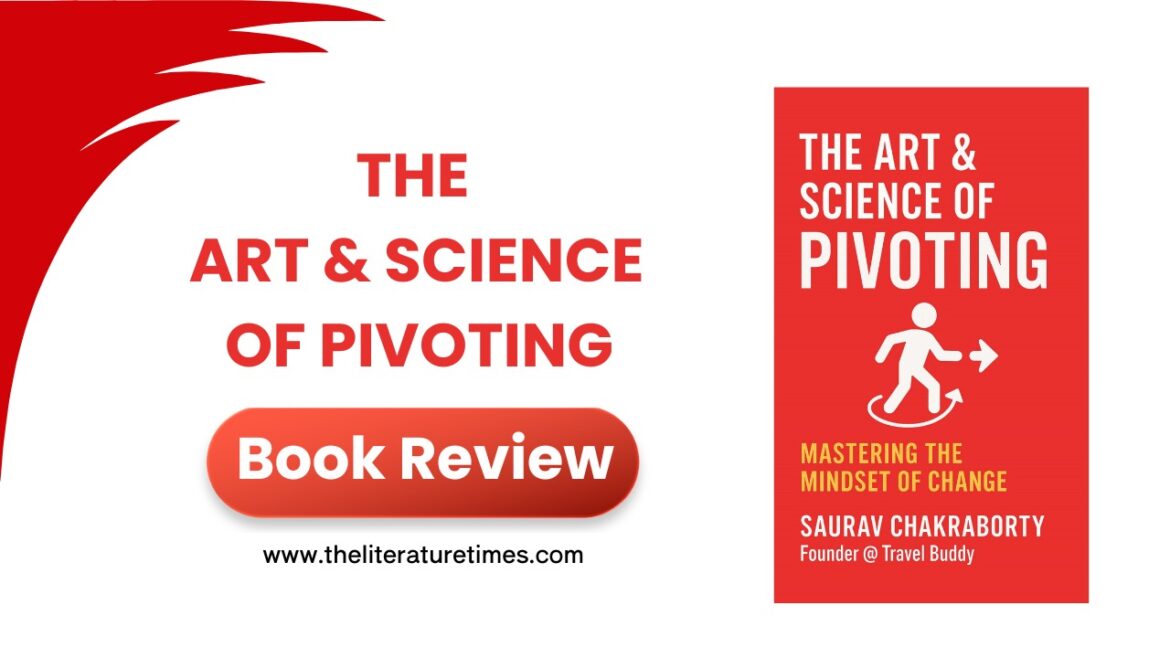
The Art & Science of Pivotingreads like a quiet rebellion against the idea that life must be linear, coherent, and predictable. In a world that prizes consistency and upward trajectories, this book makes a radical claim: that change, when embraced consciously, is not a failure of planning but a deeper form of wisdom.
The author reframes pivoting not as an emergency response to crisis, but as a natural rhythm of growth. Just as seasons shift and identities evolve, so too must our ambitions, roles, and definitions of success. This perspective gives the book a timeless quality — it speaks not only to entrepreneurs and professionals, but to anyone navigating transitions of identity, purpose, or belonging.
What makes the book compelling is its layered approach. On the surface, it addresses practical questions about decision-making, timing, and responsiveness. But beneath that lies a deeper inquiry into self-awareness, values, and inner alignment. Pivoting becomes a spiritual as much as a strategic act — a moment where one listens closely to what no longer fits and what is quietly asking to be born.
The narrative resists the culture of instant answers. Instead of offering templates, the author offers reflection. Instead of prescriptions, the book offers permission — permission to pause, to doubt, to feel lost, and to redefine success on one’s own terms. This creates a rare sense of psychological safety for the reader, who is not pressured to perform transformation, but invited to understand it.
Language plays an important role in this invitation. The prose is thoughtful and unhurried, allowing ideas to unfold rather than rush toward conclusions. The reader is not pushed forward; they are walked alongside. This stylistic patience mirrors the book’s core message — that meaningful change cannot be forced, only cultivated.
The emotional intelligence of the book is especially noteworthy. It recognizes that pivoting involves not only external shifts but internal mourning — for abandoned dreams, expired identities, and outdated narratives about who we are supposed to be. By acknowledging this grief, the book validates experiences that are often ignored in professional or self-help discourse.
Perhaps the most profound contribution of The Art & Science of Pivoting is its challenge to certainty itself. It invites readers to loosen their grip on fixed futures and to trust in responsive, evolving paths. In doing so, it does not diminish ambition — it refines it, making it more humane, sustainable, and aligned.
This is not a book for those seeking shortcuts. It is a book for those seeking honesty. For those who sense that the old map no longer fits, but who are not yet ready for a new one. In that in-between space — uncertain, fragile, and fertile — this book offers something rare: understanding.
The Art & Science of Pivotingdoes not tell you how to win. It teaches you how to listen — and sometimes, that is the most powerful pivot of all.
Book: The Art & Science Of Pivoting
Author: Saurav Chakraborty
Publisher: Evincepub Publishing