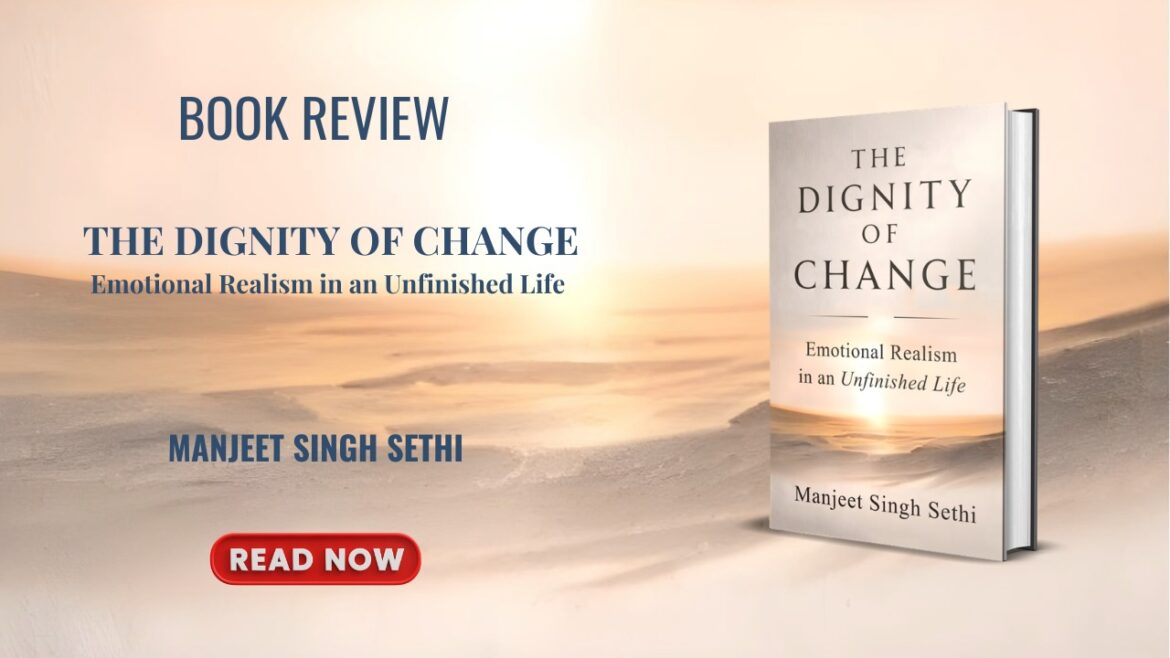
- Title: The Dignity of Change: Emotional Realism in an Unfinished Life
- Author: Manjeet Singh Sethi
- ISBN: 978-93-4726-354-5
- Publisher: Evincepub Publishing
In today’s fast-moving world, people are constantly told to improve themselves, move on quickly, and find clear answers to life’s problems. Self-help books often promise success, happiness, and transformation if readers follow certain steps. But The Dignity of Change: Emotional Realism in an Unfinished Life by Manjeet Singh Sethi offers a very different and refreshing perspective. Instead of promising quick solutions, the book invites readers to sit with life’s uncertainties and understand their emotional experiences with honesty and patience.
This reflective nonfiction work is thoughtful, calm, and deeply human. It speaks about life as it really is—unfinished, uncertain, and constantly changing. Rather than trying to “fix” people, the book encourages them to accept their experiences and develop emotional steadiness. In simple and meaningful language, the author reminds us that change is not always dramatic or complete. Sometimes, dignity lies in simply learning to stay present with what life brings.
A Different Kind of Self-Reflection
One of the most interesting things about this book is that it does not follow the usual style of motivational or self-help writing. Many books in this category focus on goals, improvement, and success. They often promise that readers can completely transform their lives if they follow certain rules.
However, The Dignity of Change moves in a quieter direction. The author does not try to push readers toward constant growth or dramatic change. Instead, he encourages reflection and emotional understanding. The book gently suggests that life is not always meant to be solved like a puzzle. Some experiences remain incomplete, and that is perfectly natural.
Through this approach, the book offers what the author calls “emotional realism.” This idea is central to the book. Emotional realism means acknowledging feelings as they are, without trying to rush through them or force a solution. Life is full of uncertainty, and emotions do not always come with clear answers. Accepting this truth can actually bring a sense of calm and maturity.
Understanding Life’s Transitions
The book explores many of the transitions that people experience during their lives. These include changes in identity, shifts in relationships, personal growth, ageing, and moments of solitude. Each of these experiences can bring confusion or emotional discomfort.
Instead of presenting these situations as problems to solve, the author looks at them with patience and understanding. He writes about how people often expect life to move smoothly from one stage to another. But in reality, change can be slow, unclear, and sometimes painful.
For example, relationships do not always end with clear explanations. Personal identities may evolve over time. Feelings may remain unresolved for years. The author does not try to simplify these experiences. Instead, he acknowledges that such situations are part of being human.
This honest approach helps readers feel less alone in their struggles. The book gently reminds us that uncertainty does not mean failure. Sometimes it simply means that life is still unfolding.
The Importance of Emotional Boundaries
Another thoughtful theme in the book is the idea of emotional boundaries. In modern life, people often feel pressured to meet expectations from family, society, and work. This pressure can lead to emotional exhaustion and confusion.
The author encourages readers to become more aware of their inner experiences and set healthy boundaries when necessary. This does not mean rejecting others or becoming distant. Instead, it means respecting one’s emotional limits and creating space for personal clarity.
By understanding boundaries, people can learn to protect their emotional well-being while still staying connected with others. This balanced approach reflects the book’s overall message: stability and dignity are more important than constant change.
Ageing and the Passage of Time
Ageing is another topic explored with sensitivity in this book. Many people feel anxious about growing older. Society often celebrates youth and productivity while ignoring the wisdom that comes with time.
In The Dignity of Change, ageing is presented as a natural part of life’s journey. The author does not treat it as something negative or frightening. Instead, he shows how the passage of time can deepen understanding and bring emotional maturity.
The reflections on ageing are calm and thoughtful. They encourage readers to appreciate life as it unfolds, rather than constantly worrying about what has been lost or what might come next.
Solitude and Inner Awareness
The book also talks about solitude, which is often misunderstood in modern society. Many people fear being alone because they associate solitude with loneliness. However, the author presents solitude as an opportunity for self-awareness and emotional clarity.
Spending time alone allows individuals to understand their thoughts and feelings more deeply. It creates space for reflection and inner balance. Instead of escaping from silence, the book encourages readers to welcome it.
This idea connects strongly with mindfulness practices. The author’s experience as a mindfulness practitioner is visible throughout the book. His reflections are calm, steady, and thoughtful, guiding readers toward greater awareness of their emotional lives.
Writing Style and Language
One of the strongest aspects of this book is its clear and simple writing style. The language is thoughtful but easy to understand. The author avoids complicated ideas and unnecessary technical terms. This makes the book accessible to a wide range of readers.
Each section feels like a quiet conversation rather than a lecture. The tone is gentle and reflective. Readers are not told what they must do. Instead, they are invited to pause, think, and explore their own experiences.
This calm style makes the book particularly suitable for slow reading. It is not a book that needs to be rushed. Readers may find themselves returning to certain passages again and again, reflecting on their meaning.
The Author’s Experience and Perspective
Manjeet Singh Sethi brings significant life experience to his writing. As a holistic life coach, mental health counsellor, and mindfulness practitioner, he has spent many years working with individuals and organisations. His professional background allows him to understand emotional challenges with empathy and depth.
He is also the author of Breathe: Mastering Mindfulness for Modern Living, which received the Rabindranath Tagore Award and has been archived in the National Library of India for its contribution to mindful living and contemporary thought.
In The Dignity of Change, this experience is visible in the thoughtful observations about human behaviour. However, the author does not present himself as an authority who has all the answers. Instead, he writes with humility, recognising that life remains unfinished for everyone.
A Companion Rather Than a Guide
Perhaps the most important message of this book is that it is not a guide to improvement. The author clearly states that the book does not promise transformation or personal success. Instead, it offers companionship for readers who are navigating uncertain moments in their lives.
This idea makes the book unique. Many readers may feel relief when they realise that they do not have to constantly improve or “fix” themselves. Sometimes, simply staying present with one’s experiences is enough.
By offering this perspective, the book encourages emotional acceptance and patience. It reminds readers that life does not always move in clear directions. Growth can happen quietly and slowly, without dramatic change.
Who Should Read This Book?
The Dignity of Change: Emotional Realism in an Unfinished Life is suitable for readers who enjoy reflective and thoughtful writing. It will particularly appeal to people who are going through periods of transition, uncertainty, or emotional change.
Readers who are interested in mindfulness, self-reflection, and personal growth without pressure will also find value in this book. It is not meant for those looking for quick solutions or step-by-step instructions. Instead, it is ideal for readers who appreciate calm and meaningful exploration of life’s deeper questions.
The book may also be useful for counsellors, coaches, and individuals working in mental health or personal development. Its ideas about emotional realism and dignity in change offer valuable insights into the human experience.
Final Thoughts
The Dignity of Change: Emotional Realism in an Unfinished Life by Manjeet Singh Sethi is a thoughtful and meaningful reflection on the realities of life. In a culture that often celebrates quick success and dramatic transformation, this book quietly reminds readers that life is rarely so simple.
Through gentle reflections on identity, relationships, ageing, boundaries, and solitude, the author encourages readers to approach their emotions with honesty and patience. Rather than forcing change, the book teaches the value of presence and acceptance.
Its simple language, calm tone, and thoughtful insights make it a comforting read for anyone navigating the uncertainties of life. More than anything else, the book reminds us that dignity does not come from solving every problem. Sometimes, dignity lies in staying present, accepting life as it unfolds, and recognising that every life story remains beautifully unfinished.
In this way, the book becomes not just something to read, but something to return to whenever life feels uncertain. It stands as a gentle reminder that even in the middle of change, it is possible to remain grounded, aware, and quietly hopeful.
Buy on Amazon : Click here