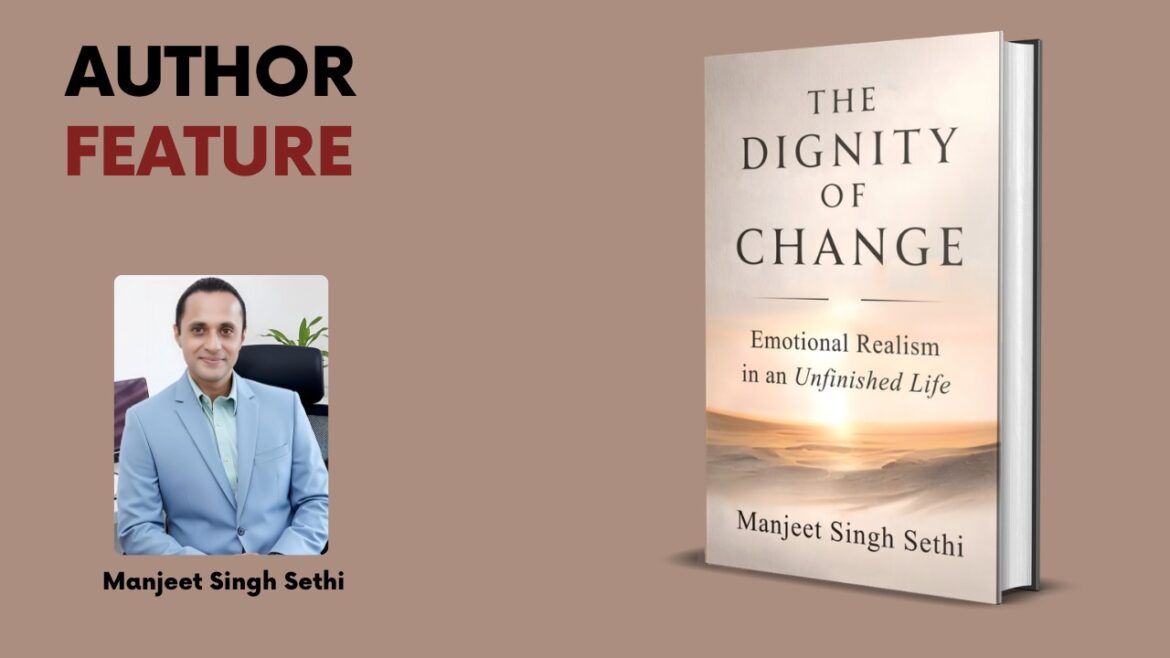
- Author: Manjeet Singh Sethi
- ISBN: 978-93-4726-354-5
- Publisher: Evincepub Publishing
- Finding Steadiness in an Unfinished Life
In today’s world, everyone seems to be running. People run after success, happiness, self-improvement, and a perfect version of life that may not even exist. Every day, social media and motivational messages tell us that we must constantly change ourselves, heal quickly, and move forward without looking back. If something breaks, we must fix it immediately. If life feels confusing, we must find the answer at once.
But real life is not always like that.
Many people experience moments where things do not make sense. A relationship changes. A job ends. A dream slowly fades. A person we once were begins to shift into someone new. In these moments, there is no clear solution, no quick advice, and no perfect ending.
This quiet and honest truth lies at the heart of The Dignity of Change: Emotional Realism in an Unfinished Life by Manjeet Singh Sethi. Instead of offering a guide to “fix” life, the book gently reminds readers that it is okay for life to remain unfinished.
A Different Way to Look at Change
Many books promise transformation. They promise that if we follow certain steps, we will become a better, happier version of ourselves. But this book takes a different path.
It does not rush the reader toward change. Instead, it invites the reader to sit quietly with life as it is.
Change, as the book explains, is not always dramatic. Sometimes it happens slowly, almost silently. A person may wake up one day and realise they no longer think or feel the same way they once did. Old roles fade. New responsibilities appear. Friendships evolve. Even our understanding of ourselves shifts with time.
These transitions can feel uncomfortable because they do not come with clear instructions.
The book calls this experience emotional realism—the ability to accept feelings and changes as they are, without forcing them into neat conclusions.
Living Without Perfect Answers
Many people grow up believing that life must have answers. If we work hard enough, reflect deeply enough, or search long enough, we will eventually understand everything.
But life rarely follows such a tidy pattern.
Sometimes we carry questions for years. A broken relationship may never fully explain itself. A decision made long ago may still feel uncertain. A person we loved may leave without giving closure.
Instead of trying to erase these unfinished stories, the book suggests something gentler: learning to live alongside them.
This does not mean giving up. It means recognising that uncertainty is also part of being human.
The author writes with calm understanding about the emotional weight people carry. Many individuals silently hold memories, regrets, hopes, and doubts that do not easily disappear. Rather than pushing these emotions away, the book encourages readers to acknowledge them with patience.
Identity Is Always Changing
One of the most thoughtful ideas in the book is about identity.
People often think of identity as something fixed. We say, “This is who I am,” as if the answer will remain the same forever.
But life slowly changes that answer.
A student becomes a professional. A parent becomes an empty-nester. A young dreamer becomes someone who understands responsibility. With time, people discover parts of themselves they never expected.
Sometimes these shifts feel exciting. Other times they feel confusing.
For example, a person who spent years building a career may suddenly question whether success alone brings fulfilment. Another person who always focused on family may start wondering about their own personal dreams.
These questions do not mean something is wrong. They simply show that identity is alive and evolving.
The book gently reminds readers that becoming someone new is not a failure. It is part of the natural movement of life.
Relationships That Grow and Change
Relationships also change over time. Friendships that once felt effortless may slowly drift apart. Some connections deepen with age, while others quietly fade.
This can be painful, especially when people expect relationships to stay the same forever.
The book speaks about these changes with honesty and compassion. Instead of blaming anyone, it recognises that people grow in different directions.
Sometimes two individuals who once understood each other perfectly may later discover that their paths no longer match. This does not erase the meaning the relationship once held.
Memories, shared experiences, and emotional bonds continue to shape who we are.
The dignity lies in accepting these changes without bitterness. It means allowing relationships to evolve naturally, even when they move away from what we once imagined.
The Quiet Strength of Boundaries
Another thoughtful theme in the book is the importance of boundaries.
Many people struggle with boundaries because they want to keep everyone happy. They say yes when they feel like saying no. They continue giving emotional energy even when they feel exhausted.
Over time, this can lead to deep inner fatigue.
The book encourages readers to understand that boundaries are not acts of rejection. They are acts of self-respect.
Setting a boundary simply means recognising one’s limits. It means protecting emotional space so that life does not become overwhelming.
Sometimes boundaries are simple. It might mean taking time alone after a busy day. Sometimes they are more difficult, like stepping away from situations that cause repeated emotional harm.
But when boundaries are honoured, people often feel calmer and more grounded.
Learning to Sit with Solitude
In a busy and noisy world, solitude is often misunderstood. Many people think being alone means being lonely.
But the book presents solitude in a different light.
Solitude can also be a space for reflection. It allows people to listen to their own thoughts without constant distraction. In moments of quiet, individuals may begin to understand themselves more clearly.
Of course, solitude is not always comfortable. It can bring hidden emotions to the surface. Old memories may appear. Questions about life may grow stronger.
Yet these moments of reflection are also opportunities for growth.
When people learn to sit peacefully with themselves, they develop a deeper sense of steadiness. They realise that they do not always need external answers. Sometimes understanding slowly emerges from within.
Ageing and the Passage of Time
Another important reflection in the book is about ageing.
Modern culture often celebrates youth and constant productivity. Growing older is sometimes seen as something to resist or fear.
But the book views ageing differently.
Age brings perspective. Experiences, both joyful and painful, slowly shape a person’s understanding of life. Over time, people may become less interested in proving themselves and more interested in living with authenticity.
Ageing also reminds us that life is temporary. This awareness can make everyday moments more meaningful.
A simple conversation, a quiet morning, or a walk in nature may begin to feel more valuable than constant achievement.
Instead of treating ageing as a loss, the book presents it as a gentle shift in awareness.
Letting Life Remain Unfinished
Perhaps the most powerful idea in the book is the acceptance of an unfinished life.
Many people feel pressure to “complete” themselves. They believe they must heal every wound, achieve every goal, and understand every emotion.
But human life rarely reaches such perfect completion.
There will always be dreams left unexplored, questions left unanswered, and feelings that remain partly unresolved.
The book suggests that this incompleteness does not reduce the value of life. In fact, it makes life more real.
An unfinished life allows space for curiosity, humility, and compassion. It reminds us that we are always learning.
Instead of chasing perfection, the author invites readers to cultivate presence. Being present means noticing what is happening now, even if it feels uncertain or imperfect.
A Companion, Not a Manual
One of the most refreshing aspects of the book is its tone. It does not lecture the reader. It does not insist on strict rules for happiness.
Instead, it feels like a thoughtful companion.
Through gentle reflections and calm observations, the author offers a space where readers can pause and breathe. There is no pressure to transform overnight. There is no demand to become someone new immediately.
The message is simple yet powerful: it is possible to live with dignity even when life feels incomplete.
The Author’s Perspective
The depth of the book reflects the life experience of its author, Manjeet Singh Sethi.
With nearly three decades of experience in leadership development, counselling, and mindfulness practice, he has worked closely with people navigating personal and professional challenges. His approach combines emotional awareness with practical understanding of human behaviour.
Rather than presenting himself as someone with all the answers, he writes with humility. His words encourage readers to trust their own inner process.
This balanced perspective makes the book both thoughtful and comforting.
Why This Book Matters Today
In a fast-moving society where people are constantly encouraged to improve, optimise, and achieve more, a quieter voice can be deeply meaningful.
The Dignity of Change: Emotional Realism in an Unfinished Life reminds readers that growth does not always look dramatic. Sometimes it appears as patience. Sometimes it appears as acceptance.
Sometimes it appears simply as the courage to stay present even when life feels uncertain.
The book gently shifts the conversation away from constant self-correction and toward emotional steadiness.
It suggests that dignity is not found in perfection but in the way we carry ourselves through change.
A Gentle Reflection for Every Reader
Readers who pick up this book may not find quick solutions. Instead, they may find something more valuable: understanding.
They may recognise their own experiences in its reflections—moments of confusion, quiet strength, personal transformation, and unfinished stories.
By the end of the journey, the reader may realise that life does not need to be fully resolved to be meaningful.
Sometimes the most important step is simply learning to stay present, breathe deeply, and continue walking forward—one uncertain, honest step at a time.
And in that quiet acceptance lies the true dignity of change.