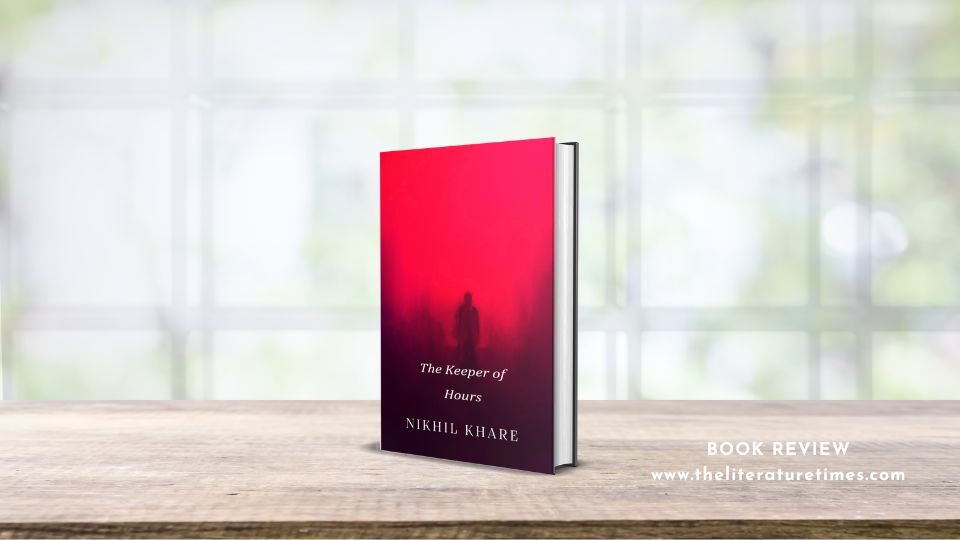
In The Keeper of Hours: Berlin After the War, Nikhil Khare delivers a profoundly introspective literary novel that transcends the conventions of historical fiction. Set against the haunting ruins of post-World War II Berlin, the book is less concerned with recounting historical events than with examining the psychological and philosophical consequences of living through them. Rather than presenting war as a sequence of battles and victories, Khare explores what remains after the smoke clears—the silence, the moral ambiguity, and the invisible fractures within the human mind.
The novel follows Friedrich Adler, a man navigating a city where destruction is no longer an event but a permanent condition. Berlin itself emerges as more than a backdrop; it becomes a living metaphor for shattered identities, collapsing certainties, and the uneasy process of reconstruction. Every ruined street, abandoned building, and quiet conversation reflects the emotional landscape of its inhabitants, creating an atmosphere that is both haunting and deeply immersive.
One of the novel’s greatest strengths lies in its remarkable psychological depth. Friedrich is not portrayed as a conventional hero, nor is he easily categorized as victim or villain. Instead, he becomes a complex study of a person gradually shaped by systems of power, survival, and moral compromise. His journey is unsettling precisely because it feels psychologically authentic. The reader witnesses how repeated exposure to trauma and institutional control slowly alters perception, raising difficult questions about responsibility, obedience, and the erosion of conscience.
Khare’s prose is distinctive and unapologetically literary. Long, meditative passages invite readers to pause and reflect rather than rush through the narrative. The language is rich with philosophical observations about time, memory, identity, and the nature of human existence. This contemplative style may not appeal to readers seeking fast-paced historical thrillers, but those who appreciate literary fiction will find immense value in its deliberate rhythm and intellectual depth. The opening chapters establish this reflective tone beautifully, emphasizing that some experiences cannot be neatly resolved or forgotten but continue to exist beyond memory itself.
Another compelling aspect of the novel is its exploration of power. Throughout the narrative, power is shown not merely as political authority but as an invisible system that survives even when governments collapse. Institutions change, ideologies shift, yet structures of control quietly reorganize themselves. Friedrich’s encounters reveal how individuals become absorbed into these systems, often without dramatic moments of decision but through subtle, almost imperceptible adjustments in thought and behavior. This nuanced portrayal makes the novel relevant far beyond its historical setting, inviting readers to reflect on contemporary questions about authority, conformity, and personal agency.
The characterization deserves particular praise. Friedrich’s emotional restraint makes him a fascinating yet deeply unsettling protagonist. His observations are analytical rather than sentimental, allowing readers to experience the gradual transformation of a human being from detached survivor to instrument of larger forces. Rather than relying on dramatic emotional outbursts, Khare builds tension through silence, hesitation, and subtle psychological shifts. Even seemingly ordinary interactions carry an underlying sense of unease, reminding readers that moral collapse often occurs quietly rather than spectacularly.
What distinguishes The Keeper of Hours from many historical novels is its refusal to offer easy answers. The book does not divide characters into simple categories of good and evil. Instead, it examines the complex mechanisms through which ordinary individuals adapt to extraordinary circumstances. The narrative repeatedly challenges readers to consider whether morality can remain intact when survival itself becomes uncertain, and whether history is shaped more by ideology or by countless individual decisions made in moments of ambiguity.
The novel’s pacing reflects its philosophical ambitions. Rather than relying on constant action, it builds suspense through observation, repetition, and psychological progression. Every conversation, every pause, and every seemingly insignificant detail contributes to a larger meditation on human nature. Readers willing to embrace this slower pace will discover a rewarding and intellectually stimulating experience that lingers long after the final page.
Ultimately, The Keeper of Hours: Berlin After the War is a bold and ambitious work of literary fiction. It successfully combines historical atmosphere, philosophical inquiry, and psychological realism into a narrative that is both emotionally resonant and intellectually engaging. Nikhil Khare demonstrates remarkable confidence in allowing silence, introspection, and ambiguity to carry the emotional weight of the story, resulting in a novel that challenges rather than comforts its readers.
This is not merely a novel about the aftermath of war; it is a meditation on memory, identity, and the fragile boundaries between humanity and machinery of power. Readers who appreciate thoughtful literary fiction, psychological exploration, and morally complex narratives will find The Keeper of Hours to be an unforgettable reading experience. It is a work that asks difficult questions, refuses simplistic conclusions, and ultimately reminds us that the deepest scars of history are often those carried within the human mind.
Buy Now: https://amzn.in/d/07ypEzKq