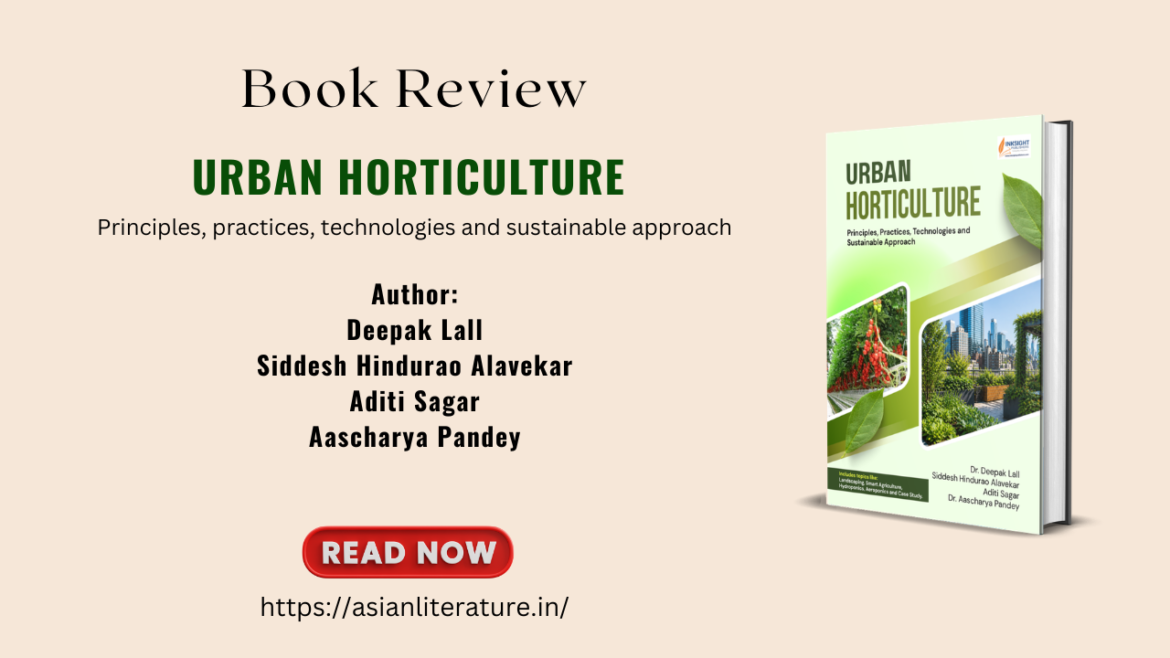
In today’s rapidly growing urban world, cities are facing serious challenges such as pollution, lack of green spaces, water scarcity, and increasing pressure on food systems. As urban populations continue to rise, the importance of sustainable farming and green living has become greater than ever before. Urban Horticulture is a timely and highly informative book that addresses these modern concerns in a practical and scientific way. Written by Deepak Lall, Siddesh Hindurao Alavekar, Aditi Sagar, and Aascharya Pandey, this book successfully combines academic knowledge with real-world solutions. It provides readers with a detailed understanding of how urban horticulture can improve environmental sustainability, food production, and overall quality of life in cities.
A Modern and Relevant Subject
One of the strongest aspects of this book is its relevance to present-day society. Urban horticulture is becoming an important field because cities are running out of open agricultural land. The book explains how people can grow fruits, vegetables, and plants even in limited urban spaces such as rooftops, balconies, terraces, and vertical structures. The authors clearly show that urban farming is not only a hobby but also a practical solution for future food security and environmental balance. The book discusses modern farming methods like:
- Hydroponics
- Aquaponics
- Rooftop gardening
- Vertical farming
- Smart agriculture techniques
These topics are highly important in today’s urban lifestyle and are explained in a simple and understandable way.
Blend of Science and Practical Knowledge
Another major strength of Urban Horticulture is its balance between scientific understanding and practical application. The authors do not limit the discussion to theoretical concepts. Instead, they provide practical guidance for implementing urban horticulture systems in real-life conditions. Readers can understand how to deal with common urban problems such as:
- Lack of space
- Soil contamination
- Water shortage
- Climate-related challenges
The book offers low-cost and innovative solutions suitable for Indian cities as well as other urban regions around the world. This practical approach makes the book useful not only for students and researchers but also for gardening enthusiasts and urban residents.
Focus on Sustainability and Climate Resilience
One of the most valuable messages of the book is its focus on sustainability. The authors strongly highlight the importance of creating climate-resilient cities through green practices. Urban horticulture is presented as more than just farming. It is shown as a way to:
- Improve air quality
- Increase biodiversity
- Reduce urban heat
- Promote healthy lifestyles
- Create greener communities
The book explains how sustainable urban farming can contribute to environmental protection and better living conditions for future generations. This environmental awareness gives the book strong social and ecological importance.
Rich Academic Contribution
The book reflects strong academic effort and collaboration. Along with the main authors, students from the Department of Horticulture at Sam Higginbottom University of Agriculture, Technology and Sciences (SHUATS) have also contributed chapters to the volume. This collaborative approach adds diversity and depth to the content. The combination of experienced academicians and young researchers creates a balanced and updated perspective on urban horticulture. The inclusion of case studies, research-based discussions, and modern farming models makes the book academically rich while still remaining accessible.
Easy Language and Clear Presentation
Although the book discusses technical and scientific topics, the language remains simple and reader-friendly. The authors explain concepts clearly without making the content overly difficult. This simple presentation is important because it allows readers from different backgrounds to understand and benefit from the book. Students, researchers, urban farmers, planners, and even beginners interested in gardening can comfortably read and learn from it.
Strong Authorial Expertise
The quality of the book is strengthened by the strong academic and professional background of the authors. Deepak Lall, an Assistant Professor at SHUATS, has extensive experience in horticulture, fruit science, organic farming, and post-harvest management. His contribution brings academic depth and professional understanding to the book. Siddesh Hindurao Alavekar, a Ph.D. scholar and founder of agricultural initiatives promoting agrotourism and rural entrepreneurship, adds innovative and entrepreneurial perspectives. Aditi Sagar contributes youthful research energy and scientific understanding related to sustainable fruit production and disease management. Aascharya Pandey strengthens the book with his research on fruit quality improvement and advanced post-harvest management techniques. Together, the authors bring academic excellence, research experience, and practical field knowledge into one comprehensive work.
Importance for Future Cities
The book successfully highlights how urban horticulture can become an important part of future city planning. As cities become more crowded and environmental concerns increase, sustainable urban farming can play a major role in improving food systems and community health. The discussion on policy frameworks, rooftop farming incentives, and economic models makes the book forward-looking and practical. It connects urban horticulture with larger global goals such as sustainability, climate resilience, and improved quality of life.
Final Thoughts
Urban Horticulture by Deepak Lall, Siddesh Hindurao Alavekar, Aditi Sagar, and Aascharya Pandey is an informative, practical, and highly relevant book for modern times. The book successfully combines scientific knowledge with practical urban farming solutions. Its focus on sustainability, innovation, and climate resilience makes it valuable for students, researchers, urban planners, farmers, and gardening enthusiasts alike. The clear language, real-world examples, and practical guidance make the subject easy to understand and apply. More importantly, the book presents urban horticulture not just as a farming practice but as a meaningful pathway towards healthier, greener, and more sustainable cities. Overall, this book stands as a valuable contribution to horticultural science and sustainable urban development, encouraging readers to rethink how cities can become more self-reliant, environmentally friendly, and connected with nature.
Amazon: https://www.amazon.in/dp/9379003633
Review by Neel Preet
For www.theliteraturetimes.com