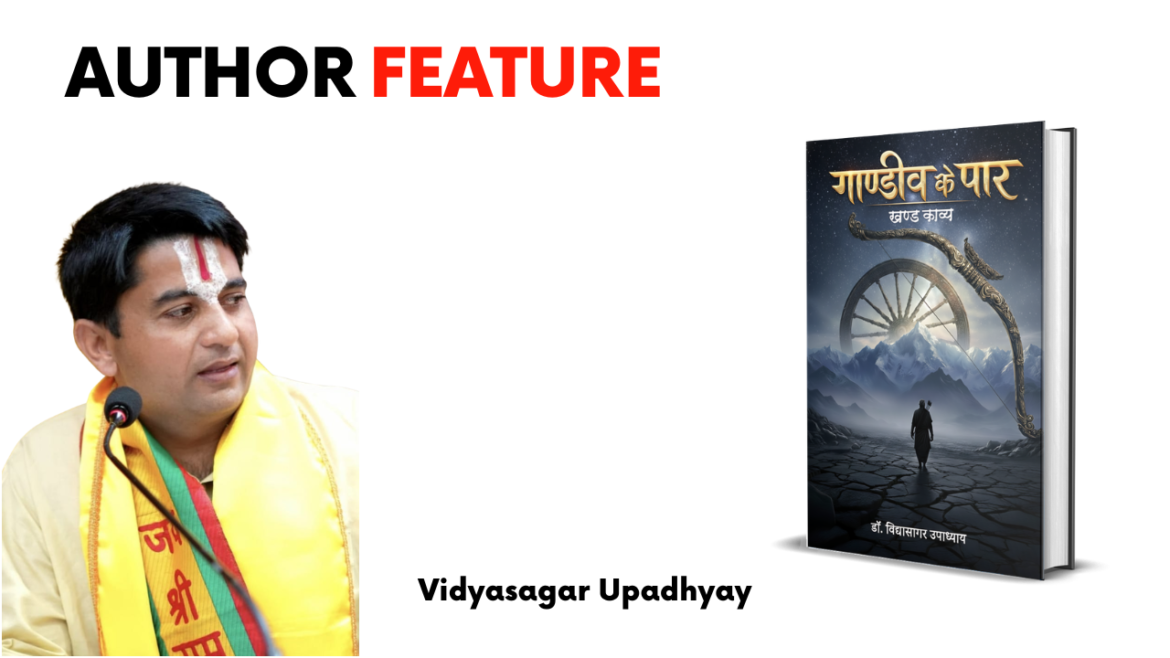
Indian literature has always carried deep spiritual and philosophical meaning. Stories from the Mahabharata are not only tales of war and victory but also reflections on life, duty, pain, truth, and self-realisation. While most people know the story of Arjuna before the Kurukshetra war, very few think about what happened after the war ended. What remained in the heart of a warrior after victory? Did peace truly arrive? Did all questions disappear? These powerful and emotional questions form the heart of Gaandeev ke Paar by Vidyasagar Upadhyay. This book is not just another retelling of the Mahabharata. It is a thoughtful philosophical journey that begins after the great war has already ended. The battlefield has become silent, the weapons are resting, and the excitement of victory has slowly faded. Yet inside the human heart, many questions still remain unanswered.
The book beautifully imagines a deep conversation between the aged Arjuna and his grandson Parikshit. Through this dialogue, the story moves from physical battle to inner understanding, from external victory to spiritual awakening. Vidyasagar Upadhyay is known as a respected scholar and thinker who combines ancient Indian wisdom with modern understanding. With more than twenty-three literary works and many national and international honours, he has created a strong identity in spiritual and philosophical writing. His works are not limited to storytelling alone. They guide readers toward deeper reflection about life, truth, and consciousness. In Gaandeev ke Paar, this wisdom appears very naturally. The title itself is deeply symbolic. “Gaandeev” was Arjuna’s divine bow, representing strength, war, power, and duty. But “beyond the Gaandeev” means moving beyond weapons, ego, pride, and worldly conflicts. It suggests a journey toward peace, wisdom, and spiritual truth.
This idea gives the book its emotional and philosophical depth. Most people remember Arjuna from the Bhagavad Gita as a confused warrior standing on the battlefield before the war begins. Lord Krishna guides him, answers his doubts, and encourages him to perform his duty. But Gaandeev ke Paar asks a different question: What happens after the war is over and life becomes silent again? This question makes the book unique and thought-provoking. The story presents an older Arjuna not the young heroic warrior filled with energy, but a man who has experienced victory, loss, death, relationships, and time itself. Through his conversation with Parikshit, readers witness a more mature understanding of life.
The dialogues carry emotional wisdom. They speak about attachment, pride, suffering, ego, destiny, and the search for ultimate truth. The book slowly guides readers away from outer conflict toward inner stillness. One of the most beautiful aspects of the book is its peaceful tone. Unlike dramatic war stories filled with action and excitement, this work feels calm, reflective, and meditative. It encourages readers to slow down and think deeply. The writing reminds us that real battles are often fought inside the mind and heart. Another important quality of the book is its philosophical simplicity. Spiritual subjects can sometimes become very difficult or heavy for readers. But Vidyasagar Upadhyay presents complex ideas in a graceful and understandable way. Even ordinary readers can connect with the emotions and reflections presented in the dialogues.
The relationship between Arjuna and Parikshit also adds warmth to the story. It is not only a conversation between two generations but also between experience and curiosity, wisdom and questioning. Parikshit represents the seeker who still wishes to understand life, while Arjuna represents the soul that has travelled through struggle and slowly moved toward detachment. This emotional connection gives the book human depth. The book also reflects an important truth about life. Many people spend years chasing success, victory, recognition, and achievement. But after reaching those goals, they often realise that external success alone cannot give complete peace. Real understanding begins when a person starts questioning the meaning of life itself.
This silent transformation becomes the soul of Gaandeev ke Paar. The poetic style of the work makes the experience even more powerful. Poetry allows emotions and philosophical thoughts to flow naturally. Instead of sounding like lectures, the ideas feel emotional and personal. Readers who enjoy spiritual literature, Indian philosophy, and reflective storytelling will find this book deeply meaningful. It speaks especially to people who are searching for calmness and deeper understanding in today’s noisy and restless world. In many ways, the book also reminds readers about the timeless relevance of Indian wisdom traditions. Ancient stories continue to remain meaningful because human emotions have not changed. People still struggle with confusion, ego, fear, attachment, and the desire for peace. That is why books like Gaandeev ke Paar feel relevant even today. Vidyasagar Upadhyay’s strength as a writer lies in his ability to connect spiritual ideas with emotional experience. He does not present philosophy as dry intellectual discussion. Instead, he presents it as a living journey of the human soul.
Ultimately, Gaandeev ke Paar is not just about Arjuna or Parikshit. It is about every person who has fought battles in life and later searched for meaning beyond victory. The book gently teaches that true wisdom begins when the noise of conflict ends. Weapons may win wars, but only self-understanding can bring peace. Through this thoughtful and poetic journey, Vidyasagar Upadhyay invites readers to move beyond the “Gaandeev” of ego and struggle and walk toward silence, truth, and inner awakening.