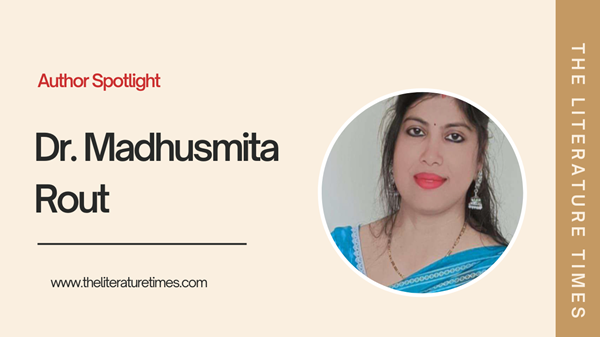
Dr. Madhusmita Rout is currently serving as an Assistant Professor in the Department of Political Science at Ravenshaw University, Cuttack, Odisha. She obtained both her M.Phil. and Ph.D. in International Relations from the prestigious Jawaharlal Nehru University (JNU), New Delhi, India. With extensive teaching experience at the postgraduate level, she has nurtured and inspired students through her academic rigor and mentorship. Prior to joining Ravenshaw University, she served as a Lecturer in Political Science at S.M. Government Women’s College, Phulbani, Odisha.
Dr. Rout has published numerous research papers in reputed national and international peer-reviewed journals and contributed several chapters to edited volumes. She has also presented her research widely at national and international conferences, engaging with diverse scholarly audiences. At present, she is actively guiding Ph.D. scholars in their respective research pursuits.
Deeply committed to the advancement of knowledge, Dr. Rout is known for her dedication to research excellence and her relentless pursuit of academic enrichment. Her work reflects a constant endeavour to address contemporary political and social challenges with critical insight and scholarly depth. She remains devoted to creating a vibrant research culture, fostering intellectual curiosity, and contributing meaningfully to the discipline of Political Science.
1. What motivated you to write Beyond Borders: Global Wars and the Future of Peacekeeping?
The motivation behind writing Beyond Borders: Global Wars and the Future of Peacekeeping comes from a deep concern that traditional peacekeeping frameworks are no longer adequate for today’s complex global crises. With conflicts driven by climate change, inequality, and geopolitics affecting over a billion people, there is an urgent need to rethink how peace is built and sustained.
The book was inspired by the resilience of communities from Liberia’s women-led peace movement to Colombia’s reintegration efforts that show peace is possible through collective action. It also aims to bridge research and real-world practice, offering new ideas like the Global Peace Compact to make peacekeeping more proactive, inclusive, and future-ready. In essence, Beyond Borders was motivated by a belief that peace must move beyond traditional boundaries, geographic, political, and ideological, to meet the realities of the 21st century.
2. How has your teaching experience shaped your perspectives on peace and conflict studies?
My teaching experience has profoundly shaped my understanding of peace and conflict studies by turning abstract theories into lived, human realities. Engaging with students from diverse backgrounds has shown me how perspectives on conflict, justice, and peace differ across cultures and contexts. Classroom discussions often reveal that peace is not merely the absence of war, but the presence of dignity, inclusion, and opportunity. Teaching has also deepened my belief that education itself is a form of peacebuilding—it cultivates empathy, critical thinking, and dialogue. By connecting case studies like Syria, South Sudan, or Colombia to students’ own experiences, I’ve learned that sustainable peace requires both structural change and individual transformation.
3. The book highlights failures of traditional peacekeeping. Which failure, in your opinion, is the most urgent to address?
The most urgent failure to address in traditional peacekeeping is its reactive and state-centric approach. Peacekeeping has too often focused on managing conflicts after violence erupts rather than preventing them in the first place. This reactive model overlooks the social, economic, and environmental roots of conflict, such as inequality, climate stress, and exclusion, which continue to fuel instability even after peace agreements are signed.
Equally critical is the overreliance on state actors while neglecting local communities and civil society, who are often the real agents of peace. When local voices are excluded, peace becomes fragile and short-lived. To move forward, peacekeeping must evolve from reaction to prevention, from control to collaboration, empowering communities, addressing root causes, and integrating climate and human security into its core mission.
4. In your opinion, what impact does climate change have on conflict and peacekeeping efforts?
Climate change is one of the most powerful conflict multipliers of our time. It doesn’t cause wars directly, but it deepens existing tensions by intensifying resource scarcity, displacement, and inequality. Droughts, floods, and rising temperatures strain livelihoods, especially in fragile regions like the Sahel or the Horn of Africa, fueling competition over land, water, and food. These pressures often turn local disputes into larger conflicts. For peacekeeping, this means traditional missions must adapt. Climate-induced instability blurs the line between humanitarian, environmental, and security challenges. Peacekeepers now need to integrate climate risk assessments, support climate-resilient livelihoods, and collaborate with environmental and development actors.
5. What role can young people play in promoting peace?
Young people play a transformative role in promoting peace because they bring energy, innovation, and new perspectives to peacebuilding. They are often the first to challenge injustice, mobilize communities, and use technology to advocate for change. From digital activism and social media campaigns to grassroots mediation and volunteer networks, youth are redefining what peace work looks like in the 21st century.
They also act as bridge-builders connecting divided communities, amplifying marginalized voices, and fostering dialogue across cultural and political lines. When given meaningful participation in peace processes, studies show that peace agreements are more likely to endure. Ultimately, young people are not just the future of peace; they are its present. Empowering them through education, leadership opportunities, and inclusive policymaking is essential to building societies that are just, resilient, and truly peaceful.
6. Are you active on social media? How can readers and students connect with you?
Yes, I’m active on social media, where I engage with readers, students, and fellow researchers interested in global peace, security, and climate issues. I regularly share insights, updates about my publications, and discussions on emerging trends in international relations and peacebuilding. I always welcome thoughtful dialogue, especially from young scholars and practitioners committed to shaping a more peaceful and sustainable world.
7. Where can readers purchase your book Beyond Borders: Global Wars and the Future of Peacekeeping?
Readers can purchase Beyond Borders: Global Wars and the Future of Peacekeeping through multiple platforms in both print and digital formats. The book is available on Amazon India, Kindle, Flipkart, Google Play Books, Google Books, and the LLP Store. Whether readers prefer a paperback edition or an eBook version, they can easily access it through any of these platforms.
Book Order Links:
- Amazon IN: https://www.amazon.in/dp/9349168375
- Kindle: https://www.amazon.in/dp/B0FSRFLVHV
- Flipkart: https://www.flipkart.com/product/p/itme?pid=9789349168374
- Google Play: https://play.google.com/store/books/details?id=iZmJEQAAQBAJ
- Google Books: https://books.google.co.in/books/about?id=iZmJEQAAQBAJ
- LLP Store Paperback: https://literatureslight.com/product/beyond-borders-global-wars-and-the-future-of-peacekeeping/