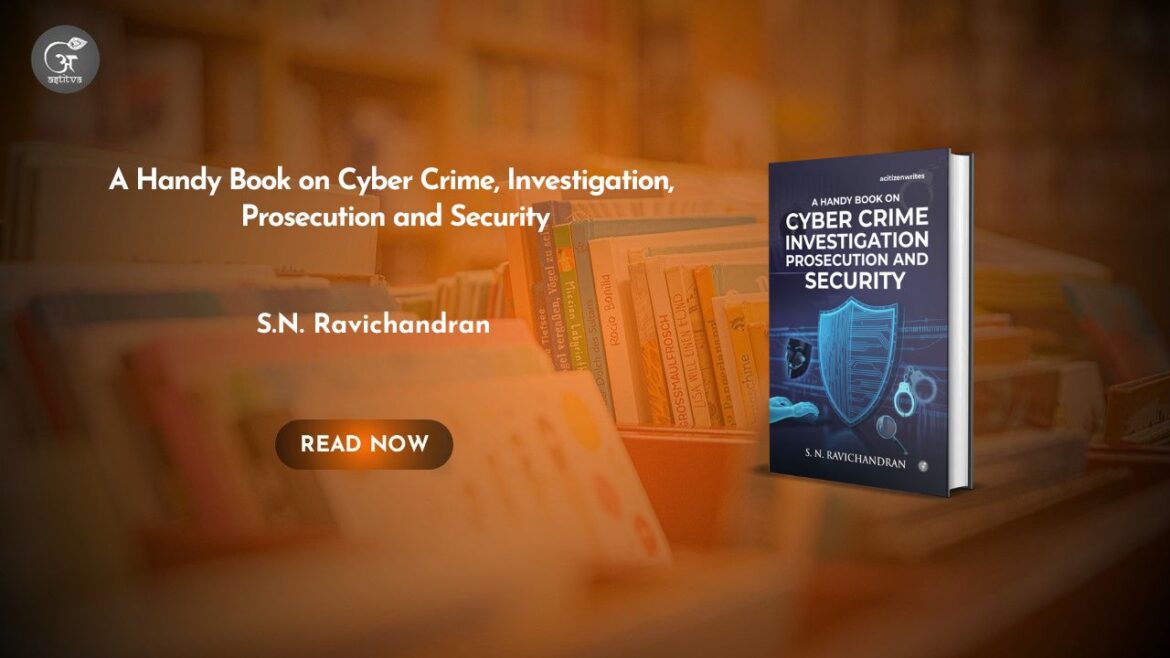
A Handy Book on Cyber Crime, Investigation, Prosecution and Security by S. N. Ravichandran arrives at a time when the digital world has become deeply intertwined with everyday life, bringing with it unprecedented opportunities as well as complex risks. As cyber offences grow in scale, sophistication, and geographical reach, there is an urgent need for reliable, practical, and legally sound guidance that can help investigators, professionals, students, and policy practitioners understand and respond to these challenges. This book seeks to meet that need by offering a comprehensive and structured exploration of cybercrime and the mechanisms required to combat it effectively.
The book presents a clear and methodical overview of cybercrime, tracing its evolving nature and explaining why traditional approaches to crime control are often insufficient in the digital domain. It emphasizes the multidisciplinary character of cybercrime investigation, where technology, law, policy, and human behavior intersect. Readers are introduced to the various forms of cybercrime, their classifications, and the motivations that drive offenders, providing a strong conceptual foundation before moving into more technical and procedural aspects.
Structured into four well-defined parts, the book first addresses the fundamentals, including the definition and scope of cybercrime and its classification. It then moves into the role of the investigator, detailing investigation techniques, digital forensic processes, and the use of tools essential for uncovering electronic evidence. Significant attention is given to evidence collection, collation, and documentation, highlighting the importance of maintaining integrity and admissibility in a legal setting. The discussion on prosecution examines the complexities of applying laws in a borderless cyber environment, where jurisdictional challenges and evolving legal frameworks often complicate the pursuit of justice. The final part of the book focuses on prevention and resilience, offering practical tips for securing operations on the internet and reducing exposure to cyber threats.
What distinguishes this work is its balance between theory and practice. Rather than remaining purely academic, the book draws on real-world investigative experience and legal insight, making it especially valuable for law enforcement personnel, legal professionals, corporate security teams, and students of cyber law and digital forensics. At the same time, its clear language and systematic approach make it accessible to readers seeking a broader understanding of cyber risks and digital safety.
The authority and depth of the book are reinforced by the author’s extensive professional background. S. N. Ravichandran is a seasoned techno-legal consultant and cybercrime investigator with hands-on experience in handling complex cyber, white-collar, economic, and banking fraud cases. Holding an M.Sc. in Applied Sciences from PSG College of Technology, Coimbatore, and a certification in Public Policy and Strategic Studies from the Takshashila Think Tank, he brings together technical expertise and policy-oriented thinking. As an Anchor of the Data Security Council of India and a faculty member at the In-House Training School of the Tamil Nadu Police in Coimbatore, he has played a significant role in training law enforcement officers in cybercrime investigation. His regular engagement with educational institutions, social organizations, and industry on topics such as information security, workplace safety, and cryptocurrency further enriches the practical perspective reflected in this book. He is also the author of an earlier work on Primordial Rights and Fundamental Rights in the Digital Age, underscoring his sustained engagement with the legal and ethical dimensions of technology.
A Handy Book on Cyber Crime, Investigation, Prosecution and Security stands as a timely and relevant contribution to the field of cyber security and cyber law. By combining conceptual clarity, procedural guidance, and preventive insight, it equips readers with the knowledge required not only to understand cybercrime but also to respond to it effectively and responsibly in an increasingly digital world.