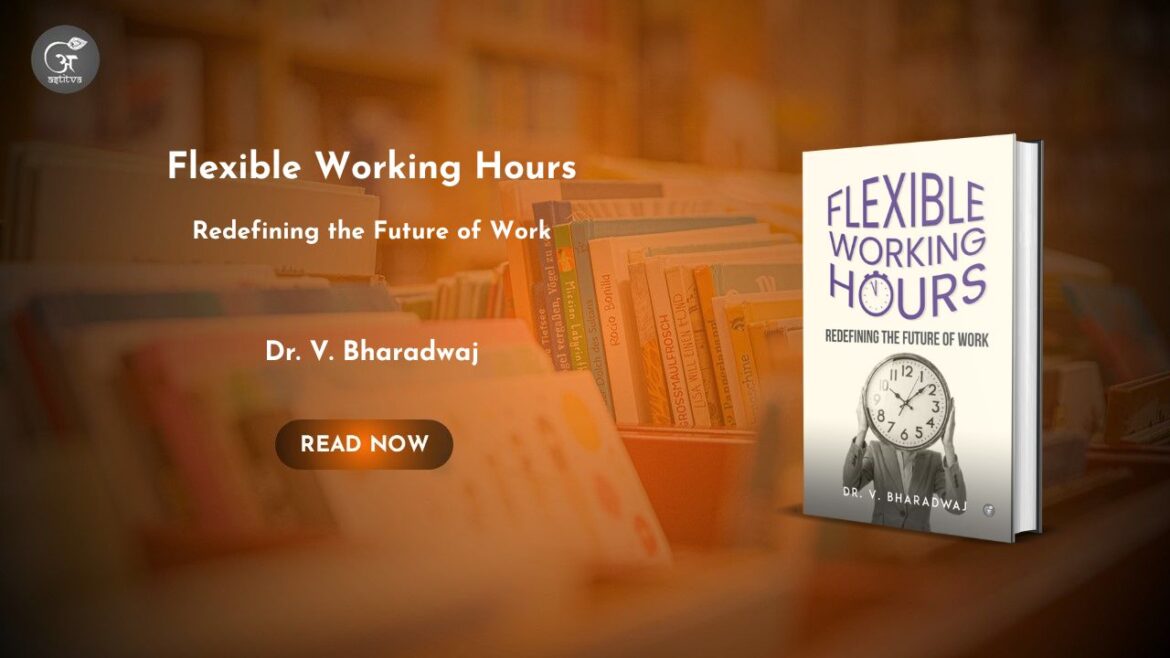
In an era where the nature of work is being reshaped by technology, globalization, and shifting employee expectations, a timely and thought-provoking new book has arrived to contribute meaningfully to the ongoing conversation. Flexible Working Hours: Redefining the Future of Work by Dr. V. Bharadwaj offers a comprehensive, research-driven exploration of flexible working as not merely a trend, but a strategic necessity for organizations seeking long-term sustainability and performance.
The book stands out for its balanced approach, bringing together historical perspectives, contemporary academic research, and practical frameworks. Rather than treating flexible working as a fashionable buzzword, the author examines its evolution across decades, tracing how workplace practices have transformed in response to industrial shifts, technological advancements, and changing social values. This contextual grounding allows readers to understand that flexible work is part of a larger transformation in how organizations function and how people relate to their professional lives.
What makes this work particularly relevant is its focus on flexible working as a strategic imperative. Dr. Bharadwaj argues that organizations which proactively design and implement flexible work models are better positioned to attract and retain talent, improve employee well-being, and enhance overall organizational performance. Through carefully structured analysis, the book demonstrates how flexibility can drive productivity, foster innovation, and create more inclusive work environments when implemented thoughtfully and supported by strong leadership.
The content is deeply rooted in contemporary research, making it valuable for academic audiences, including students, researchers, and faculty members in management, human resource studies, and organizational behavior. At the same time, the author succeeds in translating complex theories into accessible insights, ensuring that practitioners, business leaders, HR professionals, and policymakers can also benefit. The book functions both as a scholarly contribution to academic discourse and as a practical guide for organizations navigating the complexities of the future of work.
Readers will find clear frameworks that can be applied in real organizational contexts. These frameworks address critical issues such as designing flexible work policies, managing performance in remote and hybrid environments, building trust between employers and employees, and aligning flexibility with organizational goals. By grounding these frameworks in empirical research and real-world considerations, the book avoids generic prescriptions and instead offers nuanced, context-sensitive guidance.
The author’s academic and professional background adds significant credibility to the work. Dr. V. Bharadwaj holds a PhD, UGC-NET qualification, and an MBA, and brings a rich blend of scholarly rigor and practical understanding to the subject. As an academic and management professional specializing in human resource management and emerging workplace practices, his insights are informed by both theory and lived experience within organizational settings. His research interests in flexible working models, organizational performance, and the evolving relationship between technology and work are evident throughout the book, giving it depth and relevance.
A key strength of the book is its exploration of the relationship between technology and flexible work. Rather than portraying technology as a simple enabler, Dr. Bharadwaj critically examines how digital tools, artificial intelligence, and communication platforms are reshaping power dynamics, work boundaries, and employee expectations. This perspective encourages readers to think more deeply about the ethical, psychological, and structural implications of flexible work arrangements.
The book also addresses the broader societal impact of flexible working hours. It highlights how flexibility can support work-life balance, gender equity, inclusion of caregivers and persons with disabilities, and opportunities for individuals in geographically remote areas. At the same time, it does not shy away from discussing the challenges, such as the risk of burnout, blurred boundaries between work and personal life, and the need for robust organizational policies to prevent misuse or inequity. This balanced treatment enhances the book’s credibility and usefulness.
For organizations currently experimenting with hybrid models or considering long-term shifts in their work structures, this book offers timely guidance. It encourages leaders to move beyond ad-hoc decisions and instead adopt evidence-based strategies. For policymakers and institutional leaders, it provides insights that can inform labor policies and educational frameworks aligned with the future of work.
Flexible Working Hours: Redefining the Future of Work is more than just a book on workplace trends; it is a meaningful contribution to understanding how work itself is evolving. By bridging the gap between theory and practice, Dr. V. Bharadwaj has created a resource that speaks to academics, professionals, and decision-makers alike. As organizations and societies continue to navigate uncertainty and transformation, this book offers clarity, depth, and direction for anyone serious about shaping a more flexible, effective, and humane future of work.