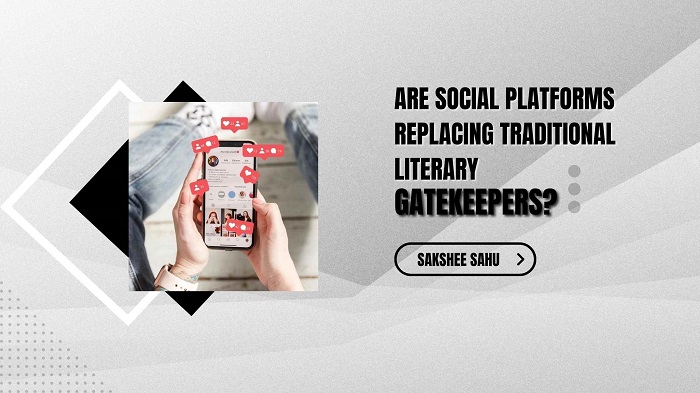
For much of literary history, access to readers was controlled by a small group of gatekeepers—publishers, editors, critics, and cultural institutions. These figures decided which manuscripts were published, which authors were promoted, and which books were considered worthy of serious attention. Their influence shaped literary canons, public taste, and even the careers of generations of writers. Today, however, the rise of social platforms has disrupted this long-standing system. Writers can now reach audiences directly, and readers increasingly discover books through online communities rather than traditional reviews or bookstore displays. This transformation has sparked debate about whether social platforms are replacing traditional literary gatekeepers or simply redefining their role.
Get Free Publishing Guide:
The Decline of Centralized Literary Authority
Traditional literary gatekeeping developed in an era when publishing required significant financial investment and physical distribution. Printing books, marketing them, and placing them in bookstores demanded resources that only established publishers could provide. As a result, publishers acted as filters, selecting manuscripts they believed were both culturally valuable and commercially viable. Critics and literary journals further reinforced this authority by shaping public discourse around what constituted “serious” or “important” literature. While this system helped maintain editorial standards, it also excluded many voices, particularly those from marginalized backgrounds or unconventional genres.
Social platforms have weakened this centralized authority by removing many of the barriers to entry. Writers can publish excerpts, poems, essays, or entire novels online without approval from an editor or publisher. Platforms such as TikTok, Instagram, and X allow creators to share their work instantly and build audiences organically. In this environment, visibility is no longer dictated solely by institutional endorsement but by reader engagement. A book can gain recognition because it resonates emotionally with readers rather than because it aligns with traditional literary expectations. This shift has challenged the idea that cultural value must be validated from the top down, replacing it instead with a more decentralized and participatory model.
New Blog: https://www.theliteraturetimes.com/do-readers-trust-recommendations-from-authors-more-than-critics/
Social Media as the New Discovery Engine
One of the most significant ways social platforms are reshaping literary culture is through discovery. Readers increasingly rely on recommendations from influencers, peers, and online communities rather than professional critics. The success of book-focused social movements demonstrates how powerful these platforms have become. A single viral post can revive interest in an overlooked title or catapult an unknown author to bestseller status. In some cases, books that initially failed in the traditional market have found new life through online enthusiasm, proving that institutional rejection does not necessarily reflect reader interest.
This new discovery model empowers readers but also alters what kinds of books gain prominence. Social platforms favor content that is emotionally compelling, easily summarized, or visually appealing. As a result, genres that inspire strong personal reactions often perform well, while quieter or more experimental works may struggle to gain traction. Unlike traditional gatekeeping, which emphasized critical evaluation and long-term cultural significance, social media visibility is often driven by immediacy and shareability. While this democratization broadens access and representation, it also raises concerns about whether popularity is becoming the primary measure of literary worth.
Coexistence Rather Than Replacement
Despite their growing influence, social platforms have not entirely replaced traditional literary gatekeepers. Publishers still play a crucial role in refining manuscripts, ensuring quality control, and providing long-term career support for authors. Editing, design, legal protection, and global distribution remain areas where traditional institutions hold a clear advantage. Moreover, literary awards, academic recognition, and critical reviews continue to shape reputations and establish lasting cultural impact. Many authors who gain popularity online ultimately seek traditional publishing deals, suggesting that institutional validation still carries value.
Must Read: https://www.theliteraturetimes.com/is-virality-a-sustainable-book-marketing-strategy/
Rather than a complete replacement, the current landscape reflects a hybrid system. Social platforms now act as informal gatekeepers by amplifying certain voices and stories, while traditional institutions increasingly respond to trends that emerge online. Publishers scout talent from social media, critics engage with digital discourse, and authors navigate both worlds simultaneously. This coexistence has shifted power dynamics, giving writers and readers more influence than ever before. However, it has also introduced new forms of gatekeeping, such as algorithmic visibility and platform-specific norms, which can be just as restrictive in different ways.
Conclusion
Social platforms are not eliminating traditional literary gatekeepers, but they are fundamentally transforming how literary value is created and recognized. By democratizing access and enabling direct connections between writers and readers, they have challenged long-standing hierarchies and expanded the range of voices in public discourse. At the same time, traditional institutions continue to provide structure, credibility, and sustainability within the literary ecosystem. The future of literature is likely to be shaped by the interaction between these forces rather than the dominance of one over the other. In this evolving landscape, authority is no longer centralized but shared, and the question is no longer who controls access to literature, but how stories find meaning and impact in a connected world.