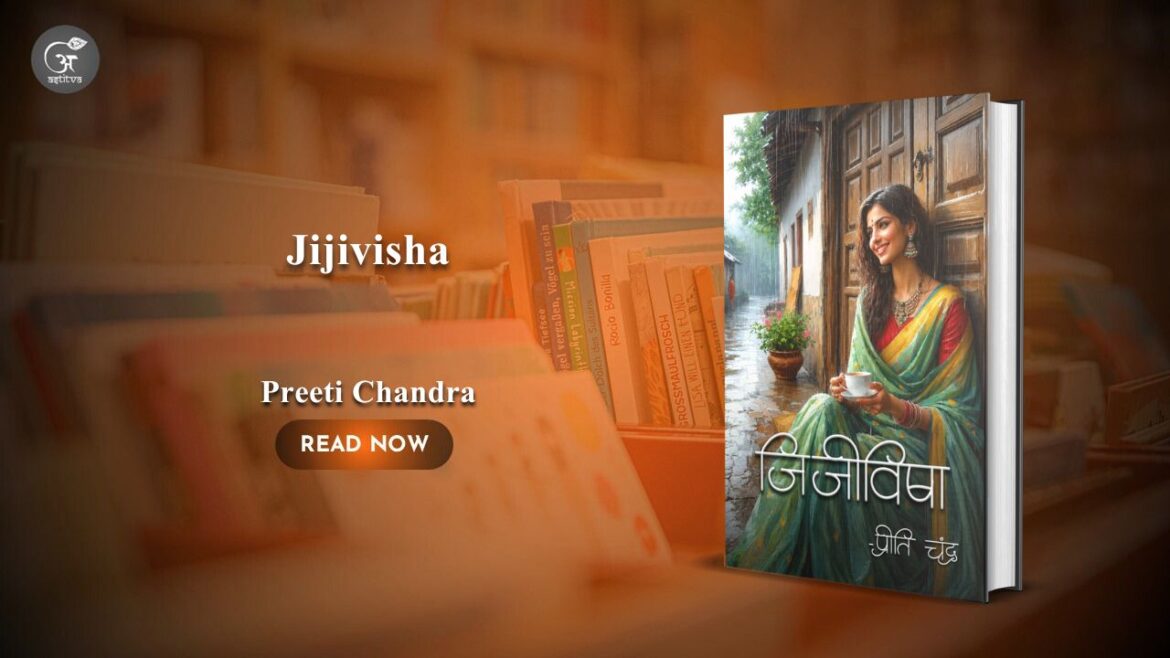
Jijivisha, the new book by Preeti Chandra, emerges as a deeply personal and emotionally honest work, born from years of silent observation, unspoken thoughts, and experiences that were carried quietly in the heart. This collection of stories is not shaped by literary ambition alone, but by a lifetime of lived emotions—those that remained unexpressed for years due to circumstances, responsibilities, and the cultural restraints of a middle-class upbringing.
The author shares that writing had always been close to her, but never something she had pursued publicly. In her early years, words were companions meant only for herself—written, read, and kept privately. Growing up in a family and a time where children were not encouraged to openly discuss their inner feelings, self-expression remained limited. The hesitation to speak freely, the fear of being misunderstood, and the cultural expectations that demanded silence shaped her emotional world. These influences echo profoundly through the stories of Jijivisha.
As life progressed, the weight of responsibilities grew heavier. Much of her time was spent living with her maternal uncle, managing a household, and working—leaving little room for writing. Yet emotions, when strong, eventually find their way onto paper. The stories in this book are born from those emotions—simple, sincere, and deeply felt. Preeti describes herself as introverted and serious, and those qualities naturally flow into her storytelling. There may be imperfections in structure or expression, she admits, but the raw honesty of emotions forms the true heart of her writing.
At the center of Jijivisha lies the delicate yet powerful emotional world of women. Although society has evolved, the inner struggles of women in many parts of the world remain unchanged. Responsibilities, expectations, and circumstances often silence their desires. Preeti uses a poignant metaphor—a storeroom or forgotten corner in every home that is opened only once in a year. The dreams and desires of many women, she says, are locked away similarly, gradually losing meaning, value, and existence. These stories give voice to those silent emotions, capturing the hidden battles and unspoken longings that women carry within themselves.
Every woman holds unfulfilled aspirations that she seldom shares, and often, no one attempts to understand. Whether her feelings are expressed or not makes little difference to others, yet they shape her inner world profoundly. Jijivisha attempts to bring these emotions to the surface—to acknowledge them, honour them, and remind readers of their depth.
Behind this heartfelt work is a writer whose life journey has been marked by loss, responsibility, and resilience. Born in Lucknow in 1971, Preeti faced emotional hardships early on. The passing of her mother, her father, and the challenges of supporting her physically disabled uncle demanded maturity and strength. She worked tirelessly—taking up small jobs, tutoring, and supporting differently-abled individuals—to build her life again. Amidst this, the desire to express herself through writing never faded.
Her first published story, “Snehil Sambandh,” released in the book Shabdon Ki Sihran by Manda Publications, became a turning point. Encouraged by the support of well-wisher Mr. Preeti Prajapati, she rediscovered the spark of creativity she had carried all along. Jijivisha is a testament to that rediscovery—a reflection of survival, courage, and the timeless human longing to be heard.
Through this book, Preeti Chandra offers not just stories but fragments of her inner world, inviting readers to feel, reflect, and perhaps find their own silent emotions mirrored in her words.