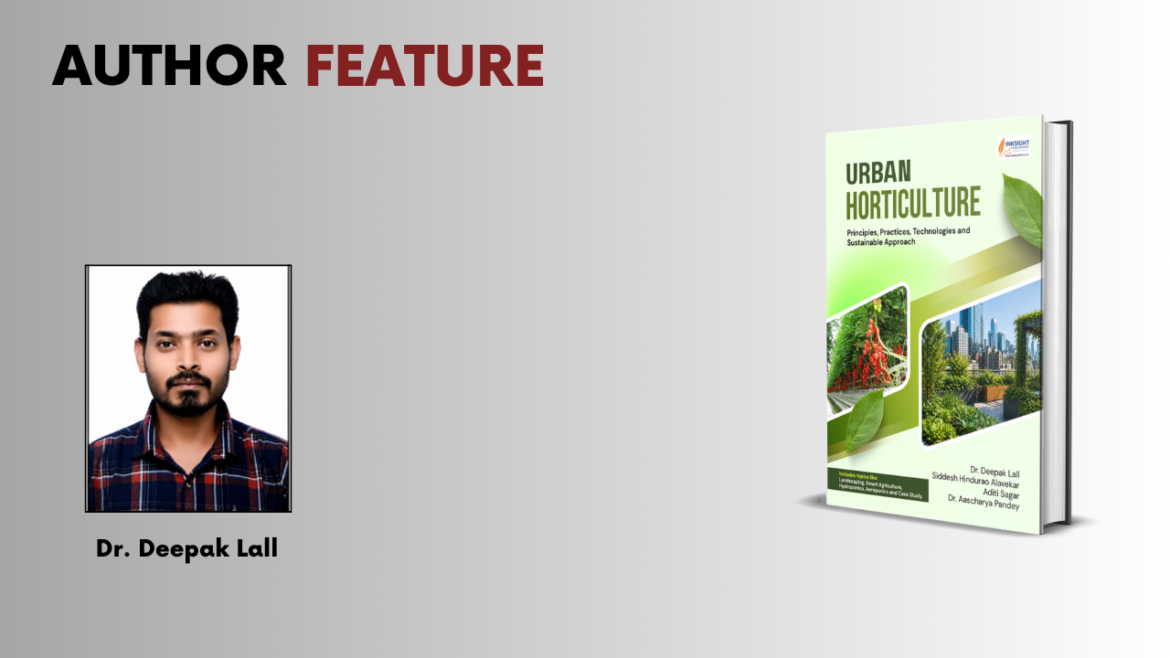
Modern cities are growing very fast. Buildings are becoming taller, roads are becoming busier, and open green spaces are slowly disappearing. In this fast-changing urban life, people are becoming more disconnected from nature. Fresh air, healthy food, and green surroundings are turning into luxuries in many cities. At such a time, the book Urban Horticulture comes as a meaningful and practical guide that shows how nature and modern city life can grow together. Written by Dr. Deepak Lall, Mr. Siddesh Hindurao Alavekar, Ms. Aditi Sagar, and Dr. Aascharya Pandey, this book is not just an academic text but also a vision for a healthier and greener future. The authors, along with students from the Department of Horticulture at SHUATS, Prayagraj, have created a work that combines scientific knowledge with practical solutions for urban living.
The book highlights an important truth: farming and gardening are no longer limited to villages or large agricultural lands. Even small city spaces like rooftops, balconies, terraces, and indoor corners can become productive green areas. Through urban horticulture, people can grow vegetables, fruits, herbs, and flowers while improving the environment around them. One of the strongest qualities of this book is its practical approach. The authors understand the challenges faced by urban people—lack of space, water shortage, pollution, and poor soil quality. Instead of simply discussing problems, the book provides solutions that are simple, modern, and adaptable to city life.
The book introduces readers to innovative methods like hydroponics, aquaponics, rooftop gardening, vertical farming, and smart agriculture. These methods may sound technical at first, but the authors explain them in a simple and understandable way. Readers learn that plants can even grow without traditional soil and that modern technology can help produce healthy food in limited urban spaces. The idea behind urban horticulture is not only about growing food. It is also about improving mental peace, environmental balance, and community well-being. In crowded cities, green spaces provide relaxation and emotional comfort. A small garden on a terrace or balcony can reduce stress, improve air quality, and create positivity in everyday life.
Dr. Deepak Lall, the leading author, brings rich academic and research experience into the book. His expertise in fruit science, post-harvest management, organic farming, and hi-tech horticulture gives strong scientific depth to the work. His dedication to teaching and research is reflected in the clear and informative style of the book. Mr. Siddesh Hindurao Alavekar adds practical agricultural innovation to the project. His work in agrotourism and organic farming shows how agriculture can become both sustainable and economically beneficial. His efforts to cultivate crops like cinnamon and black pepper in the Konkan region demonstrate how creativity and dedication can open new opportunities in horticulture.
Ms. Aditi Sagar represents the energy and curiosity of young researchers. Her interest in sustainable fruit production and disease management reflects the future direction of horticultural science in India. Her contributions add freshness and modern thinking to the book. Dr. Aascharya Pandey’s expertise in post-harvest management and fruit quality improvement strengthens the practical usefulness of the work. His research on shelf life and fruit storage highlights the importance of reducing food waste and improving food quality for consumers.
Together, these authors create a book that is educational, inspiring, and socially relevant. Their teamwork itself reflects the spirit of collaboration needed for sustainable urban development. Another important aspect of Urban Horticulture is its focus on environmental sustainability. Cities today face serious issues like pollution, rising temperatures, and climate change. Urban horticulture can play a major role in solving these problems. More plants in cities mean cleaner air, reduced heat, better biodiversity, and improved ecological balance.
The book also explains how urban farming can create employment and livelihood opportunities. Rooftop farms, vertical gardens, nursery businesses, and organic vegetable production can become sources of income for many urban families. In this way, urban horticulture becomes not only an environmental movement but also an economic opportunity. The authors also connect urban horticulture with global goals like sustainable development and climate resilience. They explain that creating greener cities is not only the responsibility of governments but also of individuals and communities. Even small efforts can create large positive changes when many people participate together.
The language of the book remains clear, informative, and reader-friendly. Whether the reader is a student, researcher, gardener, urban planner, or ordinary city resident, the book offers valuable knowledge in a practical and understandable manner. In today’s world, where cities continue to expand and natural resources are under pressure, books like Urban Horticulture become highly important. They remind readers that progress does not mean moving away from nature. True development happens when technology, environment, and human well-being grow together. Overall, Urban Horticulture is more than a horticultural guide. It is a vision for greener, healthier, and more sustainable cities. Through research, innovation, and practical wisdom, the authors encourage readers to reconnect with nature, even in the middle of urban life. The book inspires hope that small green efforts today can build a better and more balanced tomorrow.