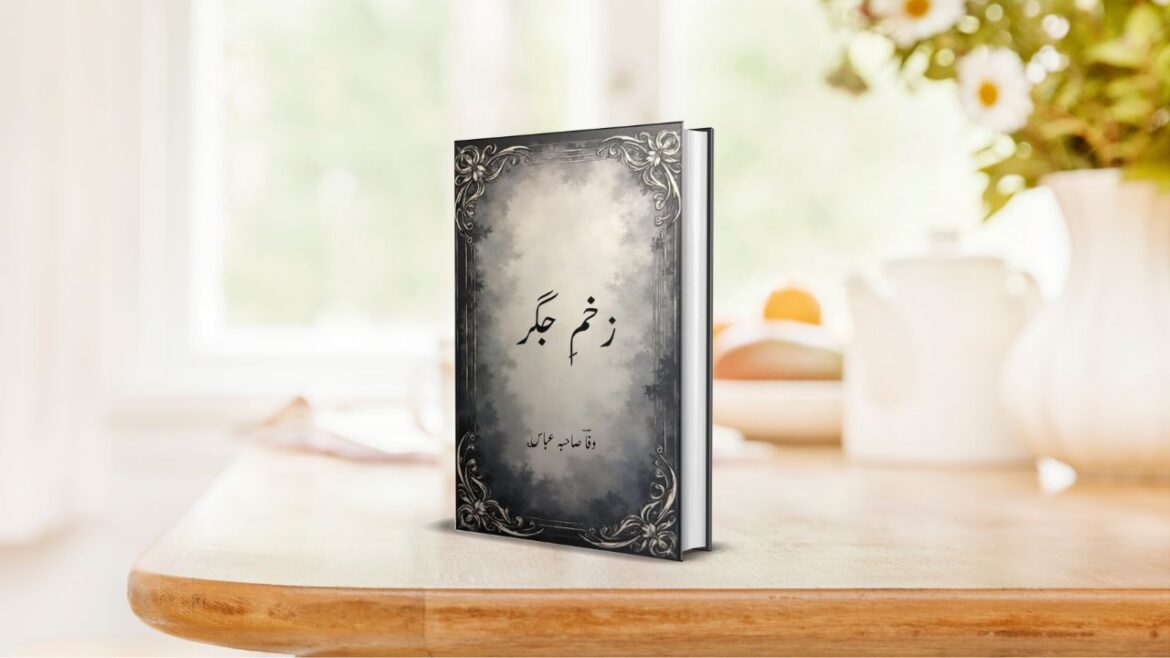
Wafa Sahiba Abass represents a fresh and emotionally compelling voice in contemporary Urdu poetry. At a remarkably young age, she has embraced writing not merely as a creative pursuit but as a means of giving shape to emotions that often remain unspoken. Her debut solo collection, Zakhme Jigar, reflects a sensitivity that reaches beyond her years, capturing the complexities of love, heartbreak, longing, and healing with honesty and poetic grace. Through her words, Wafa reminds readers that poetry has the power to transform pain into beauty and silence into expression.
Hailing from the breathtaking valleys of Kashmir, Wafa grew up surrounded by landscapes known for their serenity and timeless beauty. Yet, alongside the external beauty of her homeland, she cultivated a deep awareness of the emotional landscapes that define every human life. This awareness became the foundation of her writing. From an early age, she found herself drawn to poetry, discovering that words could express feelings too profound for ordinary conversation. What began as a personal refuge gradually evolved into a meaningful literary journey.
Unlike many young writers who search for dramatic themes, Wafa finds inspiration in universal human experiences. Love, separation, broken promises, hope, sacrifice, and resilience become recurring threads throughout her work. Her poetry reflects not only personal emotions but also the shared experiences of countless readers who have loved deeply, endured loss, or struggled to move forward after heartbreak. This emotional authenticity allows her writing to resonate across generations.
Before publishing Zakhme Jigar, Wafa had already established herself as a promising literary talent through her contributions to several international anthologies, including She Raises India Shines, Just Wait, and Threads of Thousand Rhymes. These collaborative works introduced her distinctive poetic voice to a broader audience and demonstrated her ability to express complex emotions with remarkable clarity and elegance. Each publication strengthened her confidence while refining her unique style of storytelling through verse.
With Zakhme Jigar, Wafa takes an important step forward as an independent author. Rather than presenting poetry as decorative language, she offers readers an intimate emotional journey. The collection explores the wounds that love can leave behind while also celebrating the resilience that emerges from suffering. Every poem becomes a conversation between memory and hope, where heartbreak coexists with the quiet determination to heal.
The title itself, Zakhme Jigar—meaning “Wounds of the Heart”—captures the essence of the collection. It symbolizes not only emotional pain but also the courage required to acknowledge vulnerability. Throughout the book, readers encounter verses that speak of cherished relationships, shattered dreams, lonely nights, fading memories, and unanswered questions. Yet beneath every expression of sorrow lies an enduring belief that healing remains possible.
One of the most striking aspects of Wafa’s poetry is its emotional sincerity. She does not seek elaborate literary ornamentation or complicated metaphors simply for effect. Instead, her strength lies in presenting emotions exactly as they are experienced—raw, vulnerable, and deeply human. Her verses invite readers to revisit their own memories, allowing each poem to become a mirror reflecting individual experiences of love and loss.
Wafa’s work also demonstrates an understanding that pain itself possesses transformative power. Rather than portraying suffering as an endpoint, she presents it as part of a larger journey toward self-discovery and emotional growth. Her poems acknowledge grief without surrendering to despair, encouraging readers to recognize that even the deepest wounds can eventually become sources of wisdom, compassion, and creative expression.
As an emerging Urdu poet, Wafa contributes to a literary tradition celebrated for its ability to explore human emotions with extraordinary depth. Her writing honors this rich heritage while remaining accessible to modern readers. Whether one is an experienced lover of Urdu poetry or discovering the genre for the first time, her verses speak in a language that transcends cultural and generational boundaries because the emotions they describe are universal.
Beyond her literary accomplishments, Wafa represents the growing influence of young voices in contemporary literature. She demonstrates that meaningful storytelling is not defined by age but by authenticity and emotional courage. As both a student and an author, she continues to balance education with creative expression, proving that passion and discipline can grow together. Her journey inspires other aspiring writers to trust their voices and transform personal experiences into art capable of touching countless lives.
What distinguishes Wafa Sahiba Abass is her ability to write from the heart without losing artistic elegance. Every poem in Zakhme Jigar carries the emotional weight of lived experience while offering readers comfort through shared understanding. She recognizes that everyone carries invisible scars, and through her poetry, she assures readers that they are never alone in their struggles.
In an era where fast-paced communication often leaves little room for reflection, Wafa’s poetry encourages readers to slow down, embrace their emotions, and acknowledge both the beauty and fragility of human relationships. Her words remind us that vulnerability is not weakness but strength, and that every broken heart carries within it the possibility of renewal.
With Zakhme Jigar, Wafa Sahiba Abass establishes herself as a promising literary voice whose work is defined by compassion, honesty, and emotional depth. Her poetry transforms tears into verses, memories into timeless reflections, and wounds into stories that resonate long after the final page is turned. As she continues her literary journey, readers can look forward to many more works that celebrate the resilience of the human spirit while honoring the emotions that make us profoundly human.