1. Congratulations on the release of The Twelfth Nun. What inspired you to develop this mysterious story, and how did the original idea come to you?
Thank you. The story began with a very strong image that stayed with me long after I first imagined it: an isolated monastery, deep silence, and the unsettling feeling that something about the place was not quite what it seemed.
I was drawn to the atmosphere first. I wanted to explore the feeling of being somewhere ancient and unfamiliar, where every room seems to have a history and every unanswered question creates another question.
From that initial idea, I started writing and allowing the mystery to develop naturally. I did not begin with every detail planned out. I began with a feeling, a setting, and a question—and gradually turned those into a complete story.
2. Your book is described as being based on a dream. What was the dream that inspired The Twelfth Nun, and how did you transform that experience into a complete story?
The dream itself was very simple, but the feeling it left behind was incredibly strong. I remember a remote monastery, an unsettling silence, a bell that seemed to ring without anyone touching it, and the sense that there was something behind a door that I was not supposed to open.
When I woke up, I could not stop thinking about it. I wrote down the images and the emotions I remembered before they disappeared. From there, I started asking questions: Why was the bell ringing? Why was the door there? What was being hidden? And why did the place feel as though it was waiting for someone?
I didn’t have all the answers when I started writing. The story developed gradually as I followed those questions. The dream gave me the atmosphere and the starting point; the writing process allowed me to build the rest of the world around it.
What began as a strange dream eventually became a full novel, but I wanted to preserve the uncertainty and atmosphere that made the original dream stay with me in the first place.
3. The story combines mystery, supernatural elements, faith, memory, and fear. Which of these themes was most important to you while writing the book?
I think fear and uncertainty were the strongest influences, but I was especially interested in the idea of how people react when they do not understand something.
The story explores the way fear can affect decisions, relationships, memories, and even the way we interpret what we see.
Faith is also important because it creates an interesting contrast with fear. Both can exist in the same person at the same time, and I wanted to explore that tension without making the story feel like a simple battle between good and evil.
Ultimately, I wanted the supernatural elements to create the mystery while the human emotions underneath them gave the story its depth.
4. Father Adrian Voss finds himself drawn deeper into the secrets of the monastery. What can you tell us about Adrian as a character, and what makes his journey important to the story?
Adrian is a character whose journey is closely connected to questions of identity, memory, and belonging.
He begins the story carrying questions about his own past, and that makes the mystery much more personal for him. As the story progresses, he is forced to question things he once accepted without hesitation.
What I liked about writing Adrian was that his journey is not only about discovering secrets. It is also about discovering what those secrets mean to him emotionally.
I wanted readers to experience the story through someone who is not simply trying to solve a mystery, but is gradually realizing that the mystery may be much closer to him than he expected.
5. The photograph of twelve nuns is one of the intriguing elements of the novel. Without giving away any spoilers, what can readers expect from the mystery surrounding the twelfth nun?
The photograph is one of those moments in the book where a very simple image creates a much larger question.
I would rather not explain what the twelfth figure means, because discovering that is part of the experience of reading the novel.
What I can say is that the photograph is not there simply as a visual mystery. It connects to some of the larger questions at the heart of the story, particularly questions surrounding memory, history, and what people think they understand.
The answer is something I would strongly encourage readers to discover for themselves.
6. The remote French monastery creates a strong atmosphere of isolation and suspense. What made you choose this particular setting for the story?
The setting was extremely important to me because I wanted the characters to feel separated from the ordinary world.
A remote mountain monastery naturally creates isolation. Snow, silence, old stone walls, limited communication, and the feeling of being far away from everyone else all contribute to the atmosphere.
I also liked the contrast between something that can look peaceful and beautiful from a distance and something that can feel completely different once you are inside it.
The monastery allowed me to create a setting where the environment itself could contribute to the suspense. It is not just where the story happens; it is part of the feeling of the story.
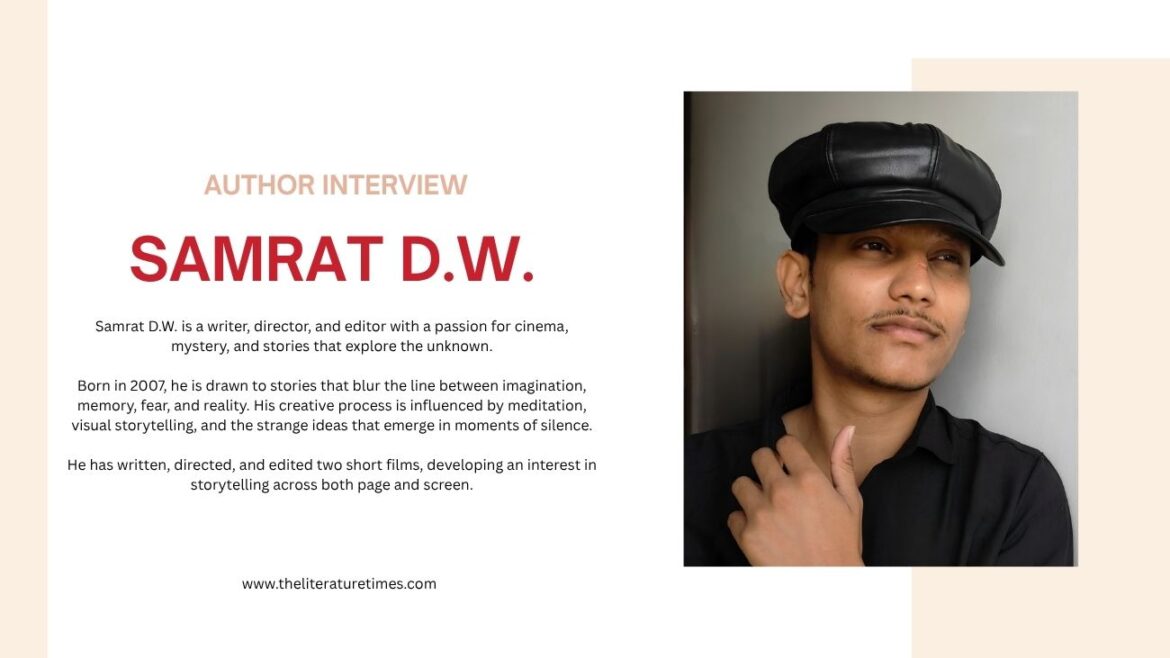
7. You are also a writer, director, and editor who has worked on short films. How has your experience in filmmaking influenced the way you write fiction?
Filmmaking has had a major influence on the way I write.
I tend to imagine scenes visually while writing. I think about what a character would notice first, what should remain hidden, where silence should fall, and how a scene might look or feel if it were on screen.
That has been especially useful when writing mystery and suspense because sometimes the most powerful moment is not what you show the reader, but what you make them wait to discover.
At the same time, writing fiction gives me a freedom that filmmaking does not always provide. I can spend more time inside a character’s thoughts, memories, doubts, and emotions.
So the two forms influence each other: filmmaking helps me think visually, while fiction allows me to go deeper into the inner world of the characters.
8. You have a strong interest in cinema, mystery, and stories exploring the unknown. Which authors, filmmakers, or works have influenced your creative imagination?
I have always been attracted to stories that create a strong atmosphere and allow the unknown to remain unknown for a while.
Cinema has especially influenced the way I think about suspense, visual storytelling, silence, pacing, and the importance of what is left unsaid.
I am also inspired by the creative process itself—ideas that appear unexpectedly, unusual images, moments of silence, and questions that refuse to leave your mind.
Rather than copying one particular creator or one particular style, I think my imagination has developed from absorbing many different kinds of storytelling and then allowing those influences to become something personal.
9. You were born in 2007 and have already explored storytelling through both literature and film. What have you learned from creating your earlier short films that helped you while writing The Twelfth Nun?
My earlier filmmaking experiences taught me the importance of patience and structure.
A story does not become effective simply because it contains a lot of ideas. The ideas have to be introduced at the right moment, and the audience needs space to experience them.
Short films also taught me to think carefully about every scene, every image, and every piece of dialogue. That became useful while writing the novel because I wanted each part of the story to contribute something to the overall atmosphere or mystery.
Most importantly, filmmaking taught me to trust visual storytelling and silence. Sometimes you do not need to explain everything immediately. Sometimes letting the audience wonder is much more powerful.
10. What do you hope readers feel or think about after finishing The Twelfth Nun? Is there a particular question you would like the story to leave in their minds?
More than anything, I hope readers feel that the story stayed with them after they finished it.
I would like them to remember the atmosphere, the questions, the emotions, and the feeling of uncertainty that follows the characters throughout the novel.
I also hope the story makes readers think about how easily fear can influence the way people see situations and make decisions.
And I would love for readers to finish the book with at least one question still in their minds—not because they were given an incomplete story, but because the story gave them something to think about beyond the final page.
11. Are you active on social media? How can readers follow your work, connect with you, or stay updated about your upcoming projects?
Yes. I am active on Instagram at **@samrat_d_w**, where I share updates about my writing, filmmaking, and creative work.
Some of my short-film work has also reached millions of views on Instagram, which has been incredibly encouraging for me as a young creator. It has shown me how quickly a story or a visual idea can connect with people when it reaches the right audience.
I enjoy using social media not only to share finished work, but also to connect with people who are interested in stories, films, and the creative process.
12. Where can readers buy The Twelfth Nun, and are there any upcoming books, films, or other creative projects you would like to tell our readers about?
The Twelfth Nun is available globally through major online platforms, including Amazon, Flipkart, and other leading book retailers, so readers from different parts of the world can access the book.
As for future projects, I am continuing to work on ideas in both literature and filmmaking. I am especially interested in stories that explore mystery, atmosphere, imagination, and the unknown.
I prefer to keep upcoming projects quiet until they are ready, because I enjoy allowing readers to discover a new story without knowing too much beforehand.
CLOSING
Thank you for giving me the opportunity to talk about The Twelfth Nun.
The book began with a dream and gradually became a much larger creative journey for me. It allowed me to explore mystery, fear, memory, faith, and the unknown while also learning more about myself as a writer.
I hope readers enjoy discovering the story for themselves.
And perhaps the best way to describe the journey of this book is:
“Some stories are imagined. Others find you.”