Bridging Traditional Ayurvedic Wisdom with Contemporary Gynecological Practice
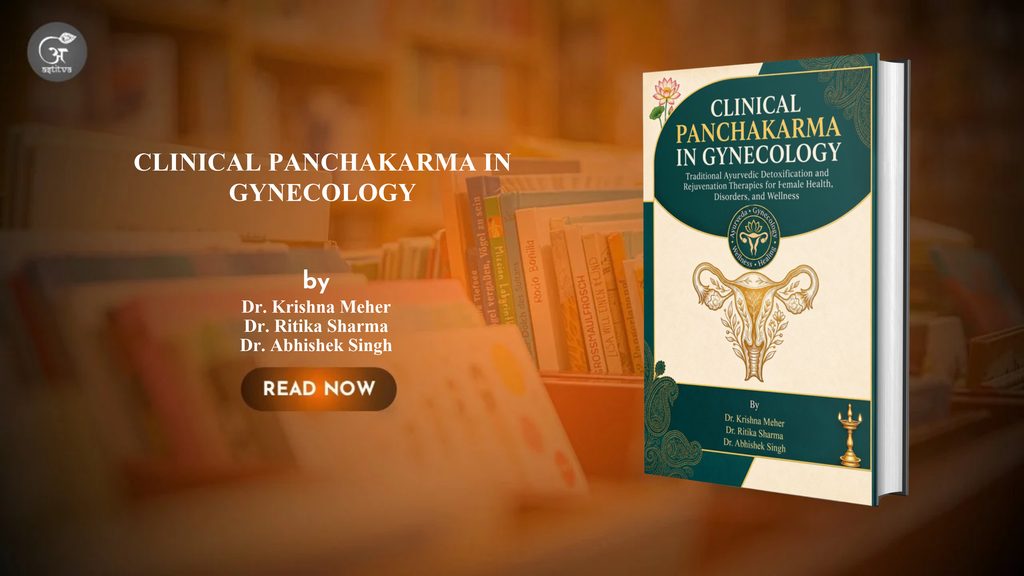
The field of women’s healthcare continues to evolve as medical practitioners explore comprehensive approaches to diagnosis, treatment, and patient well-being. Within Ayurveda, Panchakarma has long occupied a significant position as a systematic therapeutic approach focused on Shodhana, Dosha management, and the restoration of physiological balance. Addressing the need for greater clinical clarity in its application to women’s health, Clinical Panchakarma in Gynecology, authored by Dr. Krishna Meher, Dr. Ritika Sharma, and Dr. Abhishek Singh, presents a practice-oriented exploration of Panchakarma within the specialized discipline of gynecology.
The book aims to move beyond conventional theoretical discussions by examining the clinical considerations involved in applying Panchakarma principles to gynecological practice. With particular emphasis on patient assessment, therapeutic decision-making, procedural safety, and treatment monitoring, the publication seeks to serve as a valuable academic and professional resource for Ayurvedic practitioners, postgraduate scholars, educators, and students specializing in Prasuti Tantra and Stree Roga.
A Clinical Perspective on Panchakarma in Women’s Health
Panchakarma represents an important component of Ayurvedic therapeutics, traditionally associated with purification procedures and the management of Dosha imbalances. However, its application in gynecology demands specialized clinical understanding because women’s healthcare involves distinct physiological, reproductive, and therapeutic considerations.
Clinical Panchakarma in Gynecology addresses this complexity by emphasizing that successful clinical practice requires more than familiarity with individual Panchakarma procedures. Practitioners must also understand the principles of Prasuti Tantra and Stree Roga, recognize appropriate clinical indications, evaluate patient suitability, identify contraindications, and select suitable therapeutic formulations.
The authors approach these requirements from a practical perspective, presenting Panchakarma as a clinical discipline that demands careful assessment, appropriate planning, and responsible implementation.
An important aspect of the book is its recognition of the relationship between traditional Ayurvedic knowledge and contemporary gynecological practice. Rather than treating these fields as entirely separate, the publication encourages an informed understanding of how classical therapeutic principles may be considered within modern clinical settings, with attention to patient safety and professional judgment.
From Theoretical Knowledge to Practical Application
One of the central objectives of Clinical Panchakarma in Gynecology is to make the subject more clinically applicable.
The book’s approach places considerable importance on the practical details that influence therapeutic decisions. These include patient selection, indications and contraindications, drug selection, dosage, Anupāna, route of administration, treatment duration, procedural preparation, administration techniques, and monitoring requirements.
Such considerations are particularly relevant in gynecological care, where treatment decisions must account for individual patient characteristics and clinical circumstances.
The publication also emphasizes the importance of identifying clinical endpoints and recognizing potential complications. By incorporating these aspects into its clinical framework, the book seeks to encourage a structured and safety-conscious approach to Panchakarma practice.
This emphasis on procedural planning and monitoring distinguishes the publication’s stated objectives from a purely theoretical presentation of Ayurvedic therapeutic concepts.
Emphasizing Patient Safety and Clinical Responsibility
Patient safety is an essential consideration in every branch of healthcare, and the application of Panchakarma in gynecology is no exception.
The authors highlight the importance of appropriate patient selection and careful evaluation before initiating therapeutic procedures. Understanding indications and contraindications is particularly important because not every intervention is suitable for every patient or clinical condition.
The book’s focus on formulation selection, administration methods, treatment duration, and monitoring reflects the need for individualized clinical decision-making.
Equally significant is its attention to the management of complications. By acknowledging the importance of recognizing and responding to procedural difficulties, the publication promotes a more responsible understanding of Panchakarma as a specialized therapeutic practice.
This approach reinforces the principle that traditional medical knowledge should be applied with clinical discipline, appropriate training, and careful consideration of patient well-being.
An Academic Resource for Students, Researchers, and Practitioners
Clinical Panchakarma in Gynecology is positioned to support readers seeking a deeper understanding of the clinical application of Ayurvedic therapeutics in women’s healthcare.
For students of Ayurveda, particularly those studying Prasuti Tantra and Stree Roga, the book offers a framework for connecting theoretical principles with practical clinical considerations.
For postgraduate scholars and researchers, its emphasis on treatment parameters, patient selection, and clinical monitoring may provide useful direction for examining questions related to Panchakarma practice.
For Ayurvedic practitioners, the publication aims to support more systematic clinical reasoning by drawing attention to the multiple factors involved in selecting, preparing, administering, and evaluating therapeutic procedures.
The book may also be relevant to educators seeking to encourage discussion about the practical responsibilities associated with specialized Ayurvedic treatment.
Its educational value lies in its stated commitment to presenting clinical considerations in an organized manner, helping readers appreciate the importance of precision, preparation, and professional accountability.
The Authors’ Contribution to Ayurvedic Literature
Through Clinical Panchakarma in Gynecology, Dr. Krishna Meher, Dr. Ritika Sharma, and Dr. Abhishek Singh seek to address a specialized area of Ayurvedic clinical education.
Their collaborative work reflects an intention to present Panchakarma within gynecology as a field requiring detailed therapeutic understanding rather than procedural familiarity alone.
By focusing on practical parameters such as dosage, Anupāna, administration routes, treatment duration, monitoring, and complication management, the authors bring attention to important elements of clinical decision-making.
The publication’s stated purpose is particularly relevant to the continuing discussion about how traditional Ayurvedic therapeutic knowledge can be studied, taught, and applied responsibly within contemporary healthcare environments.
A Meaningful Addition to Specialized Ayurvedic Education
The growing importance of structured clinical education makes specialized academic resources increasingly relevant for healthcare students and professionals.
Clinical Panchakarma in Gynecology contributes to this educational need by emphasizing the practical responsibilities associated with Panchakarma in women’s healthcare.
Its approach encourages readers to consider not only the theoretical foundations of treatment but also the clinical questions that arise before, during, and after therapeutic procedures.
By bringing together Ayurvedic principles, gynecological considerations, procedural planning, and patient-safety concerns, the book aims to promote a more comprehensive understanding of the subject.
Importantly, its clinical framework should be understood as an educational resource rather than a substitute for qualified medical judgment, established safety standards, or evidence-based evaluation of treatment effectiveness.
Conclusion
Clinical Panchakarma in Gynecology by Dr. Krishna Meher, Dr. Ritika Sharma, and Dr. Abhishek Singh represents a focused effort to present Panchakarma as a practical clinical discipline within Ayurvedic women’s healthcare.
With its emphasis on patient selection, appropriate therapeutic planning, procedural safety, treatment monitoring, and complication management, the book seeks to strengthen the connection between theoretical knowledge and responsible clinical application.
For students, educators, researchers, and Ayurvedic healthcare professionals interested in the specialized relationship between Panchakarma and gynecology, this publication offers a relevant subject for academic study and professional reflection.
Ultimately, Clinical Panchakarma in Gynecology highlights an essential principle of healthcare education: meaningful clinical practice requires not only knowledge of therapeutic traditions but also careful assessment, sound judgment, and an unwavering commitment to patient safety.







Your perspective matters
Share your thoughts respectfully. Comments are moderated.