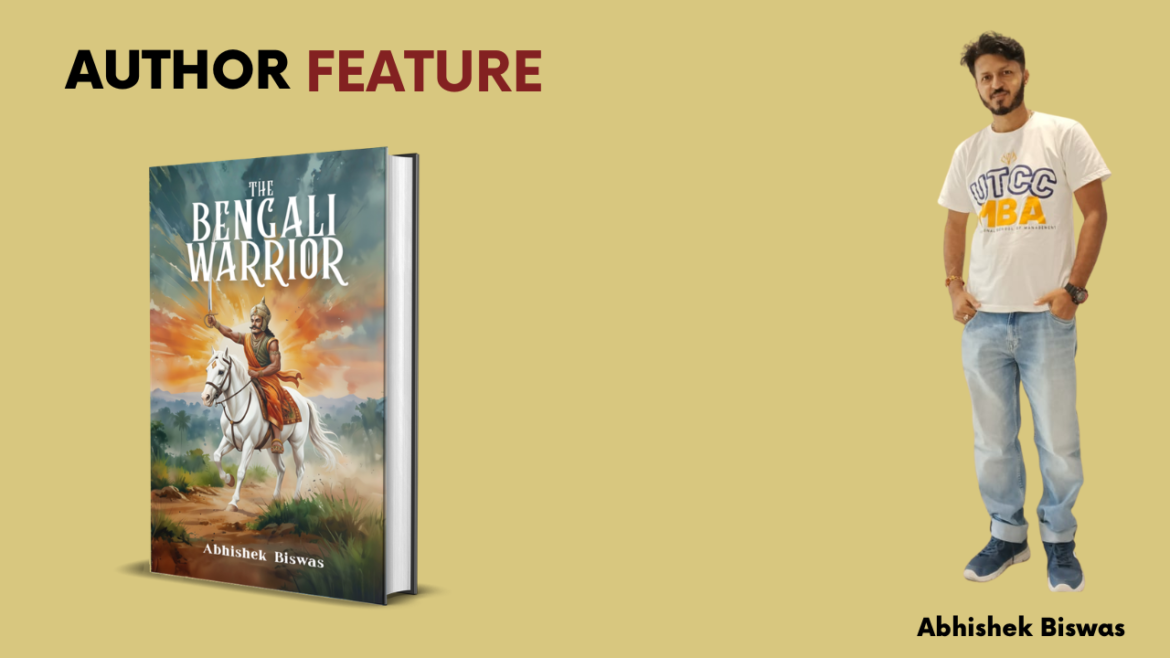
Rediscovering a Forgotten Hero: A Review of “THE BENGALI WARRIOR” by Abhishek Biswas
In the vast history of India, we often hear stories of the great Mughals or the brave Rajputs. But there are many heroes from other parts of our country whose stories are just as thrilling, yet they remain hidden in the pages of local history. Maharaj Pratapaditya, the King of Jessore, is one such legendary figure. In his debut historical fiction novel, “THE BENGALI WARRIOR,” author Abhishek Biswas brings this brave king back to life for the modern reader.
It is a story of pride, battle, and the fierce spirit of Bengal. Written in simple, easy-to-understand Indian English, this book is a must-read for anyone who loves a good story about courage and heritage.
The Story: A King Who Stood His Ground
The book is set in the late 16th and early 17th centuries. During this time, the Mughal Empire was spreading its wings across India. While many kings chose to bow down to the Mughals, Maharaj Pratapaditya of Jessore (which is in modern-day Bangladesh) decided to fight for his independence.
As one of the “Baro-Bhuyans” (the twelve powerful landlords of Bengal), Pratapaditya was not just a landlord; he was a visionary leader. He built a massive navy, established strong forts, and organized a disciplined army. Abhishek Biswas uses “historical fiction” to fill in the gaps of history. He doesn’t just give us dates; he gives us a character we can care about. He shows us the King’s struggles, his clever strategies, and his deep love for his land.
Why “Historical Fiction”?
Many people find history textbooks boring because they only list names and years. However, historical fiction adds “soul” to the facts. Biswas takes the real life of Maharaj Pratapaditya and adds emotions, dialogues, and vivid descriptions of the era.
When you read the book, you can almost hear the sound of the swords clashing and the roar of the cannons on the riverbanks of Bengal. The author describes the geography of the delta the twisting rivers and the thick forests and explains how the Bengali warriors used their knowledge of the land to fight a much larger enemy. It makes the reader feel like they are standing right there in the 1600s.
About the Author: A Unique Perspective
What makes this book special is the background of the author, Abhishek Biswas. He is not a traditional historian, and that is his biggest strength.
- Corporate Experience: With 15 years in the Indian corporate sector, Abhishek knows all about leadership, team management, and strategy. You can see this reflected in the book. He describes the King’s military and political decisions like a modern-day CEO handling a crisis.
- Teaching Background: Having taught computer science, Abhishek knows how to explain complex things in a very clear and simple way. He doesn’t use difficult “shashi-tharoor-style” words. He writes for the common Indian reader.
- International Edge: Currently pursuing an MBA in Thailand, Abhishek has a global perspective. He understands that for a local story to be successful today, it must be told with professional quality.
This mix of corporate logic and a teacher’s clarity makes the book very fast-paced and easy to follow.
The “Bengali Warrior” Spirit
The title of the book, The Bengali Warrior, is very important. Often, in popular culture, Bengalis are seen only as poets, thinkers, or artists. While that is true, Abhishek Biswas reminds us that Bengalis were also fierce warriors and master sailors.
The book highlights the “Naval Power” of Jessore. At a time when many Indian kingdoms didn’t focus on the sea, Pratapaditya built a navy that could challenge the best. This is a matter of great pride for any reader who wants to know about India’s maritime (sea-based) history.
Simple Terms for All Readers
One of the best things about this book is its language. It is written in simple Indian English. The author understands that a 15-year-old student and a 50-year-old busy professional both want a story they can read without a dictionary.
The chapters are short and exciting. The characters are introduced clearly, and the “hero vs. villain” conflict is handled with high drama. It feels like watching a big-budget historical movie on a streaming platform.
A Bridge to Our Roots
For many Indians, especially those with roots in Bengal or Bangladesh, this book is an emotional journey. Jessore is a place many have heard of from their grandparents. By writing about its greatest King, Abhishek Biswas helps the younger generation connect with their ancestors.
He shows that our history is not just about being “ruled” by others, but also about “resistance.” Maharaj Pratapaditya’s story is a reminder that even a small kingdom can stand up to a giant empire if it has a brave leader and a united people.
Why You Should Read It
- To Learn History Easily: You will learn about the Baro-Bhuyans and the struggle against the Mughals without feeling like you are studying for an exam.
- For Action and Adventure: The book is full of battle scenes, secret meetings, and political games.
- To Support New Authors: Abhishek Biswas is a fresh voice in Indian literature who is trying to bring “regional heroes” to the national stage.
- For Inspiration: The King’s dedication to his people and his courage in the face of defeat is very inspiring for anyone facing challenges in their own life.
Final Verdict: A Brave Effort
“THE BENGALI WARRIOR” is a fantastic debut. It is an honest and hardworking attempt to tell a story that deserves to be known by every Indian. Abhishek Biswas has successfully moved from the world of “Computer Science and MBA” to the world of “Swords and Shields.”
If you are looking for a book that is easy to read, full of action, and rich with Indian culture, pick up a copy of this novel. It is time we celebrate the “Warriors” of our past, and Abhishek Biswas is the perfect guide to lead us there.
Book Review at a Glance:
- Title: THE BENGALI WARRIOR
- Author: Abhishek Biswas
- Genre: Historical Fiction
- Readability: Very Easy (Simple Indian English)
- Perfect for: History lovers, students, and fans of action-adventure stories.