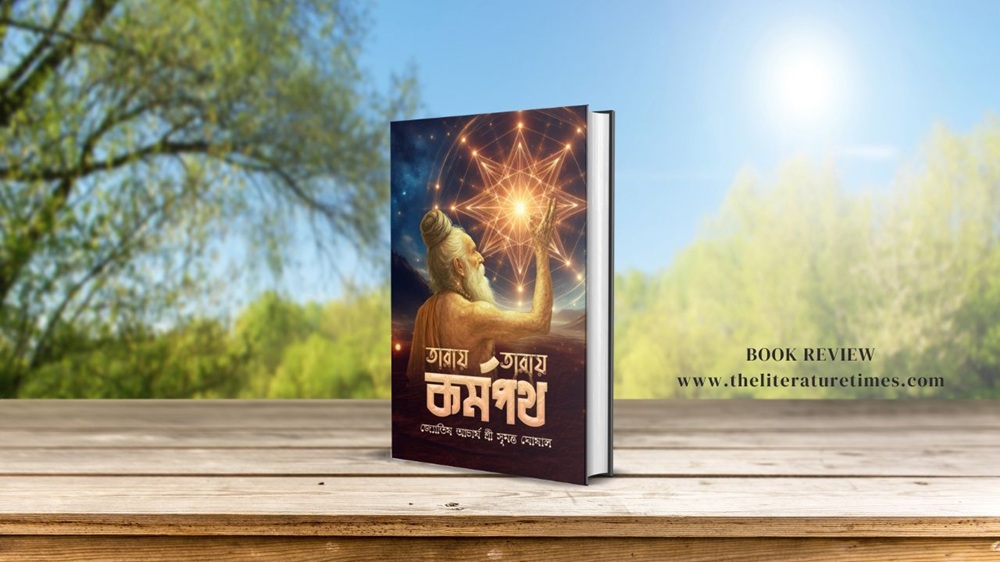
Astrology has long been regarded as a guiding force in understanding human nature, destiny, and life’s direction. In contemporary times, where career choices have become increasingly diverse and complex, the need for clarity regarding professional paths has become more relevant than ever. Career Path from Star to Star: An Astrological Analysis of Various Professions by Sumanta Ghosal emerges as an insightful attempt to bridge ancient astrological wisdom with the demands of the modern professional world. Written with sincerity and rooted in years of experience, the book offers readers a thoughtful exploration of how Vedic astrology can be used to interpret career inclinations and professional possibilities.
One of the most striking aspects of the book is its practical orientation. Rather than presenting astrology as a mysterious or purely predictive discipline, the author approaches it as a structured and analytical science. Sumanta Ghosal explains astrological principles related to professions in a manner that is accessible to both experienced astrologers and newcomers to the field. His effort to contextualize traditional astrological knowledge within modern career frameworks makes the book especially relevant for contemporary readers. As professions continue to evolve with technological and societal changes, the author acknowledges the limitations of older classifications and encourages future astrologers to expand and refine these principles further.
The book reflects the author’s deep respect for Vedic Parashari astrology and its enduring relevance. Throughout the narrative, there is a clear sense of devotion not only to the discipline itself but also to the spiritual foundations that support it. This spiritual undertone adds authenticity to the work and distinguishes it from purely commercial or sensational approaches to astrology. The author’s prayerful hope that readers may be illuminated by the divine light of astrology creates a tone of humility and sincerity that resonates strongly throughout the text.
Another commendable feature of the book is the use of examples to explain complex concepts. Astrology, particularly when related to career analysis, can often appear overwhelming to readers unfamiliar with planetary combinations, houses, and yogas. However, Sumanta Ghosal makes a conscious effort to simplify these ideas through practical illustrations. These examples not only enhance understanding but also demonstrate how astrological principles can be interpreted in real-world scenarios. This balance between theoretical knowledge and practical application gives the book both educational and functional value.
The author’s experience and background contribute significantly to the credibility of the work. Having practiced Vedic astrology for more than two decades, Sumanta Ghosal brings a level of depth and maturity that can only come through years of dedicated study and observation. Born into a Bengali Brahmin family in Chandannagar, his early fascination with astrology and spiritual subjects shaped his intellectual and personal journey. Beginning his astrological practice at the age of seventeen, he developed his knowledge further under the guidance of his गुरु, the late Dr. Shri Rantosh Saha. This traditional teacher-disciple lineage adds authenticity to his learning and reflects the disciplined foundation upon which his work is built.
What also enriches the book is the author’s multidisciplinary understanding of related fields such as South Indian Nadi astrology, Bhrigu Nadi astrology, Sankhya philosophy, and Vastu Shastra. This wider perspective allows him to approach astrology not as an isolated system but as part of a larger spiritual and philosophical tradition. Readers can sense that his interpretations are informed by a broad and holistic understanding of Indian metaphysical sciences. This depth of knowledge enhances the overall reading experience and lends the book a scholarly dimension.
The language and tone of the book remain grounded and respectful, avoiding exaggerated claims or dramatic promises. Instead of portraying astrology as an infallible mechanism, the author presents it as a guiding framework that can help individuals better understand their natural tendencies and vocational potential. This measured approach makes the book more trustworthy and intellectually balanced. The emphasis on learning, interpretation, and continuous evolution of astrological understanding reflects the author’s mature perspective on the subject.
At the same time, the book also serves as a valuable contribution to regional language literature on astrology. By presenting these concepts through the Bengali language, the author makes astrological knowledge more accessible to Bengali-speaking readers who may prefer learning complex subjects in their native language. This cultural and linguistic connection adds another layer of importance to the work, preserving and promoting traditional knowledge systems within regional literary spaces.
One of the book’s strongest qualities is its forward-looking vision. Sumanta Ghosal recognizes that modern society is continuously generating new professions and unconventional career paths that traditional astrological texts may not have explicitly addressed. Rather than treating classical knowledge as fixed and unchangeable, he encourages future astrologers to adapt, reinterpret, and expand upon existing principles. This openness to growth demonstrates intellectual flexibility and ensures that astrology remains relevant in changing times. It is this blend of tradition and adaptability that gives the book contemporary significance.
The writing also carries a reflective and almost meditative quality. There is an evident sense of responsibility in the author’s words, as though he sees his work not merely as a publication but as a contribution to a larger spiritual and intellectual journey. His hope that the book will support aspiring astrologers and benefit the astrological community reflects genuine dedication to sharing knowledge rather than seeking recognition alone.
While the book is deeply rooted in astrological principles, it also indirectly raises broader questions about destiny, purpose, and self-awareness. Readers may find themselves reflecting not only on career possibilities but also on the deeper relationship between human effort and cosmic influence. In this sense, the book goes beyond vocational analysis and enters the realm of philosophical inquiry. It reminds readers that career is not merely about earning a livelihood but also about understanding one’s inherent nature and aligning with one’s potential.
Overall, Career Path from Star to Star is a meaningful and thoughtful addition to contemporary astrological literature. It combines traditional wisdom, practical examples, spiritual depth, and modern relevance in a balanced and engaging manner. Sumanta Ghosal’s experience, humility, and dedication are evident throughout the work, making it both informative and inspiring. For readers interested in Vedic astrology, career guidance, or the evolving application of ancient knowledge in modern life, this book offers valuable insights and a sincere perspective. It stands as a testament to the enduring relevance of astrology and the continuing efforts of scholars and practitioners who seek to keep this ancient discipline alive and meaningful for future generations.