The Screen in Our Pocket: A Review of “Mobile ka Janm” by Vinod Thakor
In today’s world, the first thing we do when we wake up is reach for our mobile phones. Whether it is a small child watching cartoons, a student attending a class, or an elder checking the news, the mobile phone has become like an extra limb of the human body. but is this “birth” of the mobile phone a blessing or a curse?
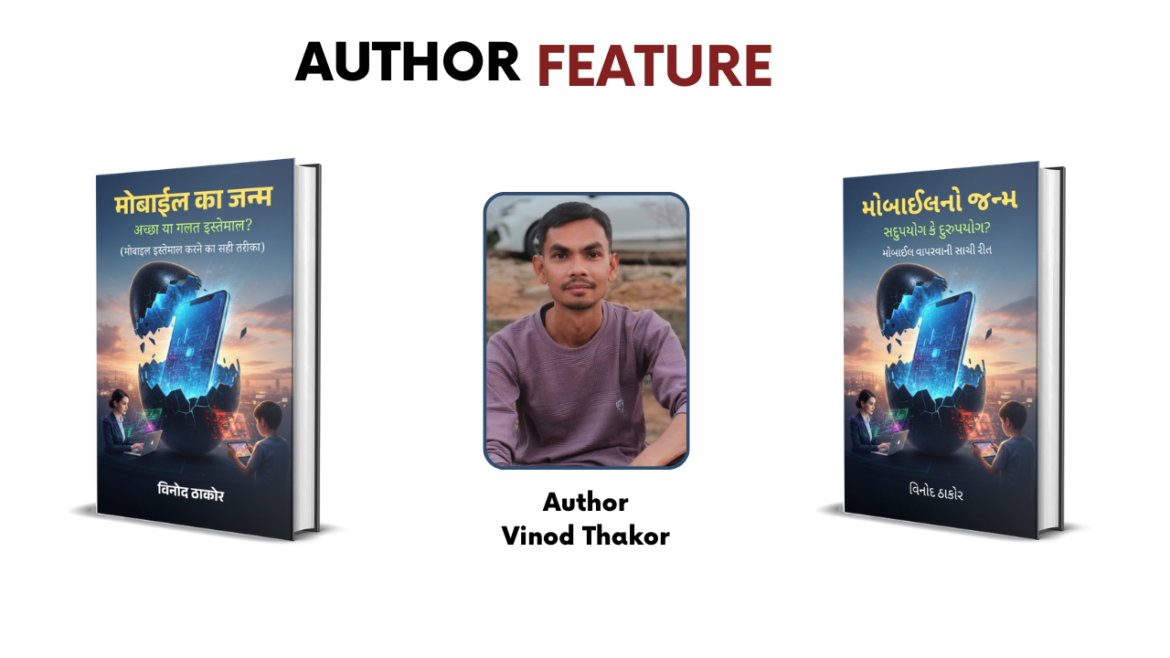
Vinod Thakor, in his thought-provoking book “Mobile ka Janm – Achha ya Galat Istemal?”, takes a deep dive into this very question. Working a government job by day and writing by night, Thakor brings a practical, “common man” perspective to one of the biggest challenges of the 21st century. This book is not just a study of technology; it is a guide for better living in a digital age.
A Tale of Two Worlds: Before and After
The most nostalgic part of the book is where Thakor describes life before the mobile phone arrived. He reminds us of a time when:
- People talked to each other in buses and trains instead of staring at screens.
- Children played outside in the dust and sun rather than on video games.
- Waiting for someone didn’t feel boring because we had the patience to just sit and think.
- Privacy was real, and “status” meant how you treated people, not what you posted online.
By comparing that simple past with our high-tech present, the author makes us realize how much we have gained, but also how much we have silently lost. He shows that while the mobile phone brought the “world” closer, it often pushed the “family” sitting in the same room further apart.
The Two Sides of the Coin: Advantages vs. Disadvantages
Vinod Thakor does not say that mobile phones are “bad.” Being a government employee, he knows the value of technology in making life efficient. He presents a balanced view:
The Good (Achha Istemal):
- Information at your fingertips: You can learn any skill or find any location in seconds.
- Safety: The ability to call for help during emergencies.
- Connectivity: Staying in touch with loved ones who live far away.
The Bad (Galat Istemal):
- Health Issues: Eye strain, neck pain (“text neck”), and lack of sleep.
- Mental Health: The “FOMO” (Fear Of Missing Out) and the constant need for likes and comments.
- Time Wastage: Spending hours scrolling through “reels” or “shorts” without learning anything new.
The book explains that a mobile phone is just a tool. Just like a knife can be used to cut fruit or cause harm, a mobile phone’s impact depends entirely on the person holding it.
The “100 Ways” to Break the Addiction
The most practical and valuable part of this book is the section where the author shares 100 ways to stay away from mobile phones. This isn’t just theory; these are actionable steps.
Some of the simple yet effective ideas include:
- Phone-Free Zones: Keeping phones away from the dining table and the bedroom.
- Hobby Revival: Picking up a physical book, a paintbrush, or a musical instrument.
- The “60-Minute Rule”: Not touching the phone for the first hour after waking up and the last hour before sleeping.
- Digital Fasting: Setting aside one day a week (like Sunday) to stay completely offline.
Thakor understands that “Digital Detox” is hard in 2026. He doesn’t ask you to throw your phone away; he teaches you how to tame it so that it doesn’t control your life.
About the Author: The Night Writer
The story of the author, Vinod Thakor, is as inspiring as the book. At 33, he balances the responsibilities of a government job with his passion for literature. While most people use their nights to scroll through social media, Thakor uses his time to write and reflect.
This discipline is reflected in his writing. His style is simple, direct, and honest. He doesn’t use complex technical jargon. Instead, he speaks like a brother or a friend who is concerned about the direction society is moving in. His goal is simple: To help people use technology without losing their humanity.
Why Every Indian Household Needs This Book
In India, we are seeing a massive “Mobile Explosion.” Even in small villages, everyone has a smartphone. However, very few people have been taught Digital Etiquette or Mobile Safety.
- For Parents: This book is a must-read to understand how to manage their children’s screen time.
- For Students: It helps them understand the difference between using a phone for “Education” and using it for “Distraction.”
- For Elders: It helps them navigate the new world without feeling overwhelmed.
The book is written in very simple terms, making it accessible to those who might not be highly tech-savvy but want to improve their lifestyle.
The Final Verdict: A Timely Warning
“Mobile ka Janm” is a mirror held up to our modern lives. It asks us a very important question: Are you using the phone, or is the phone using you?
Vinod Thakor has done a great service by documenting the transition from the “analog” world to the “digital” world. He reminds us that the best “connection” isn’t 5G or Wi-Fi it is the human connection.
If you feel like your day is disappearing into a black hole of screen time, or if you feel disconnected from your family despite being “connected” online, this book will provide you with the “100 lamps” of guidance you need to find your way back. It is a simple, honest, and highly necessary book for the times we live in.
Review at a Glance:
- Book Title: Mobile ka Janm – Achha ya Galat Istemal?
- Author: Vinod Thakor
- Core Theme: Balancing technology with real life.
- Special Feature: 100 practical ways to reduce mobile addiction.
- Verdict: 5/5 Stars for practicality and simplicity. A life-changing guide for the digital age.