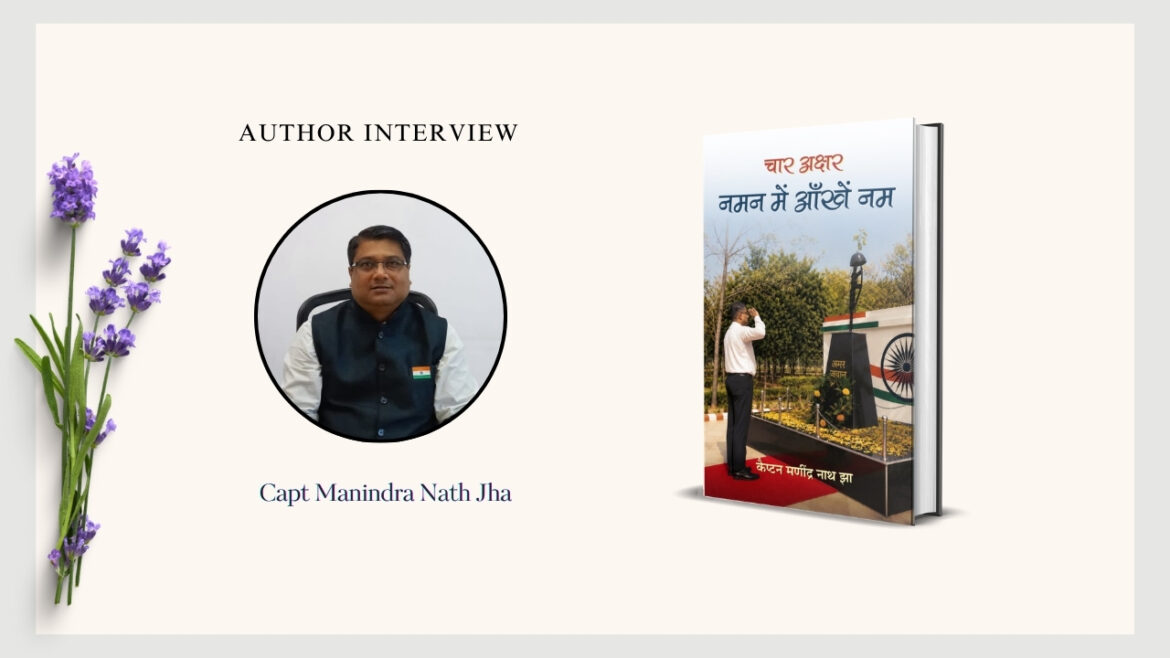
The Literature Times: What inspired you to write Char Akshar – Naman Mein Ankhen Nam, and what message did you most want readers to take away from it?
Capt. Manindra Nath Jha: Char Akshar – Naman Mein Ankhen Nam emerged from my deep personal reverence for our soldiers and their families. I wrote it to give voice to the emotions that words often fail to express—a humble naman to their courage, sacrifice, and silent strength.
I wanted readers to look beyond the uniform and understand the silent pain and of our soldiers & their families and understand the emotional cost borne by those left behind.
The message I hope readers take away is simple: true tribute to a martyr means not only saluting his sacrifice, but also standing with and honoring his family.
The Literature Times: How did your experience as an Army officer influence the way you portray courage, duty, and sacrifice in your poetry?
Capt. Manindra Nath Jha: My years in the Army gave me a close understanding of courage, duty, and sacrifice. I have seen courage in moments of fear, duty in moments of hardship, and sacrifice that often goes unspoken. I have tried to bring that authenticity into my poetry, portraying the silent emotions behind the uniform.
The Literature Times: Your book pays tribute not only to soldiers but also to their families. Why was it important for you to highlight their silent sacrifices?
Capt. Manindra Nath Jha: As a soldier, I have always felt that the sacrifice of a serviceman is also borne by his family. They silently live with separation, uncertainty, and loss. I wanted my poetry to acknowledge their pain and remind readers that behind every brave soldier stands a family whose sacrifice deserves equal respect and gratitude.
The Literature Times: How do you balance the emotional sensitivity of a poet with the discipline and strength you developed during your military career?
Capt. Manindra Nath Jha: The military taught me discipline, resilience, and courage, while poetry taught me to pause, feel deeply and express those emotions. Together, they help me write with sensitivity.
The Literature Times: What does patriotism mean to you personally, and how has your understanding of it evolved over the years?
Capt. Manindra Nath Jha: To me, patriotism is a quiet commitment to the nation—a willingness to put duty before self and remain steadfast when the nation calls. With time, I have realised that patriotism does not end at the battlefield; it also lives in integrity, responsibility, and in honouring those who sacrifice for the country.
The Literature Times: Was there any particular incident, memory, or personal experience that emotionally shaped the poems in this collection?
Capt. Manindra Nath Jha: Yes. My years in the Army brought me close to the courage of soldiers and, equally, to the silent pain of their families. Witnessing their sacrifices, especially the emotions of parents who lost their sons, left a deep impression on me. Many of these memories quietly found their way into my poems.
The Literature Times: The title Char Akshar – Naman Mein Ankhen Nam carries a strong emotional significance. How did you arrive at this title?
Capt. Manindra Nath Jha: The title emerged naturally from the emotion of the poems—a simple “Naman” that carries the weight of countless sacrifices and leaves the eyes moist.
The Literature Times: What role do you believe poetry can play in preserving the memories and legacy of soldiers and martyrs for future generations?
Capt. Manindra Nath Jha: Poetry can turn the sacrifice of our soldiers and martyrs into living memory—preserving their courage, values, and stories while inspiring future generations to honour their legacy and build a stronger nation.
The Literature Times: Your previous collection was Char Akshar – Bas Yun Hi. How is this new collection different in terms of themes, emotions, and your growth as a poet?
Capt. Manindra Nath Jha: Char Akshar – Bas Yun Hi was a journey inward, shaped by personal emotions and reflections. Char Akshar -Naman Mein Ankhen Nam looks beyond the self—to patriotism, sacrifice, and remembrance. Both collections come from the same depth of feeling. The difference lies not in the intensity of feeling, but in the themes and experiences that inspired them.
The Literature Times: What would you like young readers to learn from the courage, values, and sacrifices reflected in Char Akshar – Naman Mein Ankhen Nam?
Capt. Manindra Nath Jha: I want young readers to see courage not merely as the strength to face adversity, but as the conviction to live with values, responsibility, and compassion. Through Char Akshar – Naman Mein Ankhen Nam, I hope they develop a deep respect for our soldiers and martyrs who make the ultimate sacrifice, and for the families who silently bear its lifelong pain. May their sacrifice inspire our youth to become responsible citizens and channel their ideals, energy, and talent towards building a stronger and self-reliant India.