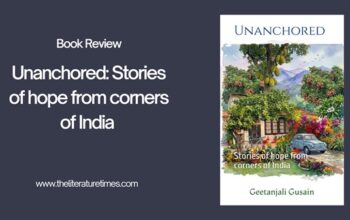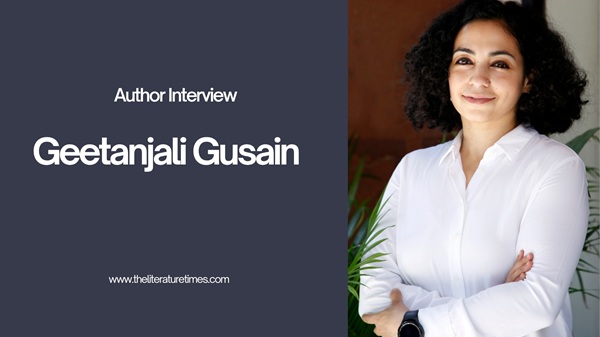
1. Geetanjali, The Meaning of Being Unanchored: Your book explores people standing at crossroads in their lives. What does being unanchored mean to you personally, and how did this idea inspire the collection?
Geetanjali Gusain: When I was writing, it wasn’t with the intention of publishing so it’s not like this idea inspired the collection. It’s when I re-read the stories that I could see how they had this common thread between them. At first, I thought of calling the collection Anchors Aweigh but is a nautical phrase not commonly understood by anyone. Mainly I wanted to emphasize how not having an anchor is not a tragedy but a way to see that the journey lies ahead of you, you’ve sailed off and the rest is what you make of it. That is what Unanchored means to me.
2. India as a Storytelling Landscape: Your stories travel through diverse places, from Udaipur to Bhimtal and Daman. How do the landscapes and cultural identities of these places influence the emotional journeys of your characters?
Geetanjali Gusain: These landscapes and cultures aren’t decorative backdrops but living parts of me that flow naturally into my characters’ lives. I’ve had the privilege of traveling extensively across India. I experienced these places from the inside out, lived alongside the locals, sharing their home cooked food, observing their mannerisms, seeing what made them smile, what made them frown. I just captured the home that opened its doors for me and the families I made in different corners of this diverse country.
Travel is one powerful way of experiencing the world, and reading is another and through these stories, I hope to have opened a portal for readers to get a glimpse of these amazing places.
3. Finding Strength in Vulnerability: One of your narratives follows a man rebuilding his identity after a life-altering stroke. What inspired you to explore vulnerability as a source of strength rather than weakness?
Geetanjali Gusain: That story comes directly from my grandmother’s life. She was someone who crossed over from Peshawar during Partition, built a life from scratch, faced immense hardship, and always bounced back. Later in life, when she suffered a paralytic stroke, she showed that same extraordinary spirit and fought her way back once again. The way she overcame her challenges taught me a profound truth that I poured straight into the story, the bonsai “was whole not despite its limitations, but because of how it grew around them.” Seeing a reader on Goodreads resonate with that same truth in their own life has been the most meaningful part of sharing it.
That is the fundamental divide of human existence, isn’t it?
When circumstance casts us into the crucible of a trial, inaction reduces us to being victims, leaving us to mourn our fate. Yet, the moment we choose to act, to stand, to resist, to move, it’s then that the confidence of the survivor shines bright, transforming us from victims of circumstance into conquerors of destiny saying life, bring it on!
4. The Conflict Between Expectations and Dreams: Your stories explore the weight of familial expectations and the struggle for personal freedom. How can people honour their family relationships while remaining true to their own aspirations?
Geetanjali Gusain: Because every relationship is uniquely shaped by the people in it, there’s no single, one-size-fits-all formula. For some people, placing family above all else brings genuine fulfilment, and that choice is valid. But for many, it doesn’t. Living entirely for others at the cost of your own truth isn’t sustainable and if sacrifice under the guise of respect leaves you miserable and resentful, it’s not worth it. That’s why honest communication is so critical. None of us are perfect, we are all humans and balance is essential in every corner of life.
5. The Stories Behind the Stories: Among the fourteen narratives in Unanchored, is there a particular character or story that challenged you emotionally or changed your perspective while writing it?
Geetanjali Gusain: Not particularly. I accompanied these characters from the beginning of the journey to the end, so writing them felt more like listening to them as we walked together. And I intentionally left several of the endings open to interpretation instead of imposing dramatic resolutions or forcing my own perspective. Does a character stay or go? That choice rests with the reader. At their core, these are stories of hope, and hope isn’t something you can dictate. I gave my readers room to decide what happens next.
6. A Message for Readers Searching for Belonging: Your book suggests that belonging is not found on a map but in unexpected places where our hearts come to rest. What would you like to say to readers who currently feel lost, disconnected, or uncertain about their place in the world?
Geetanjali Gusain: Like I said earlier, when a ship’s anchor has been lifted off, it frees the vessel to begin its voyage. If you are feeling lost, disconnected, or uncertain about your place in the world, please know that you will find your way. There is no single rule set written in stone for how to exist in this world or where you ought to land. Look at nature, some trees grow straight up toward the sky, while others branch wide and cover more ground. Both are normal. Both are beautiful. Give yourself permission to grow at your own pace, and trust that wherever your heart comes to rest, that is where you belong.