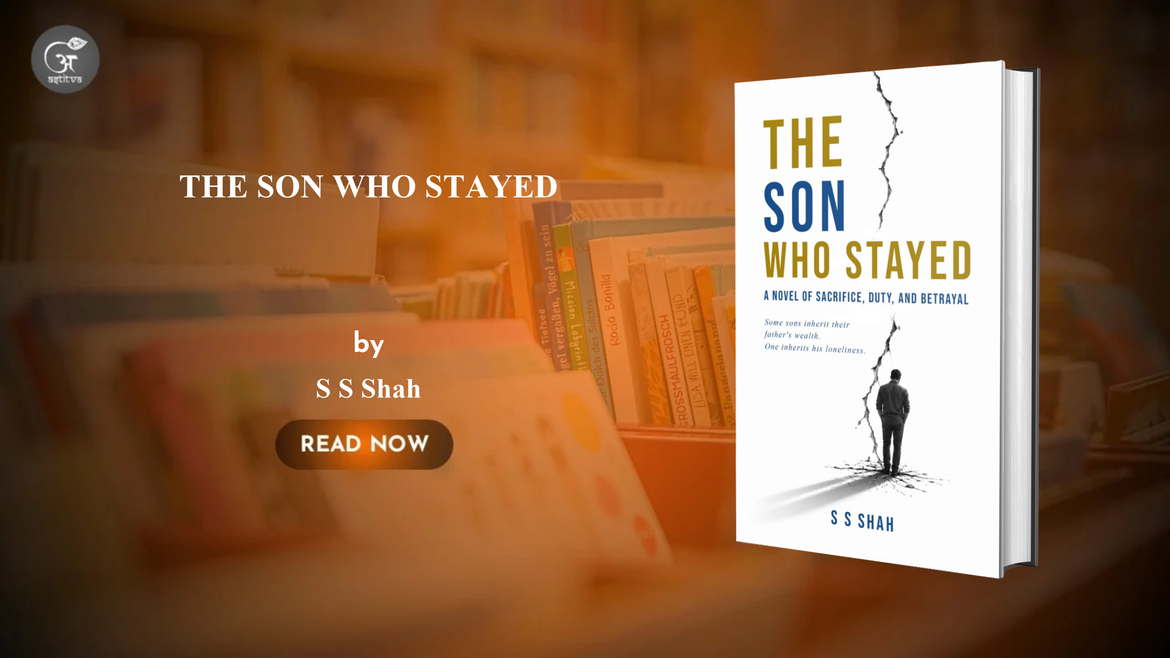
A deeply emotional story exploring a son’s unwavering devotion to his father, the sacrifices made in the name of love, and the heartbreaking consequences of jealousy within a family.
Family is often considered the strongest foundation of love, trust, and belonging. Yet, behind the walls of even the closest families, unspoken resentments, jealousy, and conflicting expectations can quietly grow. Exploring these delicate complexities of human relationships, author S S Shah presents THE SON WHO STAYED, an emotionally compelling novel that examines the true meaning of sacrifice, loyalty, and the painful reality of familial betrayal.
At the heart of THE SON WHO STAYED lies the story of a devoted son who dedicates his life to caring for and serving his father. While others pursue their individual ambitions, personal comforts, and independent lives, he chooses a different path—one defined by responsibility, unconditional love, and an unwavering commitment to the man who raised him.
His devotion is not driven by the expectation of wealth, recognition, or reward. Instead, it emerges from a deep sense of gratitude and an emotional bond that transcends material considerations. For him, being present for his father is not merely an obligation but a personal commitment that shapes his identity and the course of his life.
However, what should have been a relationship admired and respected by the entire family gradually becomes a source of resentment. His siblings, unable to accept the special closeness he shares with their father, begin to view his devotion through the lens of jealousy and suspicion.
The emotional tension within the family reveals a painful truth: sometimes, the people closest to us are the ones who struggle most to understand our intentions.
As the story unfolds, the son’s sacrifices become increasingly significant. He gives up opportunities, personal aspirations, and precious years of his life to remain beside his father. His choices reflect the quiet sacrifices made by countless individuals who place family responsibilities above their own dreams.
Yet, the true test of his loyalty arrives after his father’s death.
The loss of his father is devastating, but the grief is soon accompanied by another unexpected tragedy. The very siblings who should have stood beside him during his darkest moments instead turn against him. Their long-standing jealousy transforms into rejection, leaving him ostracised from the family to which he has devoted so much of his life.
Suddenly, the son who remained present through years of responsibility and sacrifice finds himself isolated, misunderstood, and deprived of the emotional support he needs most.
This heartbreaking transformation forms the emotional foundation of THE SON WHO STAYED.
Through the protagonist’s journey, S S Shah explores the complicated relationship between duty and personal happiness. The novel raises important questions about the sacrifices individuals make for their loved ones and whether such sacrifices are ever truly acknowledged.
What happens when a lifetime of devotion is met with rejection? How does a person rebuild a sense of belonging after being abandoned by the very people who once defined his world? And can the value of unconditional love ever be measured by the recognition it receives?
These questions give the narrative a universal emotional relevance.
One of the most significant themes explored in the book is the contrast between genuine devotion and perceived favouritism. While the protagonist considers his relationship with his father an expression of love and responsibility, his siblings interpret that closeness differently. This difference in perception creates a powerful emotional conflict, demonstrating how jealousy can distort relationships and gradually destroy the bonds that once held a family together.
The novel also draws attention to the often-overlooked emotional struggles of caregivers. In many households, one family member quietly assumes the responsibility of caring for ageing parents, frequently sacrificing career opportunities, personal relationships, and individual ambitions. Such sacrifices may remain invisible to others, particularly when family relationships become complicated by misunderstandings and resentment.
By placing this experience at the centre of the narrative, THE SON WHO STAYED offers readers an opportunity to reflect on the emotional cost of responsibility and the importance of recognising those who devote themselves to the well-being of others.
Beyond its exploration of family conflict, the book is also a story about dignity, emotional endurance, and the search for meaning after profound personal loss. The protagonist’s journey represents the struggle of an individual who must confront not only the absence of a beloved parent but also the painful collapse of relationships he once believed were permanent.
The title itself carries considerable emotional weight. THE SON WHO STAYED represents a choice that is simple in appearance yet extraordinary in its consequences. Staying means being present when circumstances become difficult, accepting responsibilities that others may avoid, and continuing to offer love without any guarantee of appreciation.
In a world where personal achievement and independence are frequently celebrated, the novel invites readers to consider another form of courage—the courage to remain, to care, and to fulfil one’s responsibilities despite the sacrifices involved.
S S Shah’s central narrative also encourages reflection on the fragile nature of family unity. Relationships built over decades can be damaged by jealousy, assumptions, and unresolved emotional conflicts. The story reminds readers that shared blood does not automatically guarantee understanding, compassion, or loyalty.
At the same time, it highlights the enduring significance of a parent’s love and the profound influence that relationship can have on a child’s life.
The emotional themes of THE SON WHO STAYED are likely to resonate with readers who appreciate family dramas, relationship-centred fiction, and stories that explore the complexities of human behaviour. Its subject matter speaks particularly to those who have experienced the challenges of caregiving, the responsibilities of family life, or the disappointment of having their sacrifices misunderstood.
Rather than presenting family relationships as uncomplicated sources of happiness, the novel examines their contradictions with an emphasis on the emotional experiences of the individual at the centre of the conflict.
Ultimately, THE SON WHO STAYED is more than a story about a son’s devotion to his father. It is a reflection on the meaning of loyalty, the consequences of jealousy, and the emotional strength required to endure rejection without losing sight of one’s values.
Through this moving premise, S S Shah invites readers to reconsider what it truly means to love someone selflessly and whether the worth of sacrifice depends on the gratitude of others.
With its exploration of duty, sacrifice, grief, and familial betrayal, THE SON WHO STAYED promises an emotionally engaging reading experience that encourages reflection long after the final page.
About the Author
S S Shah is the author of THE SON WHO STAYED, a novel centred on the emotional complexities of family relationships, parental devotion, personal sacrifice, and betrayal. Through the story of a son whose lifelong commitment to his father leads to unexpected isolation, Shah explores questions of loyalty, responsibility, and the human need for acceptance and belonging.
About the Book
Title: THE SON WHO STAYED
Author: S S Shah
Genre: Contemporary Fiction / Family Drama / Emotional Fiction
THE SON WHO STAYED tells the poignant story of a son who sacrifices his personal aspirations to devote his life to his father. However, his closeness to his father creates jealousy among his siblings. Following his father’s death, he faces rejection and ostracism from his own family. The novel captures his emotional journey through sacrifice, loss, betrayal, and the difficult realities of family relationships.