The Literature Times: What inspired you to write Bhor Ki Pankhudi, and how did the idea of Rudra and Kavya’s story first come to your mind?
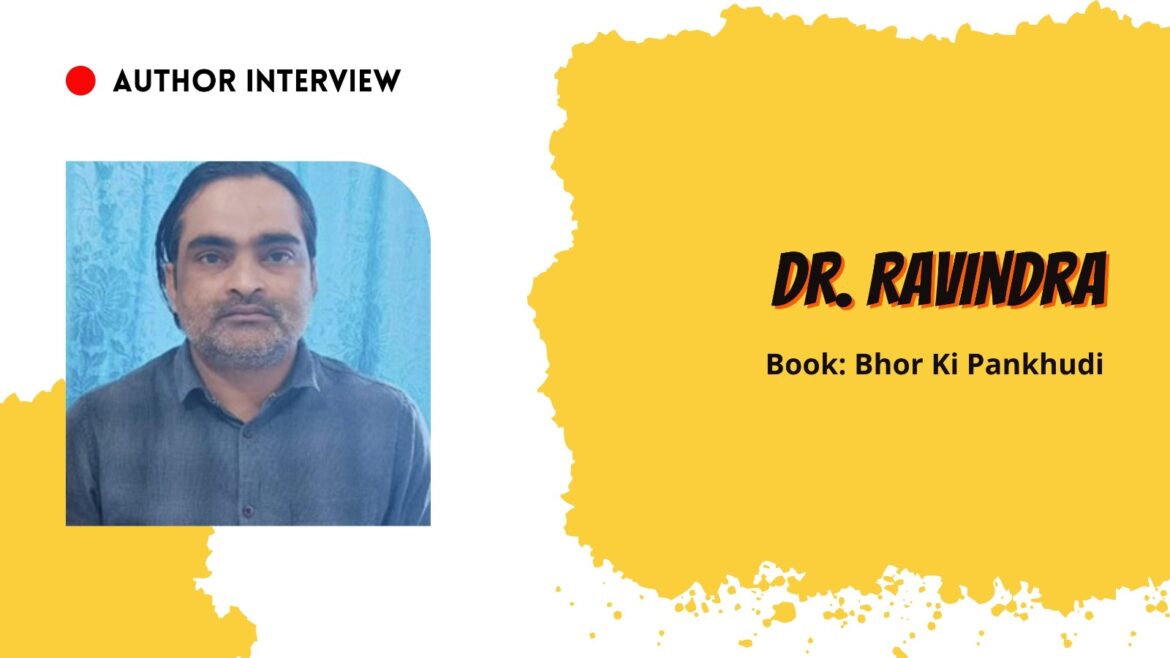
Dr. Ravindra: The seeds of this story were sown during the intense days of my 12th grade and medical entrance exam preparations. I distinctly remember the immense pressure and stress of studying for hours on end. It was during that period of struggle that the idea of Rudra and Kavya first came to me. I started thinking about how, amidst the cut-throat competition and the weight of textbooks, two souls could find comfort and solace in each other. This novel is a reflection of that journey-how love can bloom even in the most stressful and demanding phases of a student’s life.
The Literature Times: Your novel beautifully portrays silent and unspoken love. Do you believe emotions are sometimes more powerful when left unsaid?
Dr. Ravindra: Your novel beautifully portrays silent and unspoken love. Do you believe emotions are sometimes more powerful when left unsaid?
Dr. Ravindra: Yes, absolutely. Some emotions gain greater depth when they remain unspoken. Silence often carries feelings that words fail to explain. Unsaid love can stay in the heart longer than expressed emotions.
The Literature Times: As a medical professional, how much of your real-life experiences influenced the emotional and academic journey of the characters in the book?
Dr. Ravindra: My professional journey gave me a close understanding of discipline, struggle, dedication, and emotional resilience. These experiences naturally shaped the academic and emotional paths of my characters. While the story is fictional, many emotions are inspired by real-life observations.
The Literature Times: The novel captures the innocence of first love with great sensitivity. Why do you think first love leaves such a lasting impact on life?
Dr. Ravindra: I believe that love isn’t “first” or “second”-it is simply love. However, what makes it so impactful is that when we are truly in love, there is no “worldliness” (duniya-dari) involved. It is a pure, selfless state where we don’t think about social calculations or consequences; we just feel. This lack of pretension and the depth of that raw connection is what leaves such a permanent mark on our lives.
The Literature Times: Separation and unfinished promises form an emotional core in the story. Was it emotionally challenging for you to write those moments?
Dr. Ravindra: It was very difficult. To write those scenes effectively, I had to revisit those feelings of loss myself. As a writer, if you don’t feel the ache while writing, the reader won’t feel it while reading. It was a very emotional journey for me.
The Literature Times: Your writing style is simple yet deeply touching. How would you describe your approach to storytelling and emotional expression?
Dr. Ravindra: Your writing style is simple yet deeply touching. How would you describe your approach to storytelling and emotional expression? Dr. Ravindra: I believe simplicity reaches the heart more directly than complexity. My approach is to write honestly, naturally, and emotionally so readers can connect themselves with the story. Real feelings need simple words.
The Literature Times: Which character in Bhor Ki Pankhudi do you personally relate to the most, and why?
Dr. Ravindra: I relate most to Rudra because he carries emotions quietly while continuing his responsibilities. His balar feelings reflects the inne in life. between duty and ggles many people face.
The Literature Times: In today’s fast-paced digital world, do you think readers still connect deeply with emotional and soulful love stories?
Dr. Ravindra: Yes, definitely. No matter how modern the world becomes, the human heart still seeks emotions, love, and connection. Readers may be busy, but soulful stories always find a place within them.
The Literature Times: What message or feeling do you hope readers carry with them after finishing Bhor Ki Pankhudi?
Dr. Ravindra: I hope readers close the book feeling that love never truly ends. Even if people drift apart or promises remain unfulfilled, the essence of that love stays with us-fresh and delicate, like a “petal of the dawn” (Bhor Ki Pankhudi).
The Literature Times: What advice would you like to give aspiring writers who wish to balance a professional career along with their passion for literature?
Dr. Ravindra: Just keep writing, even if it’s only one page a day. Your profession gives you life experience, and your writing gives those experiences a voice. Never let the writer inside you die; it’s the part of you that keeps you unique.