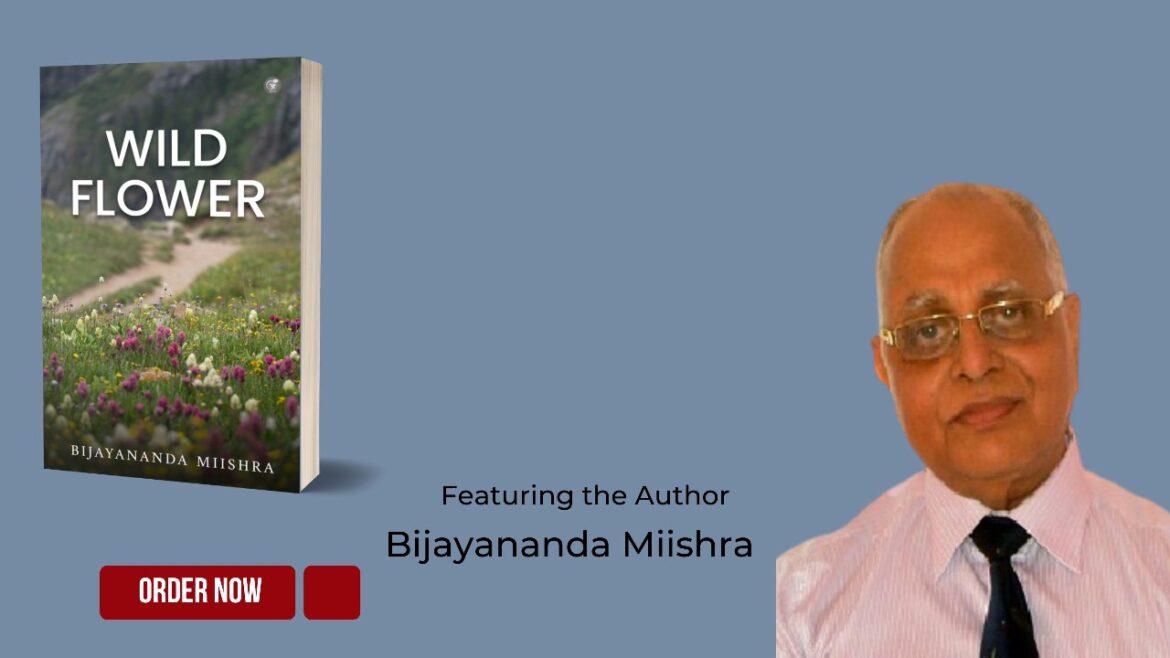
At the vibrant crossroads of memory, nature, and social reflection, Wild Flower by Bijayananda Mishra emerges as a poignant poetic journey through the complexities of modern life and timeless human values. This thoughtful collection of English poems is more than a literary endeavor—it is a mirror held up to society, reflecting the nuances of a rapidly changing world through the gentle yet unflinching lens of verse.
Drawing from decades of observation, life experience, and quiet reflection, Mishra uses poetry as a capsule to capture the ongoing transformation of human behavior, cultural norms, and environmental consciousness. With themes ranging from women’s empowerment and child education to the preservation of forests and climate awareness, Wild Flower balances intimate emotional depth with global relevance.
A retired telecommunication and computer engineer from Cuttack, Odisha, Bijayananda Mishra came to poetry later in life, after a fulfilling professional career and a life-altering injury in 2016 that briefly affected his memory. Emerging stronger in 2018, Mishra found solace and purpose in writing. His recovery journey, combined with a lifelong passion for spirituality and meditation, colors each of his poems with both vulnerability and wisdom.
“I write not just for expression, but for connection,” Mishra says. “Each poem in Wild Flower is a reflection of changing times, the shifting human condition, and the constant dialogue between nature and modernity.”
Mishra’s poetic style is meditative yet grounded. Most poems span around 60 lines and 300 words, offering compact yet rich explorations of themes. Whether touching upon societal reformation, clean living, or the innocence of childhood, his work often circles back to the enduring power of love, kindness, and empathy.
Nature holds a central place in Wild Flower. In his verses, forests are more than ecosystems—they’re living memories of a vanishing harmony, calling readers to reflect on their role in both destruction and regeneration. The poet sees nature not only as inspiration but also as a moral compass, a force that demands care and reverence.
Mishra credits much of his inspiration and support to global friendships formed online. From exchanging ideas with fellow poets on Facebook to the invaluable help of digital tools like Google and the Cambridge Dictionary, he openly acknowledges how cyberspace has enabled his creativity despite physical limitations. Notably, he extends heartfelt gratitude to poet friends such as Mrs. Shinaya Ali (Pakistan) and Mrs. Gertrud Resch (Austria), whose encouragement gave him the courage to share his voice.
Following his first book PETALS, Wild Flower marks a deepening of Mishra’s poetic voice. At 72, he remains a vibrant writer with a keen eye for detail and a compassionate heart. His journey—from engineering to poetry, from recovery to renewed purpose—is an inspiring testament to the power of words, resilience, and lifelong learning.
For readers seeking poetry that blends reflection with relevance, Wild Flower offers both a quiet meditation and a call to conscience.