Book: Shreemad Bhagavad Geeta, Geetikavya: Ek Saral Bhashya
About the Author
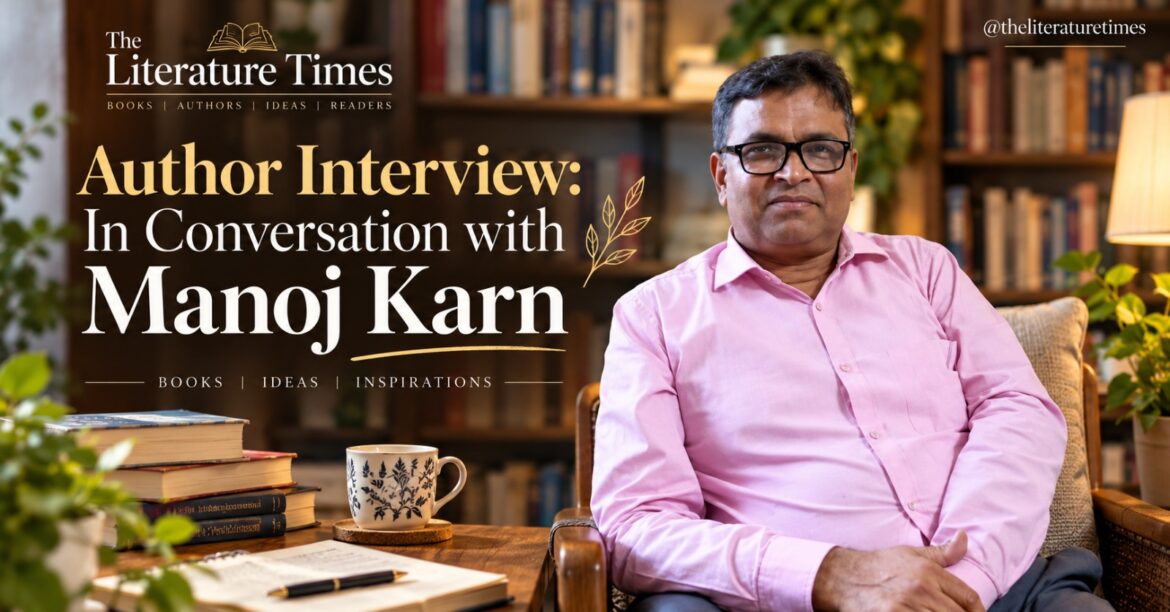
Manoj Karn, born on 11 July 1965, grew up in a modest family environment where traditional Sanatan values held an important place. He received his early education in schools and colleges in Katihar district, Bihar, and went on to earn a postgraduate degree in Zoology as well as an LLB. Beginning his career as a government teacher, he later served as an officer in Bihar’s Election Department and Commercial Taxes Department. He retired in August 2025 as Joint Commissioner of State Tax, Bihar. Alongside his public service, Karn continued to pursue his interest in literature and spiritual thought, writing poetry on sensitive aspects of human life. He received the Sahityapedia Kavya Samman and has published eight poetry collections, six in Hindi and two in Maithili. Following retirement, he remains devoted to his family, social responsibilities, and literary practice.
About the Book
Shreemad Bhagavad Geeta, Geetikavya: Ek Saral Bhashya is a Hindi poetic interpretation inspired by the central teachings and spirit of the Bhagavad Gita. The book presents its philosophical ideas in a simple, lyrical form, making them more approachable for everyday readers. Through geetikavya, or lyrical poetry, Manoj Karn seeks to communicate the Gita’s message in language that readers can read, sing, revisit, and reflect upon. Published on 24 September 2026, this 136-page Hindi poetry book is available on BookFylo.
Interview Questions
The Literature Times: The Bhagavad Gita has been interpreted and discussed across generations. What inspired you to present its teachings as a simple Hindi geetikavya, and when did you first feel that this was a book you needed to write?
Manoj Karn: When we read about young people and even high-ranking professionals like IAS, IPS officers, and judges falling prey to mental stress, depression, and suicide, it points to a deeper systemic flaw in our education system. We focus heavily on career building, but we often overlook the inner strength of the individual.
I firmly believe that the Shrimad Bhagavad Gita contains all the timeless principles needed to build resilience and moral fortitude. If we can make its teachings accessible, simple, and relatable for children from a young age, they will naturally internalize these values and grow up to be true KarmaYogi.. Mindful of their moral duties and emotionally grounded no matter the challenges they face.
The Literature Times: Your book aims to make philosophical ideas accessible to young people, women, elders, and everyday readers. How did you balance fidelity to the Gita’s deeper meaning with the need for simple, lyrical language?
Manoj Karn: During my graduation,I extensively read the works of Swami Vivekananda and developed a keen interest in subjects like KarmaYoga, SankhyaYoga, Dvaitavad,and Advaitavad, even though they were outside my formal curriculum. In my effort, I have made every effort to ensure that the core life-enriching spirit of the Gita is not missed, while presenting it in the simplest possible form.
The Literature Times: The Gita begins with Arjuna’s confusion and despondency on the battlefield. Which aspect of this human dilemma feels especially relevant to people navigating uncertainty and responsibilities in modern life?
Manoj Karn: The Gita starts with Arjuna’s confusion and despondency on the battlefield to teach us a vital lesson, feeling overwhelmed by responsibility is fundamentally human,
but true strength comes from
shifting our focus away from
anxiety about the results and
centering it on purposeful action.”
The Literature Times: Could you share something about your writing process? How did you select the teachings and ideas to render in verse, and what helped you shape them into a rhythm that readers might also enjoy singing or listening to?
Manoj Karn: I primarily write in metered and rhymed verse. However, when the depth of an emotion demands expression and rigid rhyming compromises the core meaning, I freely switch to free verse. Moreover, because I compose devotional music and bhajans in both Maithili and Hindi, bringing musicality, rhythm, and melody to my poetic compositions comes naturally to me.”
The Literature Times: You spent much of your professional life in public service while continuing your literary practice. In what ways did your experiences as a teacher and government officer influence your understanding of duty, discipline, and the Gita’s message of action?
Manoj Karn: Throughout my life,
first as an educator and later as a gazetted officer, the Gita has been an
abiding source of inner strength.
for me. The ultimate wisdom
of the Gita rests in one core truth that
the true purpose of life is not the
endless accumulation of material resources, but the pursuit of Moksha,
or ultimate liberation.”
The Literature Times: Translating complex spiritual and philosophical ideas into accessible poetry can be challenging. What was the most difficult part of creating this simple commentary, and how did you approach passages or concepts that resisted easy expression?
Manoj Karn: “I make it a practice to read the verses of the Gita repeatedly, while consulting philosophical reference books whenever I need deeper clarity.”most difficult part of creating this simple commentary was
Gyanvigyan yog where panchtatva meet with Man, Buddhi and Ahankar (Mind, Intellect and Ego)
The Literature Times: If a reader remembers only one lesson after reading or listening to Shreemad Bhagavad Geeta, Geetikavya: Ek Saral Bhashya, what would you hope that lesson might be, and how do you hope it will influence the reader’s everyday choices?
Manoj Karn: If someone wants to read a single chapter of a book, we would suggest reading the Vishwaroopa Darshana Yoga (Chapter 11 of the Gita), because it advises developing inner vision and divine sight, which makes it easy to perceive transcendental realities.
The Literature Times: Having published eight poetry collections in Hindi and Maithili, what directions would you like to explore next in your literary journey? Are there other spiritual, philosophical, or human themes you hope to bring to readers through poetry?
Manoj Karn: Yes, I take great joy in writing poetry, and alongside the emotions of human life, I also try to weave historical events into poetic form, just as I did in my previous poetry book “Kashmir Gatha” .