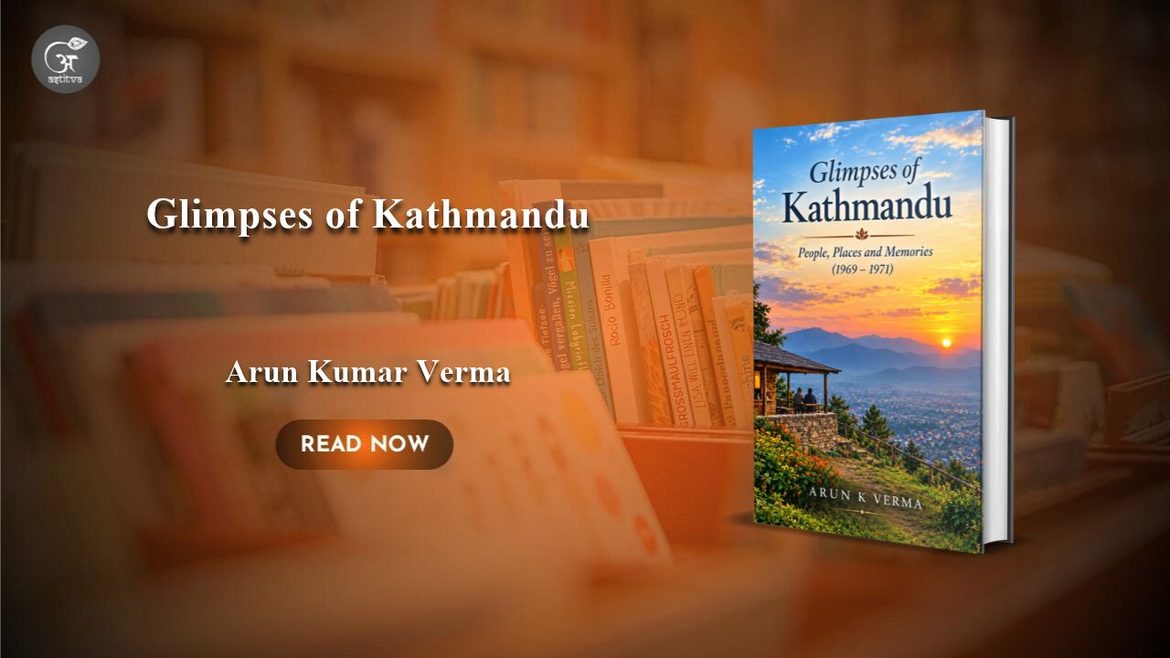
The story begins in January 1969, when a young Indian civil engineer arrived in Kathmandu on a professional assignment. Expecting to return to Delhi after approximately three years, he could hardly have imagined how profoundly this new chapter would shape his life. What began as a work-related stay gradually became an unforgettable journey filled with discovery, companionship, personal milestones, and lasting relationships.
Some places remain etched in our memories not simply because of their landscapes or landmarks, but because of the people we meet and the experiences we share there. Glimpses of Kathmandu: People, Places and Memories by Arun Kumar Verma is a deeply personal memoir that brings alive the Kathmandu of a bygone era through recollections of everyday life, friendships, professional experiences, and the unexpected ways in which a temporary assignment can become a lifelong memory.
Through affectionate and vivid recollections, Verma takes readers back to Kathmandu as he experienced it during that period. The city emerges through its people, bustling markets, temples, familiar tea stalls, and the surrounding hills that offered opportunities for exploration and escape. The memoir also recalls journeys to places such as Kakani, Nagarkot, and Daman, capturing the charm of a landscape that became an important part of the author’s personal story.
Yet, the heart of this book lies beyond its descriptions of places. It is equally a narrative of adapting to a new country, building relationships, and gradually finding a sense of belonging away from home. The author reflects on the friendships formed during his stay, the companionship of colleagues, and the personal experiences that accompanied his changing life. Marriage and the beginning of family life added new dimensions to a period that had initially seemed temporary.
One of the most touching themes of Glimpses of Kathmandu is the enduring nature of human relationships. People who first came together through professional circumstances gradually became close companions, and some eventually became like family. These friendships outlasted geographical boundaries and the passage of time, becoming among the most treasured memories of the author’s life. Through these accounts, Verma reminds readers that the true richness of any journey often lies in the connections we build along the way.
The memoir does not attempt to present a formal history of Nepal or function as a conventional travel guide. Instead, it offers something more intimate: one person’s sincere recollection of a country, a particular period, and the individuals who made that experience meaningful. Its appeal lies in the authenticity of personal memory and the warmth with which ordinary moments are revisited. Readers who have experienced life away from their homeland may find familiar emotions in its reflections on adjustment, friendship, belonging, and nostalgia. Those interested in Kathmandu’s past will also appreciate this personal glimpse into the city’s social atmosphere during the late 1960s and the years that followed.
Arun K. Verma, a former civil engineer with the Central Public Works Department, was deputed to Kathmandu in 1969. After returning to India, he spent several decades working in the publishing and printing industries. More than fifty years after his Kathmandu experience began, he brings together the memories and relationships that remained close to his heart. His professional journey across engineering, publishing, and printing provides the background to a memoir shaped primarily by observation, affection, and lived experience.
Glimpses of Kathmandu: People, Places and Memories is a celebration of the moments that give life its lasting meaning. It invites readers to revisit a time when unfamiliar surroundings gradually became familiar, colleagues became lifelong friends, and a short professional assignment turned into an extraordinary personal chapter. Through the gentle power of remembrance, Arun Kumar Verma preserves not just glimpses of Kathmandu, but also the friendships, emotions, and experiences that time can never erase.