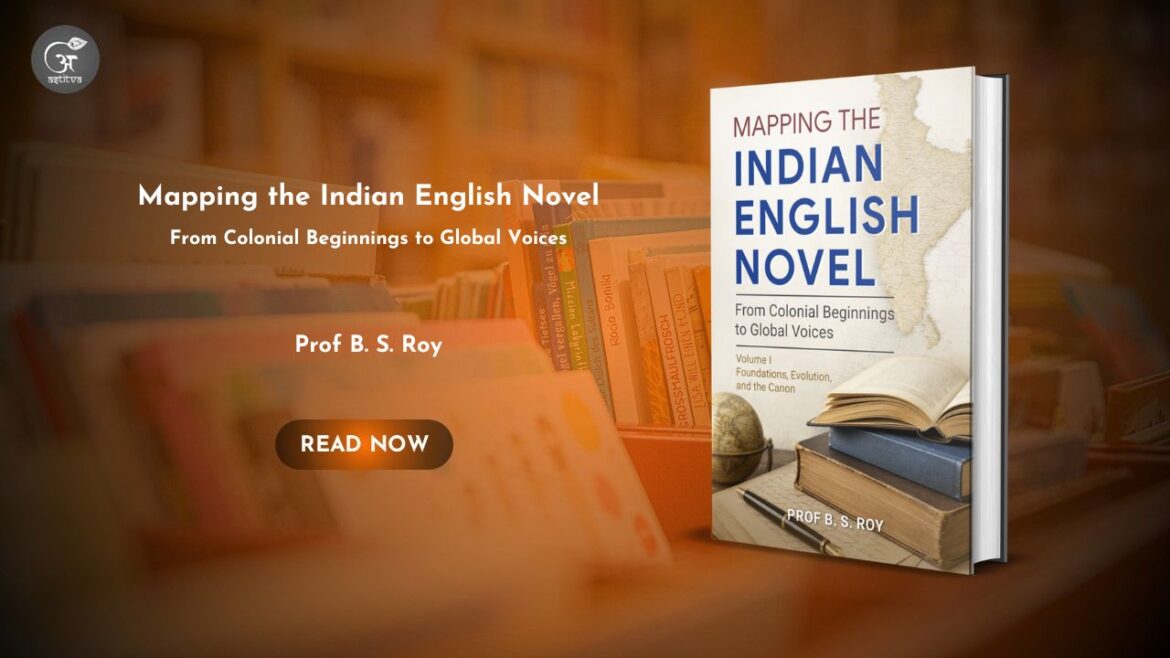
The world of Indian English literature gains a significant scholarly contribution with the release of Mapping the Indian English Novel: From Colonial Beginnings to Global Voices by Prof. B. S. Roy. This remarkable work offers an insightful and comprehensive exploration of the evolution of the Indian English novel, tracing its remarkable journey from its colonial origins to its emergence as a globally recognized literary tradition. Combining historical depth with critical analysis, the book serves as an invaluable resource for students, scholars, researchers, educators, and readers interested in understanding the development of Indian Writing in English.
The book examines the foundational stages of the Indian English novel, introducing readers to the pioneering authors whose creative vision established a rich and enduring literary canon. Through thoughtful discussions of literary movements, narrative techniques, historical influences, and thematic concerns, Prof. Roy explores how Indian novelists have addressed issues of identity, colonialism, nationalism, social reform, cultural diversity, and modernity. His lucid style and methodical approach make complex literary developments accessible without compromising academic rigor, enabling readers to appreciate the Indian English novel as both an artistic achievement and a reflection of India’s evolving social, cultural, and intellectual landscape.
As the first volume in a broader series, Mapping the Indian English Novel: From Colonial Beginnings to Global Voices – Volume I: Foundations, Evolution, and the Canon lays a solid foundation for understanding the growth of Indian English fiction and its enduring contribution to world literature. It provides readers with a structured framework for examining the historical progression of the genre while encouraging critical engagement with the texts that have shaped the literary identity of modern India.
The book is authored by Prof. Binay Shanker Roy, a distinguished academician whose nearly four decades of experience in higher education have established him as a respected authority in English literary studies. A former Head of the University Department of English at B.R. Ambedkar Bihar University, Muzaffarpur, he has also served in several key academic and administrative positions, including Proctor of the University and Director of the Malviya Mission Teachers Training Centre. Throughout his career, he has mentored numerous doctoral scholars and contributed extensively to the advancement of literary scholarship through his association with various national academic institutions and professional bodies.
Prof. Roy’s research has consistently focused on Indian Writing in English, particularly the Indian English novel. His scholarship reflects a deep understanding of the historical, cultural, and literary forces that have shaped this vibrant tradition. In addition to publishing numerous research articles in reputed journals and presenting papers at national and international conferences, he has authored acclaimed works on William Morris, Girish Karnad, African literature, and Robert Frost, demonstrating the breadth and depth of his literary expertise.
Drawing upon decades of teaching, research, and critical engagement, Prof. Roy has crafted a work that bridges academic scholarship and accessible literary criticism. His balanced integration of historical context, thematic interpretation, and close textual analysis makes this book particularly valuable for university students preparing for undergraduate, postgraduate, and research-level studies, while also offering meaningful insights to general readers with an interest in Indian literature.
The publication of Mapping the Indian English Novel: From Colonial Beginnings to Global Voices represents an important milestone in contemporary literary scholarship. By presenting the Indian English novel as a living record of India’s changing society, evolving cultural consciousness, and expanding global presence, the book invites readers to rediscover one of the most dynamic traditions in modern literature. It stands as an essential addition to academic libraries, educational institutions, and the personal collections of anyone seeking a deeper understanding of the rich legacy and continuing evolution of Indian English fiction.