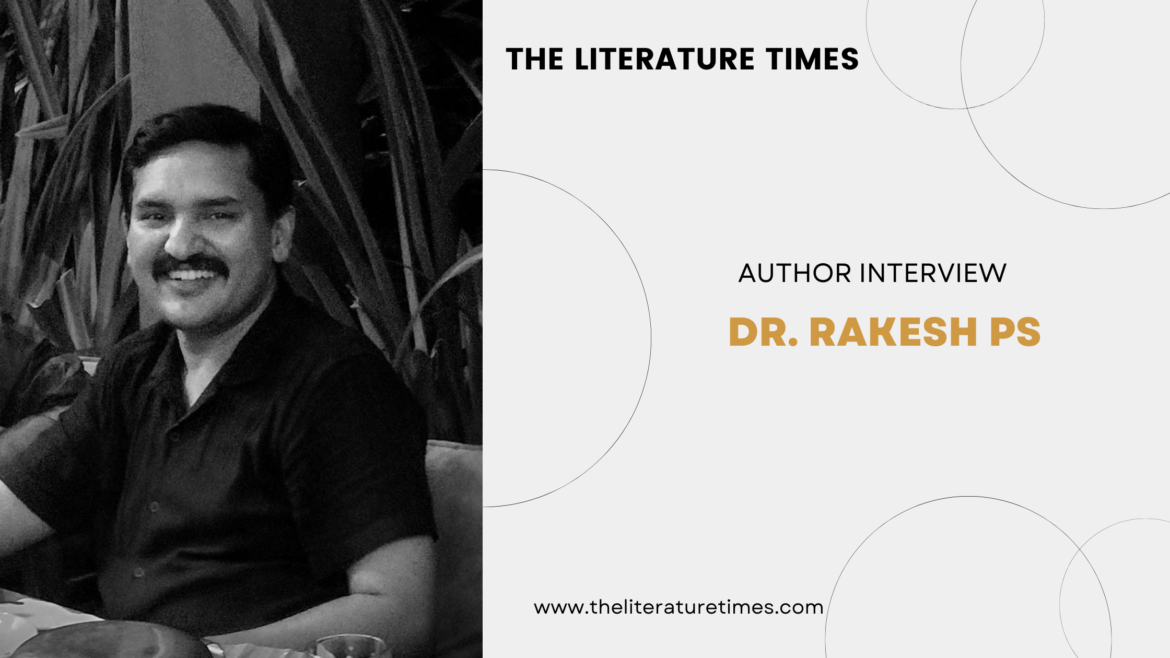
The Literature Times: Echoes from the Atoll beautifully combines public health, travel, and personal reflection. What inspired you to document your experiences in Lakshadweep through this memoir?
I initially travelled to Lakshadweep believing I had gone there for a public health assignment. Over the years, I realized the islands were changing me as much as we were trying to change public health. I had the privilege of witnessing an extraordinary achievement—an entire community coming together to eliminate tuberculosis—but I also witnessed something else: a way of life that was slowly changing under the pressures of modernity.
When I returned for my fourteenth visit, I no longer carried a laptop or official reports. I came back simply to write. I wanted to preserve not only the story of India’s first TB-free geography, but also the memories of fishermen, ASHAs, village leaders, children playing on coral beaches, and the quiet rhythm of island life before some of it disappeared. The book became less about tuberculosis and more about people, belonging, and the idea that extraordinary public health is ultimately built on ordinary human relationships.
The Literature Times: Your book highlights Lakshadweep’s remarkable journey to becoming India’s first TB-free geography. What was the most memorable moment during this mission that stayed with you forever?
People often assume the most memorable moment was when Lakshadweep was declared India’s first TB-free geography. It wasn’t.
For me, the defining moments came much earlier.
One was standing with hundreds of ASHAs as they placed their hands over their hearts and took the ‘My TB-Free Pledge.’ These women were not simply promising to implement a health programme; they were making a personal commitment to protect their own communities. Many of them would go on to visit every household on their islands, patiently building trust, addressing stigma, and ensuring that no one with symptoms was left behind.
The second was watching village leaders, panchayat members, religious leaders, youth clubs, and community representatives come together under a simple message: “My TB-Free Island.” At that point, tuberculosis stopped being the government’s programme and became the community’s own mission. People began asking not, “What is the health department doing?” but “What can we do for our island?”
Those two moments taught me a lesson I have carried throughout my career: public health achieves its greatest success not when governments lead alone, but when communities decide that the dream belongs to them.
The Literature Times: Rather than writing a technical medical account, you chose a deeply human and emotional narrative. Why was this storytelling approach important to you?
Because tuberculosis was never the real subject of the book. The real subject was people.
During my years as an epidemiologist, I realized that behind every number is a human being, a family, and a story. Scientific papers tell us what happened. Stories help us understand why it mattered.
If we tell the story of tuberculosis only through scientific language, only a small group of professionals will ever read it. But stories have a unique power. Children and adults, doctors and non-doctors—everyone connects with a good story. If we truly believe that ending TB is a people’s movement, then we must tell that story in a language that people understand and connect with.
I hope Echoes from the Atoll does exactly that— bringing public health out of conference halls and journals, and into homes, classrooms, book clubs, and everyday conversations. Because lasting change begins when communities see themselves in the story.
The Literature Times: The islands themselves almost feel like characters in your book. How did Lakshadweep shape your own perspective on life, community, and resilience?
Lakshadweep taught me that geography shapes culture, and culture shapes health.
On the mainland, we often think of distance as a problem for patients. The islands taught me that distance is actually a problem for health systems to solve. I also learned to respect uncertainty. In Lakshadweep, the sea decides everything. Ships arrive when the weather permits. Meetings happen when nature allows. Very quickly, you realize that you cannot negotiate with nature—you can only learn to work with it.
That changed me personally. The islands taught me to slow down, let go of the illusion that everything can be controlled, approach people with greater humility, and work with nature rather than against it. I also realized that leadership is less about directing people and more about creating space for communities to find their own solutions.
Above all, Lakshadweep taught me the meaning of belonging. The resilience of the islands did not come from extraordinary individuals, but from ordinary people who trusted one another and moved together. Long after I left, that lesson stayed with me, and it continues to shape how I think about public health—and about life itself.
The Literature Times: Having worked with organizations like WHO and The Union, how did your experiences in Lakshadweep differ from other public health initiatives you have been involved with?
Lakshadweep taught me humility.
Many public health programmes begin with guidelines and ask communities to adapt. In Lakshadweep, we had to do the opposite. We first understood how the islands functioned—the sea, the boats, the local governance, the role of women, the trust people placed in ASHAs—and only then designed the programme around those realities.
The islands reminded me that successful public health is not about implementing the perfect strategy. It is about building the right strategy for the people who will actually live it.
The Literature Times: Your memoir reflects the balance between scientific rigor and human compassion. How do you believe healthcare professionals can preserve empathy while working under immense pressure?
Empathy is not separate from science; it strengthens science.
Healthcare professionals make better decisions when they genuinely understand the lives of the people they serve. Sometimes the most important question is not “Why didn’t this patient come to the hospital?” but “What prevented the health system from reaching the patient?”
When we remain curious about people’s lives rather than simply judging their choices, compassion becomes part of good clinical and public health practice.
The Literature Times: Beyond tuberculosis elimination, your work also touches upon environmental preservation and community participation. How closely do you believe public health and environmental sustainability are connected?
In Lakshadweep, it is impossible to separate them.
The same coral reefs that protect the islands also protect livelihoods. The sea determines food security, transport, healthcare, and even access to education. Environmental change is therefore not just an ecological issue—it is a public health issue.
Healthy communities depend on healthy ecosystems. In places like Lakshadweep, protecting nature is protecting people.
The Literature Times: Throughout your career, you have contributed to several innovative healthcare models. Which achievement gives you the greatest sense of personal fulfillment and why?
Without hesitation, it is Lakshadweep.
Not because it became India’s first TB-free geography, but because I witnessed an entire community believing that something considered impossible was actually possible.
Achievements eventually become statistics or awards. What stays with you are the people—the colleagues who travelled through rough seas, the ASHAs who walked from house to house, the village leaders who convinced families to participate, and the islanders who welcomed me as one of their own.
That sense of belonging is far more meaningful than any professional recognition.
The Literature Times: What do you hope readers, especially those outside the medical profession, take away after reading Echoes from the Atoll?
I hope readers don’t close the book thinking about tuberculosis alone. I hope they close it thinking about people, belonging, and change.
We often look at communities from the outside and are quick to judge their customs, decisions, or pace of life. But every society has evolved in response to its own geography, history, and lived experiences. Before we attempt to change a community, we must first understand why it is the way it is.
One chapter in the book, ‘The Reef’, reflects on this idea. A coral reef appears delicate, and even a careless touch can damage something that has taken centuries to grow. Communities are much the same. Well-intentioned interventions, if introduced without sensitivity or understanding, can unintentionally erode the very strengths that have sustained people for generations.
If Echoes from the Atoll leaves readers with one lasting thought, I hope it is this: progress should never come at the cost of empathy. We must learn to listen before we judge, to understand before we intervene, and to recognize that every community has wisdom worth respecting. Only then can change be both meaningful and lasting.
The Literature Times: What advice would you like to share with young doctors, public health professionals, and aspiring writers who wish to create meaningful impact through both science and storytelling?
Spend less time behind your desk and more time listening to people whose lives are different from your own. Public health and good writing both begin with curiosity.
Never start with a ready-made solution. First, understand the problem deeply. Every community has its own history, culture, strengths, and constraints, so interventions should be designed with people, not simply delivered to them. The best solutions are rarely imported; they are co-created with the communities they are meant to serve.
Never assume that you know everything because you have a degree or a designation. The people living with the problem often understand it better than anyone else. Involve them from the very beginning – in planning, implementation, and evaluation. Our role is not to be heroes who rescue communities; it is to be facilitators who help communities discover their own strengths.
Finally, learn to listen without judging. Some of the most valuable lessons I have learned did not come from textbooks or conference halls. They came from a boatman navigating rough seas, a tea shop owner serving conversations along with tea, an ASHA walking from house to house, or a village leader who understood his community better than any report ever could.
The best public health professionals and perhaps the best writers never lose their ability to listen.