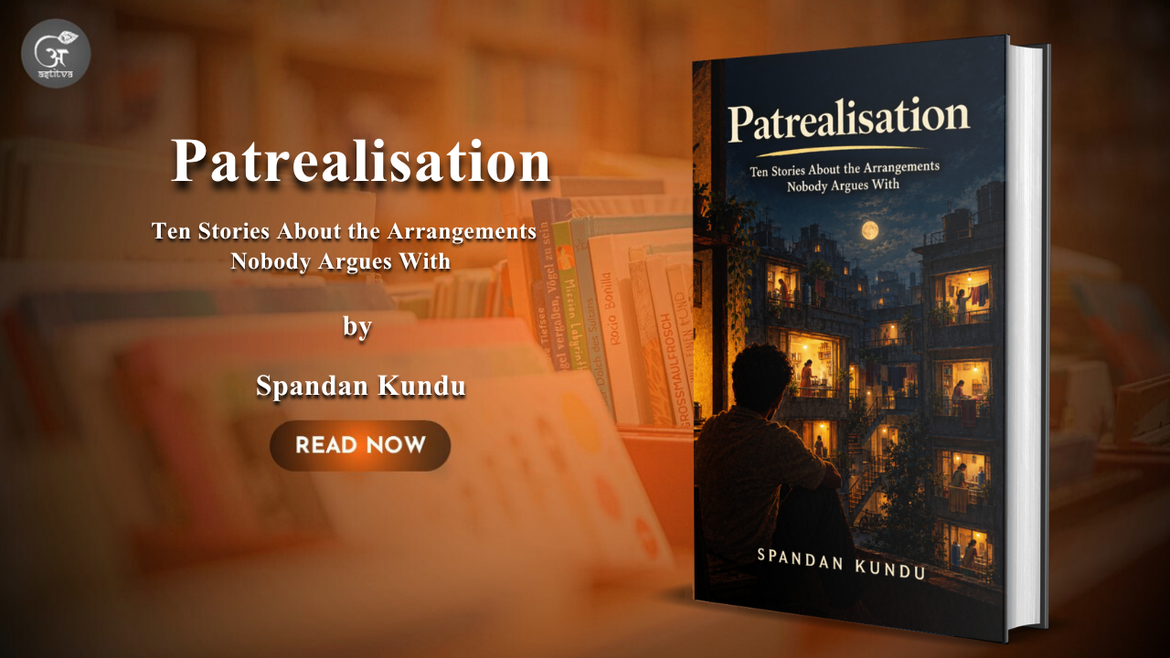
Some of the deepest inequalities are hidden in everyday routines—in the cups of tea served, the food distributed, the chores expected and the silences nobody questions. In Patrealisation: Ten Stories About the Arrangements Nobody Argues With, Spandan Kundu examines the quiet social arrangements that shape lives, often remaining invisible to those who benefit from them.
Through ten thought-provoking stories, Kundu brings readers into familiar Indian households and everyday settings where gender roles, family expectations and inherited habits determine who serves, who receives, who speaks and who remains silent. A domestic worker whose name is never learned, a girl whose ambitions gradually give way to expectations, and a family that understands an uncomfortable truth without ever discussing it—each story reveals how inequality can survive not through open conflict, but through everyday acceptance.
At the centre is a narrator who notices these patterns, often too late, and gradually confronts his own place within them. The stories challenge readers to look beyond obvious injustice and question the ordinary arrangements they have long accepted as natural.
A computer science graduate of IIT (ISM) Dhanbad, Spandan Kundu works on artificial intelligence systems while drawing literary inspiration from sociology and the complexities of Indian family life. Influenced by thinkers who examine gender, social structures and domestic relationships, he brings a reflective perspective to his debut collection.
Patrealisation gives a name to the unsettling moment when something familiar suddenly becomes strange—and impossible to ignore.
How many everyday injustices go unnoticed simply because nobody questions them? Read Patrealisation and look again at the routines, relationships and silences that shape our lives. Sometimes, the first step towards change is learning to see what was always there.