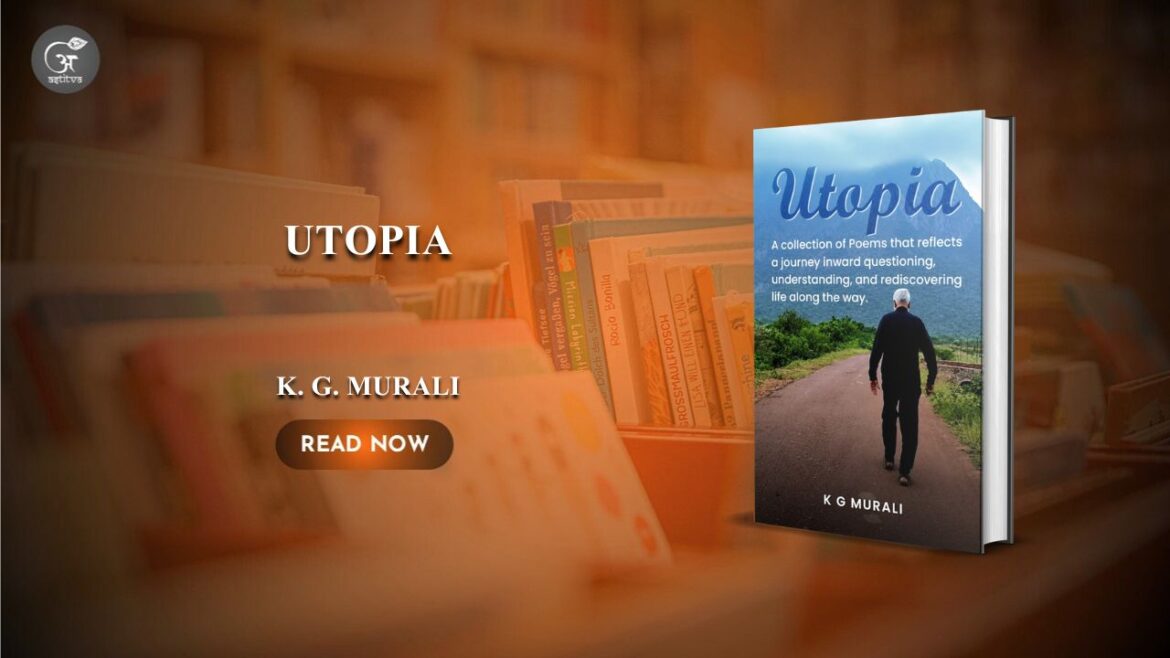
Poetry has the unique ability to slow the pace of life, inviting readers to pause, reflect, and reconnect with themselves. Utopia: A Collection of Poems that Reflects a Journey Inward—Questioning, Understanding, and Rediscovering Life Along the Way by K. G. Murali is a deeply contemplative work that offers precisely such an experience. Rather than providing answers, this remarkable collection gently encourages readers to question long-held beliefs, embrace introspection, and discover new perspectives on life through the quiet power of poetry.
At its heart, Utopia is a journey of self-discovery. Each poem serves as an invitation to look beyond the distractions of everyday life and explore the deeper truths that often remain hidden beneath routine, ambition, and expectation. The collection reflects the author’s own inward journey—one shaped by observation, reflection, and an ongoing effort to translate personal insights into everyday living. Through thoughtful verses, readers are encouraged to examine their own experiences, beliefs, and emotions with openness and honesty.
One of the defining qualities of the collection is its ability to transform ordinary moments into opportunities for profound reflection. The poems gently challenge assumptions that many people accept without question, encouraging readers to rethink ideas about happiness, success, relationships, purpose, and identity. Rather than presenting rigid philosophies, the book creates space for contemplation, allowing every reader to find personal meaning within its verses.
The emotional depth of Utopia is enriched by the author’s extraordinary life experiences. These reflections did not emerge in isolation but were shaped through decades of working closely with individuals facing profound hardship. This intimate exposure to human suffering, resilience, hope, and compassion lends authenticity to every poem. As a result, the collection speaks not only from intellectual understanding but from lived experience, making its insights both relatable and deeply moving.
The poems are written with simplicity and sincerity, allowing their emotional resonance to unfold naturally. Readers are likely to find themselves revisiting certain verses, discovering fresh meanings with each reading. The collection does not demand attention through dramatic language or complex symbolism. Instead, it quietly lingers in the reader’s mind, encouraging moments of stillness and self-awareness long after the final page has been turned.
More than a collection of poetry, Utopia becomes a companion for anyone seeking clarity amid life’s uncertainties. It offers comfort without false promises, wisdom without preaching, and inspiration without imposing conclusions. Whether read slowly over weeks or revisited whenever reflection is needed, the book reminds readers that life’s greatest discoveries often begin with a willingness to pause and look within.
The depth and authenticity of Utopia reflect the remarkable journey of its author, K. G. Murali, affectionately known as KGM. After spending two decades in the corporate world and successfully building his own enterprise, he chose a different path—one dedicated to serving people in need. For more than twenty-five years, he has worked with residents of a leprosy home, children living with HIV, families affected by the COVID-19 pandemic, and marginalized communities through his continued association with a cancer hospital in Assam.
His commitment to compassion, service, and human dignity has profoundly influenced his writing. His earlier book, Ubuntu, published during the pandemic, supported both his emotional journey and the social causes close to his heart. Through Utopia, KGM once again shares the wisdom gathered from a life lived in reflection, service, and meaningful human connection.
Utopia is a book that gently reminds readers that true transformation begins within. It is a thoughtful collection of poems that celebrates introspection, compassion, and the enduring search for meaning, making it a valuable companion for anyone seeking a deeper understanding of life and themselves.