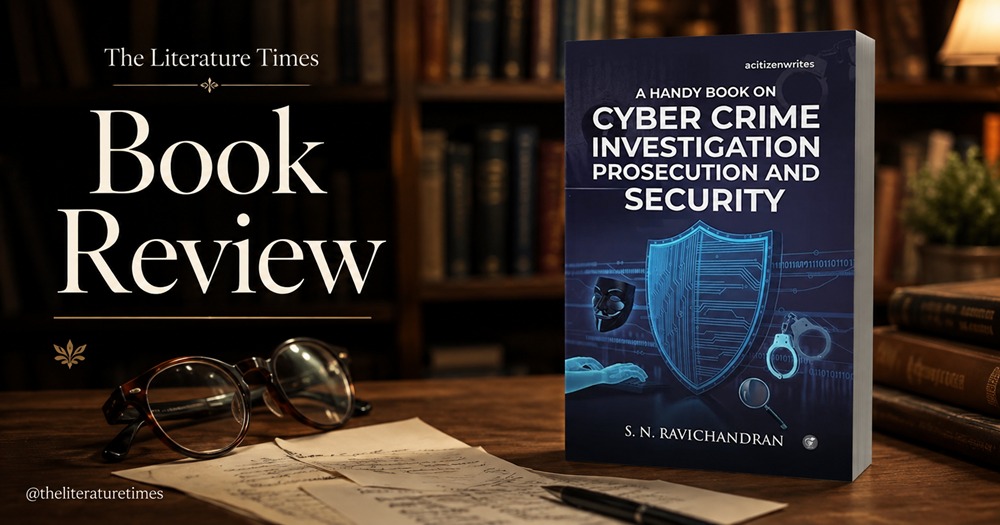
A Handy Book on Cybercrime, Investigation, Prosecution, and Security by S.N. Ravichandran enters a field where law, technology, public policy, and individual liberty increasingly overlap. Based on the material supplied for the book, its central concern is the protection of natural and fundamental rights in an environment shaped by personal data, digital platforms, surveillance possibilities, and changing legal frameworks. The book focuses especially on the Right to Privacy, personal data and data protection, and Freedom of Speech, treating these not as isolated legal ideas but as connected questions about citizenship in the digital age. This makes the work relevant to a broad professional readership, particularly lawyers, Data Protection Officers, investigators, policy-minded readers, and anyone concerned with the balance between technological capability and constitutional or fundamental protections.
One of the book’s most substantial themes is the evolution of privacy as a right. The supplied description indicates that Ravichandran traces the development of the Right to Privacy across different periods and jurisdictions, allowing readers to see privacy not as a fixed concept but as one that has been continuously shaped by social change, judicial interpretation, and legislation. That historical and comparative approach is valuable because digital privacy debates are often discussed as if they began with smartphones, social media, or modern data collection. By placing the issue within a longer legal evolution, the book can help readers understand why contemporary privacy law carries layers of philosophical, constitutional, and regulatory meaning. It also creates a foundation for examining how legislation can both protect rights and define their limits
The discussion of personal data gives the book a particularly contemporary relevance. Personal data is now central to banking, commerce, communication, governance, employment, healthcare, and everyday digital participation. Yet the practical meaning of personal data, its legal treatment, and the responsibilities associated with handling it are not always well understood outside specialist circles. Ravichandran’s effort to define personal data and examine the legal framework around it therefore addresses a real knowledge gap. The critical review of the Digital Personal Data Protection Act, 2023, as described in the book, becomes especially important because the law directly shapes the obligations of organizations and the protections available to individuals in India’s expanding digital economy.
The comparative element further strengthens the book’s usefulness. By placing the Indian data-protection framework alongside comparable laws in other jurisdictions, the author creates space for readers to examine differences in legal philosophy, regulatory design, and the practical treatment of privacy. Comparative analysis can be especially useful in data protection because digital information routinely crosses organizational and national boundaries. Lawyers and compliance professionals must often understand not only what a domestic statute says, but how its principles relate to broader international trends. The book’s approach, as presented, therefore appears designed to move beyond simple statutory description toward critical evaluation, which is an important distinction for readers seeking to understand both the strengths and limitations of legal frameworks.
Freedom of Expression forms another major pillar of the book. Ravichandran examines the importance of speech while also considering the limits that may be required in society. This is a difficult area because any meaningful discussion must account for competing values: individual liberty, public order, reputation, safety, dignity, and the responsibilities that accompany powerful communication technologies. In digital spaces, the reach and speed of expression intensify these tensions. A statement can move across platforms instantly, reach vast audiences, and remain searchable long after its original context has disappeared. By including freedom of expression alongside privacy and data protection, the book recognizes that digital rights cannot be understood in separate compartments. The rights to speak, to be left alone, and to control personal information frequently intersect and sometimes conflict.
The stated inclusion of critical reviews of Supreme Court of India decisions adds an important judicial dimension. Statutes provide formal rules, but constitutional and fundamental-rights questions often acquire their practical meaning through judicial interpretation. For legal readers, case analysis can help explain how broad principles are applied to real disputes and changing circumstances. For non-specialists, well-presented judicial discussion can make abstract rights easier to understand because courts must often weigh competing claims and articulate the reasoning behind a decision. Ravichandran’s professional background as a techno-legal consultant and cybercrime investigator makes this intersection especially relevant. His work with police agencies, economic-offence investigations, banking fraud matters, and cybercrime training gives him direct exposure to situations where technology, evidence, rights, and enforcement meet.
That professional experience is one of the strongest contextual assets behind the book. Ravichandran assists the Coimbatore City Police and the Economic Offences Wing on cyber, white-collar, economic offence, and banking fraud investigations. He is also associated with training on cybercrime investigation and has taught on information security, e-commerce, cryptocurrency, and related subjects. This combination of legal awareness, technical understanding, investigative exposure, and teaching experience positions him to address readers who need clarity across disciplinary boundaries. The book therefore has the potential to be useful not merely as a legal reference, but as a bridge between law in principle and digital-risk realities in practice.
The intended audience is correspondingly broad but professionally focused. Lawyers may find value in the discussion of privacy, free expression, legislation, and Supreme Court decisions. Data Protection Officers and compliance professionals can benefit from the examination of personal data and the Digital Personal Data Protection Act, 2023. Investigators and security practitioners may find the rights-based perspective useful because effective investigation must operate within legal boundaries and respect protected interests. Students, researchers, public-policy readers, and informed citizens may also benefit from the book’s attempt to explain how individual rights are being reshaped by technological systems and regulatory responses.
For The Literature Times, the book stands out for treating digital-age rights as questions that demand both technical literacy and legal sensitivity. Its strongest value lies in the breadth of the issues it connects: privacy, personal data, data protection legislation, freedom of expression, comparative law, and judicial interpretation. Rather than presenting technology as an isolated domain, it situates technological change within the larger framework of citizenship and rights. That perspective is increasingly necessary as digital systems become embedded in ordinary life. Readers looking for a serious, professionally oriented discussion of how rights must be protected, interpreted, and balanced in an era of pervasive data and rapidly changing technology will find the book’s subject matter timely and consequential.