A Modern Laboratory Companion for the Next Generation of Chemists
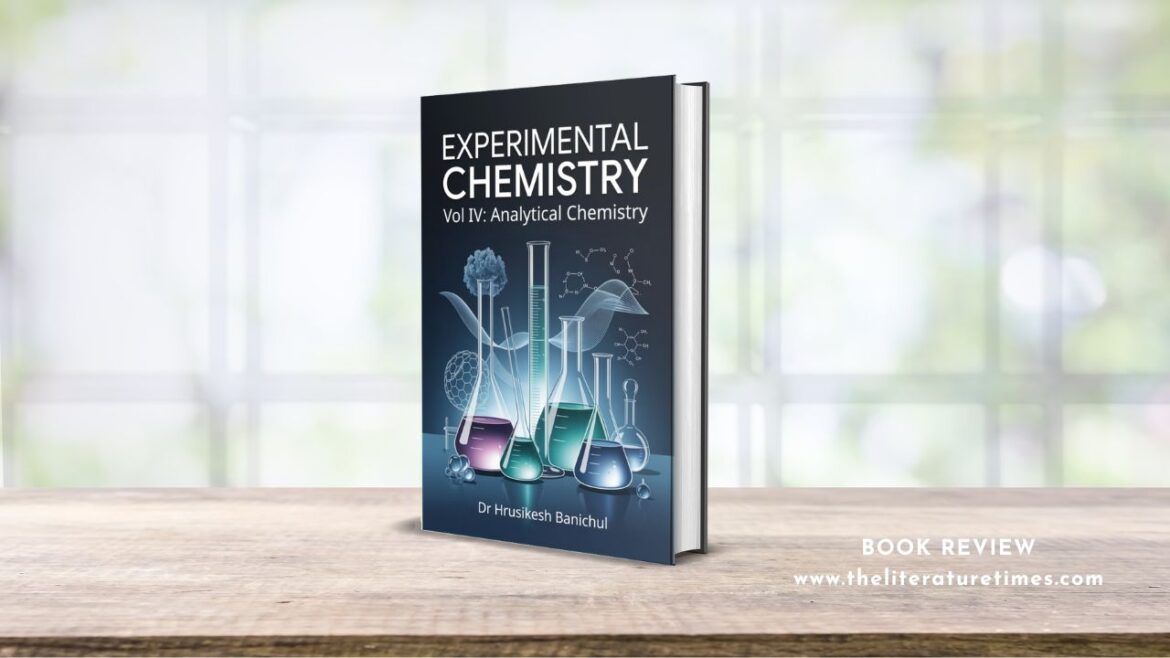
In an era where scientific education increasingly demands a balance between theoretical understanding and practical application, Experimental Chemistry, Vol IV: Analytical Chemistry by Dr. Hrusikesh Banichul emerges as a valuable and timely contribution to chemistry education. This comprehensive laboratory guide successfully bridges the gap between foundational laboratory techniques and advanced analytical practices, making it an indispensable resource for students, educators, and aspiring researchers alike.
Unlike conventional laboratory manuals that often focus on following predefined procedures, this volume encourages students to think critically, analyze systematically, and understand the scientific principles behind experimental observations. The book is carefully structured to help learners progress from fundamental organic chemistry techniques to more sophisticated applications in bioorganic chemistry, clinical analysis, and modern instrumental methods.
One of the book’s most impressive features is its emphasis on the systematic identification of unknown organic compounds. Dr. Banichul presents a clear and methodical approach to chemical analysis, guiding students through each stage of compound detection, derivative preparation, and characterization. This practical framework helps develop essential problem-solving skills while strengthening students’ confidence in laboratory environments.
A major strength of the text lies in its integration of modern analytical instrumentation. The dedicated chapters on Infrared (IR) and Nuclear Magnetic Resonance (NMR) spectroscopy are particularly noteworthy. Rather than treating these techniques as isolated theoretical concepts, the author demonstrates how spectroscopic data can be effectively correlated with laboratory findings. This approach enhances conceptual understanding and prepares students for the analytical demands of higher education and professional research.
The book further distinguishes itself through its inclusion of bioorganic and clinical analysis. These sections introduce students to applications that extend beyond traditional organic chemistry laboratories, offering valuable insights into fields such as biochemistry, medicine, and pharmaceutical sciences. The discussion on the isolation and characterization of natural products is especially relevant for students interested in drug discovery, natural sciences, and biomedical research.
Perhaps the most forward-thinking aspect of Experimental Chemistry, Vol IV is its commitment to sustainability through Green Chemistry. As environmental concerns continue to shape scientific practices worldwide, the inclusion of a dedicated chapter on environmentally responsible synthesis methods demonstrates the author’s awareness of contemporary challenges. Students are introduced to techniques that minimize waste, reduce hazardous chemical use, and promote sustainable laboratory operations. This focus not only enriches scientific education but also encourages responsible research practices.
The book’s versatility is another significant advantage. It is equally suitable for undergraduate organic chemistry laboratories, advanced biochemistry programs, introductory pharmacy courses, and students preparing for careers in chemical research. The content is presented in a manner that balances academic rigor with accessibility, ensuring that learners from diverse educational backgrounds can benefit from its insights.
Behind this exceptional work is Dr. Hrusikesh Banichul, an accomplished chemist, researcher, and educator with more than fifteen years of experience spanning academic teaching, industrial research, and applied research and development. His academic credentials, including a Ph.D. from IIT (ISM), Dhanbad, combined with extensive industrial expertise, are clearly reflected throughout the book. His practical understanding of process development, pilot-plant operations, advanced characterization techniques, and sustainable catalysis provides readers with a uniquely comprehensive perspective.
Dr. Banichul’s commitment to scientific advancement and environmental responsibility shines through every chapter. As a mentor, researcher, award recipient, and editorial board member for multiple international journals, he brings both credibility and vision to this educational resource.
Overall, Experimental Chemistry, Vol IV: Analytical Chemistry is far more than a laboratory manual. It is a thoughtfully designed educational guide that equips students with analytical skills, scientific reasoning, and an appreciation for sustainable practices. By combining traditional laboratory foundations with modern instrumentation, clinical applications, and green chemistry principles, Dr. Hrusikesh Banichul has created a work that is both academically rigorous and practically relevant.
For students seeking a deeper understanding of analytical chemistry and educators looking for a comprehensive laboratory resource, this volume stands as a highly recommended addition to the field of chemical education.