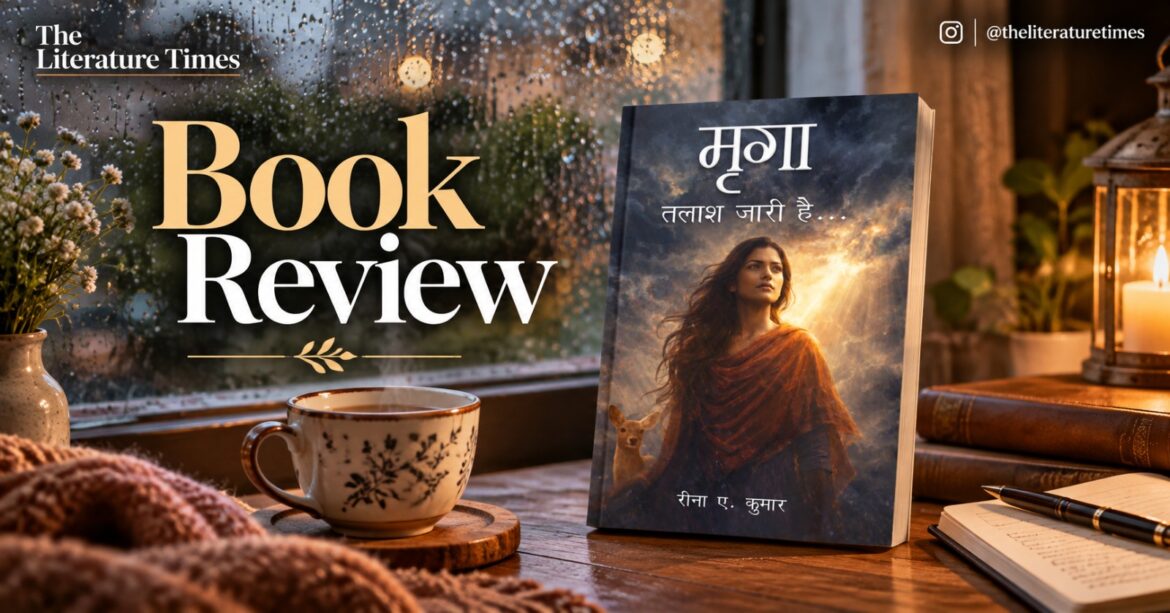
THE LITERATURE TIMES | BOOK REVIEW
Literature has an extraordinary ability to transform ordinary experiences into meaningful reflections on life. Every individual carries memories, encounters challenges, experiences moments of happiness, and forms relationships that leave lasting impressions. These experiences often become the foundation of stories that connect people across different backgrounds and generations. Mriga: Talaash Jaari Hai, written by Reena A Kumar, emerges from this understanding of human existence. Inspired by the experiences, emotions, and circumstances that surround us, the book presents a collection of stories rooted in the realities of everyday life. Following the appreciation received for her first collection, Kuch Bikhri Pankhudiyan, the author returns with another literary offering that seeks to capture the complexities of human relationships and the continuing search for meaning.
The title Mriga: Talaash Jaari Hai immediately establishes a thoughtful atmosphere. The phrase “Talaash Jaari Hai,” meaning “The Search Continues,” suggests that life itself is an ongoing journey of discovery, understanding, and emotional growth. Human beings constantly search for happiness, belonging, identity, acceptance, and fulfillment. Sometimes this search leads to meaningful discoveries, while at other times it brings disappointment, uncertainty, or unexpected challenges. The title provides an evocative framework for a collection concerned with the many experiences that shape individual lives. Rather than suggesting that every question has a definite answer, it acknowledges the continuous nature of personal exploration.
One of the most appealing aspects of the book’s stated premise is its connection with everyday experiences. Reena A Kumar explains that she has woven these stories from the fabric of life, gathering inspiration from the people, situations, and circumstances encountered around us. This approach reflects an important characteristic of meaningful storytelling: extraordinary emotions often exist within seemingly ordinary moments. A conversation, an unexpected separation, a difficult decision, or a small act of kindness can reveal profound truths about human nature. By drawing inspiration from familiar experiences, the collection seeks to establish an emotional connection with readers who may recognize aspects of their own lives within its broader themes.
Human relationships occupy an important place in the author’s understanding of storytelling. In her reflections on writing, Reena A Kumar observes that everyone is a character in their own story while simultaneously playing a role in the lives of others. This observation offers an interesting perspective on personal identity and interpersonal responsibility. Our decisions, words, and actions influence not only our individual journeys but also the emotional experiences of those around us. Relationships become spaces where people discover their strengths, confront their weaknesses, and gradually develop a deeper understanding of themselves. The author’s perspective suggests that storytelling can serve as a means of examining these connections with sensitivity and compassion.
Another significant theme associated with the collection is the coexistence of happiness and struggle. Life rarely unfolds according to expectations, and even the most ordinary journeys contain moments of uncertainty. The author describes gathering stories from the winding lanes of time, moving through experiences that were sometimes comfortable and sometimes filled with difficulties. This contrast gives the book’s premise a recognizable emotional foundation. Joy and sorrow, hope and disappointment, success and failure are not isolated experiences. They frequently exist alongside one another, shaping the way individuals interpret their circumstances. Stories inspired by such contrasts can encourage readers to recognize the value of resilience, patience, and emotional understanding.
The author’s personal relationship with her characters is particularly noteworthy. Reena A Kumar describes storytelling as an immersive emotional experience in which she becomes deeply connected with the individuals she creates. She speaks of living alongside her characters, sharing their laughter, experiencing their sadness, and becoming involved in their emotional journeys. This perspective reveals an approach to writing that places empathy at the center of the creative process. For a storyteller, characters are more than instruments used to advance a narrative. They represent imagined lives through which human experiences can be explored. Such emotional investment can provide an important foundation for sincere and relatable storytelling.
The relationship between an author and the reader also forms an essential part of this book’s background. Reena A Kumar openly acknowledges the encouragement she received following the publication of Kuch Bikhri Pankhudiyan. The appreciation shown by readers became a motivating force behind her decision to write another collection. This connection highlights the collaborative nature of literature, even though writing itself is often a solitary activity. Authors create stories through observation, imagination, and personal reflection, but those stories acquire additional meaning when readers interpret them through their own experiences. The author’s gratitude toward her audience reflects an understanding that literary expression becomes richer through this exchange.
From a broader literary perspective, Mriga: Talaash Jaari Hai belongs to a tradition of storytelling that values the emotional dimensions of ordinary existence. Stories inspired by everyday life can help preserve experiences that might otherwise remain unnoticed. They can encourage readers to examine familiar situations from unfamiliar perspectives and reconsider assumptions about relationships, responsibility, and personal growth. Such writing is particularly relevant in contemporary society, where demanding routines and rapidly changing circumstances often leave limited space for reflection. Literature offers an opportunity to slow down, observe human behavior, and appreciate the complexity behind individual decisions.
The collection’s intended appeal appears especially strong for readers who enjoy reflective Hindi literature and emotionally grounded storytelling. Those interested in relationships, personal experiences, and the challenges of everyday life may find its central concerns familiar. The book’s emphasis on human emotions also gives it potential relevance across age groups, since experiences of affection, disappointment, hope, and perseverance are widely shared. Its value lies in the opportunity it presents for readers to reflect on their own journeys while engaging with stories inspired by the lives of others.
An important distinction, however, must be maintained between the book’s stated intentions and an assessment of its complete literary execution. Without examining the individual stories, it would be premature to make definitive claims about narrative pacing, dialogue, characterization, or the consistency of the prose. The available description nevertheless establishes a clear creative direction. The author aims to transform observed experiences into emotionally meaningful narratives, guided by empathy and a close engagement with human relationships. These intentions provide a promising foundation for a collection that seeks to connect personal storytelling with broader reflections on life.
What makes the concept of Mriga: Talaash Jaari Hai meaningful is its recognition that every life contains stories worth telling. People frequently underestimate the significance of their everyday experiences, believing that only extraordinary events deserve literary attention. Yet literature repeatedly demonstrates that a simple moment can reveal an entire world of emotions. By turning toward the familiar experiences of ordinary individuals, Reena A Kumar emphasizes the importance of listening, observing, and understanding. Her perspective encourages readers to recognize that personal experiences are not isolated incidents but part of a larger network of shared human emotions.
Ultimately, Mriga: Talaash Jaari Hai presents itself as a thoughtful collection shaped by the author’s observations, emotional involvement, and appreciation for her readers. Its central idea of an ongoing search reflects the unfinished nature of human understanding. Life continues to present new questions, relationships continue to evolve, and every experience offers an opportunity for reflection. Through this second literary offering, Reena A Kumar seeks to extend the connection established with her audience and invite readers into another world of experiences drawn from life itself. For those attracted to emotionally reflective storytelling, the collection offers an inviting premise centered on empathy, resilience, and the enduring significance of human relationships.