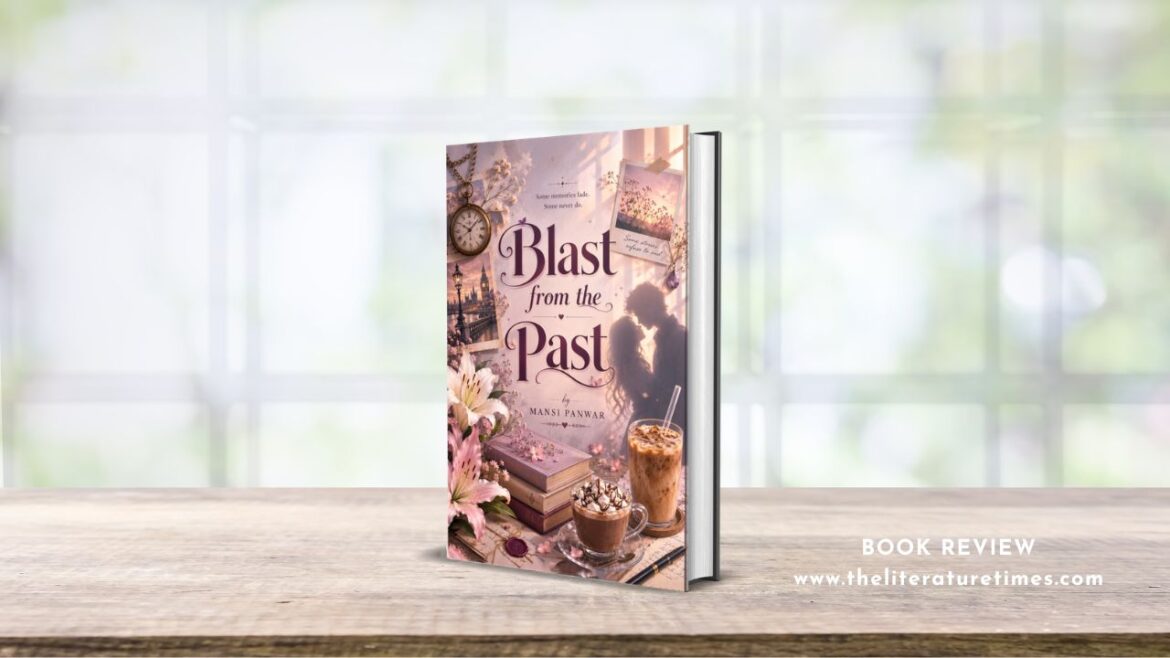
A stranger who remembers a shared love is an unsettling arrival in a life built on apparent certainty. In Mansi Panwar’s Blast From The Past, that encounter places romance inside a larger question about identity: how securely can anyone know themselves when essential parts of their history are missing? Rachel Bloom believes she has found a satisfying new beginning, complete with a hard-earned career and people she loves. Robin’s arrival disturbs that confidence. The premise’s strongest quality is the connection between its emotional and narrative stakes. Discovering what happened could change both Rachel’s understanding of her life and her feelings about the people in it.
Rachel’s present matters because she has something substantial to lose. She is not described as waiting for someone to rescue her from an empty existence; she already possesses a life that feels like her own. This makes the return of the past an intrusion as well as a possibility. A forgotten relationship may offer an explanation, but it also threatens the security of what she has built. The resulting tension gives the story a worthwhile concern beyond romantic reunion: whether recovering a former self can coexist with respecting the person one has become. Rachel’s uncertainty makes that concern immediate and personal.
Robin occupies a very different emotional position. He recognises someone he once loved, lost and mourned, while Rachel sees a stranger. Their unequal access to a shared history gives the relationship its central difficulty. His memories may be precious to him, yet they cannot automatically become evidence Rachel knows how to trust. This imbalance lends poignancy to the premise without making his longing the only feeling that matters. It also raises a demanding question for any renewed attachment: can affection grow in the present when one person is remembering a relationship and the other is only beginning to discover it?
Memory, then, has a role larger than supplying a mystery. It determines what Rachel can recognise as hers, which relationships make sense to her, and how she interprets other people’s intentions. The possibility that her remembered life differs from her lived experience opens a disturbing gap between confidence and knowledge. That gap has relevance beyond the story’s unusual circumstances. People routinely understand themselves through accounts of who they used to be, some remembered personally and others repeated by those around them. Panwar’s premise asks what becomes of that understanding when the accounts no longer agree and familiarity ceases to guarantee truth.
The suggestion of concealed secrets gives this uncertainty an ethical dimension. If Rachel has been denied parts of her own history, the issue extends to her ability to make informed choices. Knowledge can carry power within intimate relationships, especially when one person holds information another needs. The synopsis does not identify who is responsible or establish anyone’s motives, so it would be premature to assign blame. What it does establish is the importance of trust. The prospect of renewed love becomes more complicated when Rachel must first work out whose account of her past deserves belief and what that belief might cost.
The return of old friendships broadens the story’s emotional field. Rachel and Robin’s connection exists within a social history, and the resurfacing of people from that history suggests that understanding the past involves more than recovering private romantic moments. Friends can hold versions of our lives that we have forgotten or ceased to recognise. Their presence also gives the premise room to consider how relationships change across time. A meaningful recovery of the past must reckon with those changes, including the possibility that something once important no longer fits comfortably into the present.
Panwar’s biography offers useful context for this attention to emotional residue. She describes an interest in ordinary conversations, remembered songs and places associated with people we cannot entirely leave behind. Those interests align closely with the novel’s concern with feelings that outlast conscious recollection. Her stated attraction to stories that move between humour and heartache suggests an ambition to preserve the everyday texture of relationships alongside their larger upheavals. It is an appealing foundation for this material, since nostalgia becomes most persuasive when attached to particular human attachments. The supplied description establishes that sensibility, without showing how individual scenes develop it.
The synopsis itself uses direct language, short emphatic statements and unanswered questions to bring the emotional conflict into focus. Its movement from Rachel’s settled life towards mounting uncertainty gives readers a clear route into the premise. Romance and suspense are closely connected here: the person who might matter most is also someone whose knowledge unsettles her. This is a strong narrative foundation, although the full novel would be needed to assess dialogue, pacing and the handling of revelations. The distinction matters because a compelling mystery must make its eventual explanations convincing, while the relationship requires room to develop beyond the intrigue surrounding it.
The concept’s greatest strength is that truth carries an emotional cost. Rachel’s search is consequential because each answer could alter an existing bond or invite a new one. Its corresponding challenge is a familiar one for stories involving forgotten love: the past can become so emotionally authoritative that the protagonist’s present choices receive too little weight. The most valuable question raised by this premise is therefore whether rediscovery allows Rachel greater freedom to choose. Her hard-won present gives that question substance. Love’s endurance is moving, but the possibility of loving again becomes richer when it includes uncertainty, change and a person’s right to decide.
Readers drawn to romantic mysteries, second chances and relationships complicated by secrets are the clearest audience for Blast From The Past. Its premise also offers material for book-club discussion about trust, the ownership of personal history and the limits of nostalgia. The appeal lies in how closely its central puzzle touches everyday emotional concerns: whether someone truly knows us, whether a relationship can survive change, and whether a reassuring account of our life is necessarily an accurate one. Panwar has outlined a story with a persuasive emotional question at its centre. Rachel’s encounter with Robin makes discovering the truth inseparable from deciding how she wants to live.